BOOKS
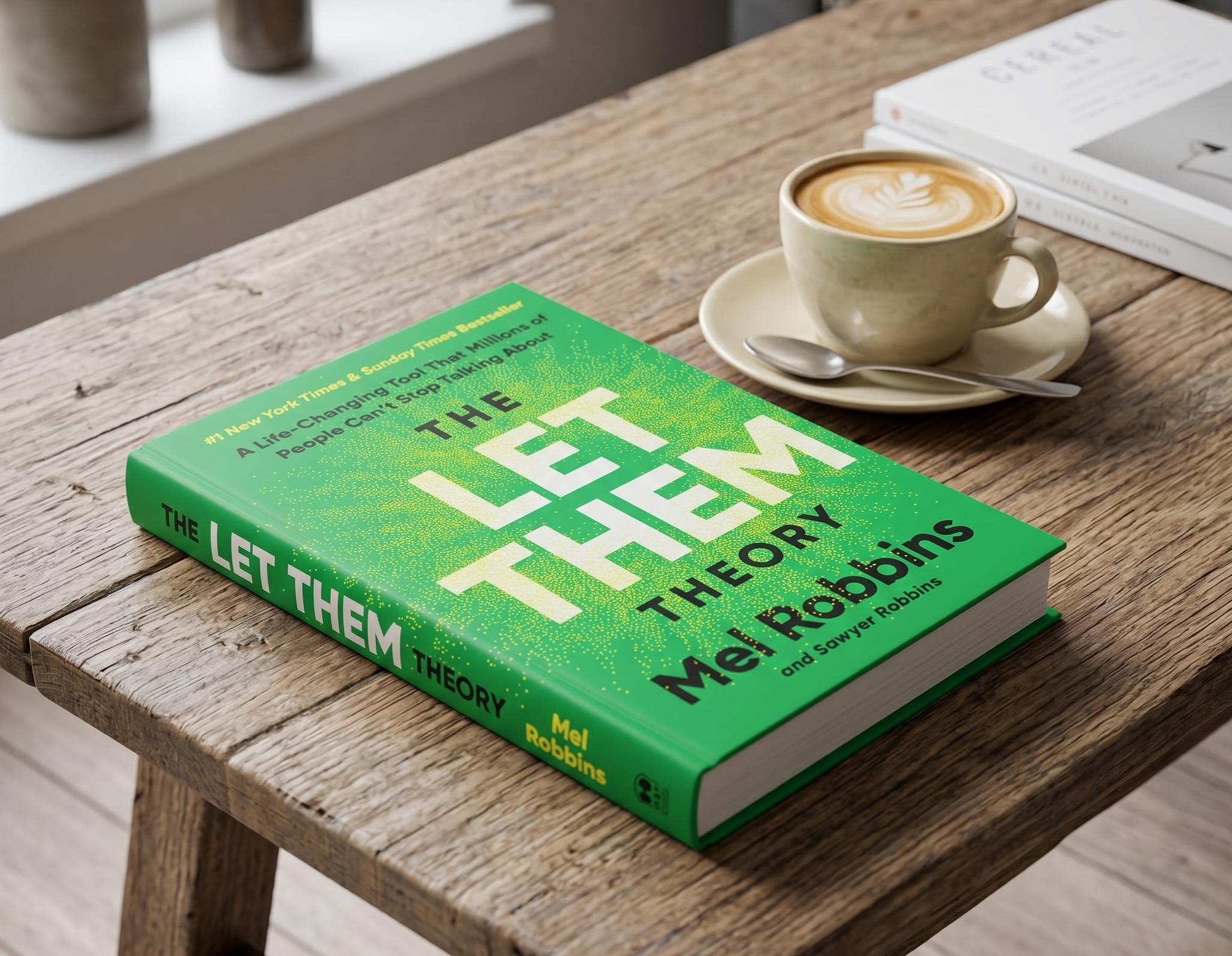
There is something revealing about the speed with which The Let Them Theory entered the cultural bloodstream. In an era of increasingly complex conversations around boundaries, healing, attachment styles and emotional labour, the book’s central premise arrives with startling simplicity: let them.
Let them misunderstand you. Let them leave. Let them judge, disappoint, exclude or behave badly. At its core, Mel Robbins’ theory proposes that much of modern unhappiness stems from the futile attempt to manage other people’s behaviour — and that peace begins with relinquishing that control.
It is not an especially new idea. Variations of it exist in Stoicism, Buddhist philosophy, therapy culture and decades of self-help literature centred on acceptance and detachment. Yet originality does not always determine resonance. Timing does. And perhaps what Robbins understands better than many contemporary writers is the emotional temperature of the present moment.
People are Tired
Not merely overworked, but emotionally overextended. Tired of decoding mixed signals, maintaining appearances, negotiating social dynamics and performing versions of themselves online. Tired of trying to control outcomes that remain stubbornly uncontrollable. In that context, the appeal of The Let Them Theory becomes easier to understand. The book does not offer transformation so much as relief.
Part of its effectiveness lies in its language. “Let them” feels almost disarmingly small for a concept that touches everything from relationships to rejection to self-worth. Robbins reduces emotional complexity into two words simple enough to repeat internally during moments of frustration or disappointment. Whether this reduction is profound or merely clever packaging depends largely on the reader. But there is no denying its psychological power.
The phrase itself functions almost like a release valve. In recent years, self-improvement culture has become increasingly demanding, turning everyday emotional experiences into endless projects of optimisation. We are encouraged to communicate better, heal faster, set firmer boundaries, become more self-aware and endlessly “do the work.” Somewhere along the way, emotional life began to resemble a full-time administrative role.
Against this backdrop, The Let Them Theory feels less like motivation and more like permission. Permission to stop micromanaging perception. Permission to stop chasing reciprocity. Permission to accept that other people will behave according to their own limitations, desires and unresolved contradictions.
That may explain why the book has resonated so strongly, particularly online. Social media has intensified not only comparison, but also interpretation. Every delayed reply, passive-aggressive comment or carefully curated post invites analysis. Modern life encourages a kind of constant emotional surveillance, both of ourselves and others. Robbins’ message cuts through this with unusual directness: let them.
Still, the book is perhaps most interesting not as philosophy, but as cultural evidence. Its popularity reveals a broader shift in what audiences are seeking from self-help altogether. Once, the genre promised transformation — better habits, greater success, heightened productivity. Increasingly, however, people seem less interested in becoming exceptional than in becoming less overwhelmed.
There are moments when the book’s simplicity risks flattening the nuance of human relationships. Not every situation can be resolved through emotional detachment, nor is surrender always synonymous with wisdom. Some readers may also find the ideas overly familiar, repackaged in contemporary language for a social media generation newly encountering concepts that have existed for centuries.
And yet, dismissing the book on those grounds alone would perhaps miss the point.
Ideas do not gain traction purely because they are intellectually groundbreaking. They gain traction because they articulate something people already feel but have struggled to name. The Let Them Theory succeeds because it gives language to a quiet exhaustion many people have been carrying for years.
Its real achievement lies not in teaching readers how to control their lives, but in suggesting that control itself may be overrated.
In the end, the enduring appeal of “let them” may have less to do with self-improvement than self-preservation. Beneath the book’s polished simplicity is a message that feels distinctly of this moment: not every battle deserves our emotional energy, and not every disappointment requires interpretation.
Sometimes people leave. Sometimes they disappoint you. Sometimes they misunderstand who you are entirely.
The radical thing, Robbins suggests, is allowing them to.