PEOPLE
By Ong Chin Huat
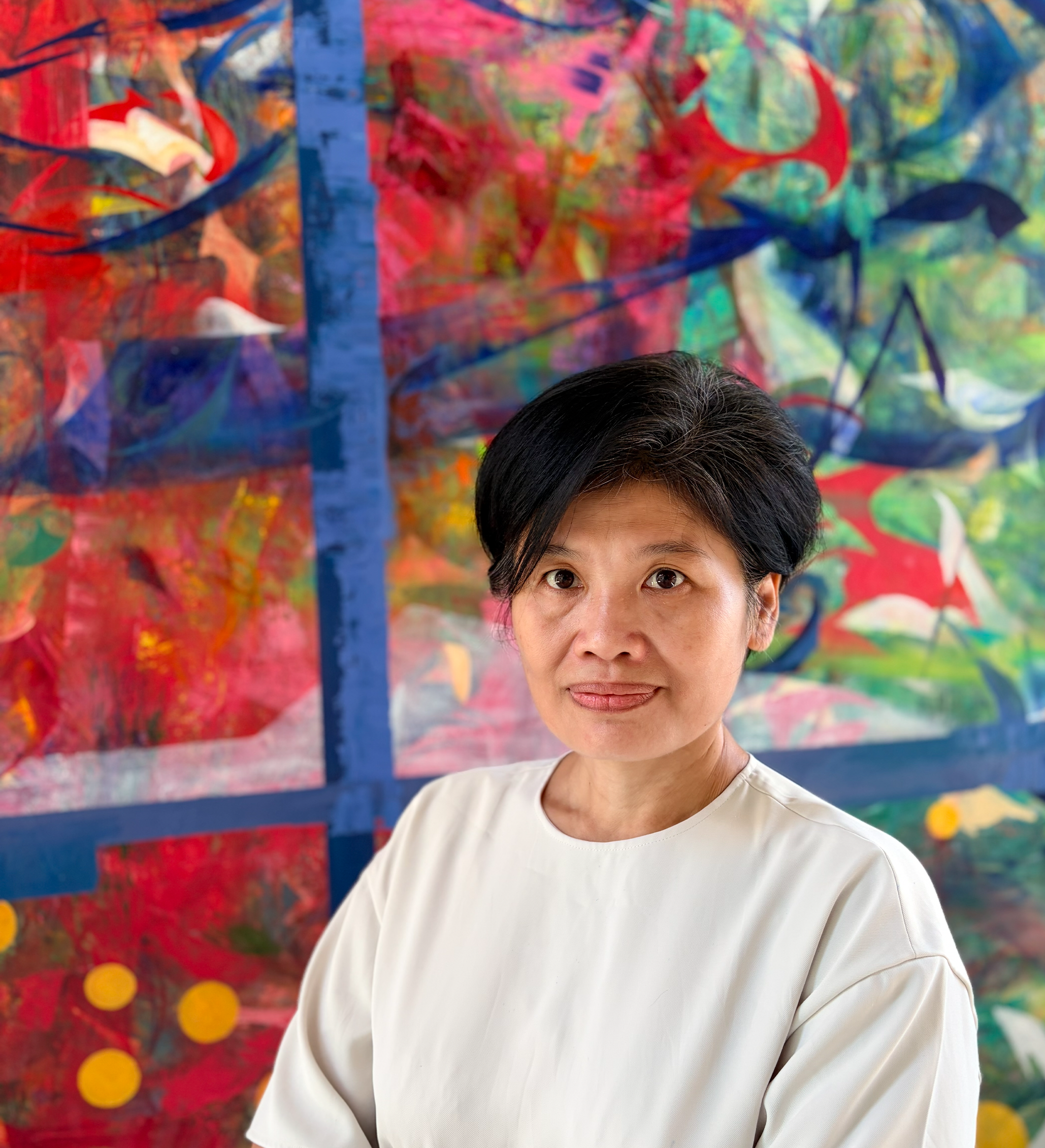
There is a particular kind of quiet that surrounds Yau Bee Ling. It is not the quiet of someone who has little to say, but of someone who has learned — over thirty-five years of painting — that the most important things rarely announce themselves loudly. They surface slowly, like forms emerging from layered paint, tentative and true.
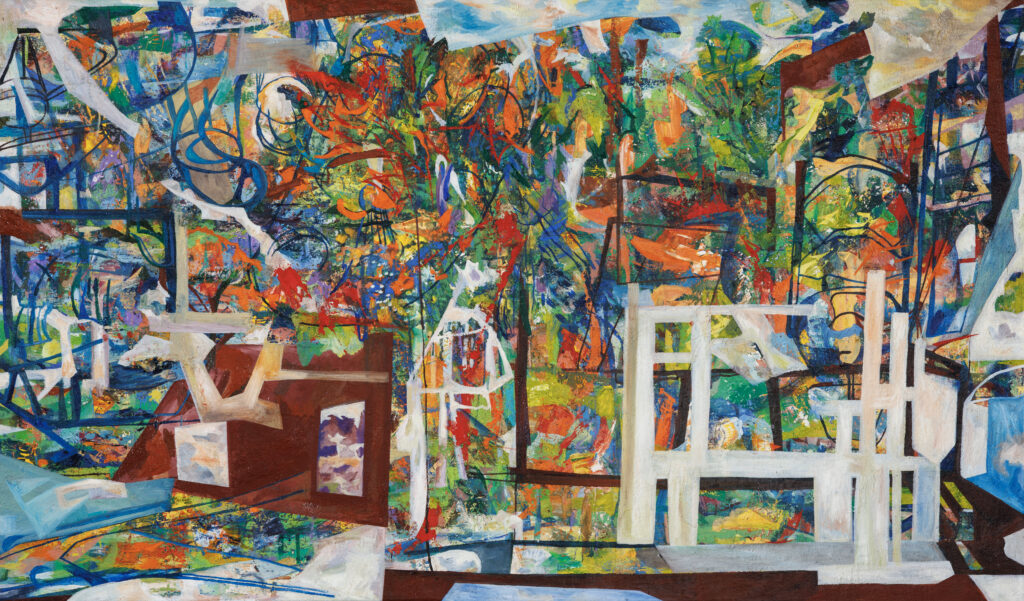
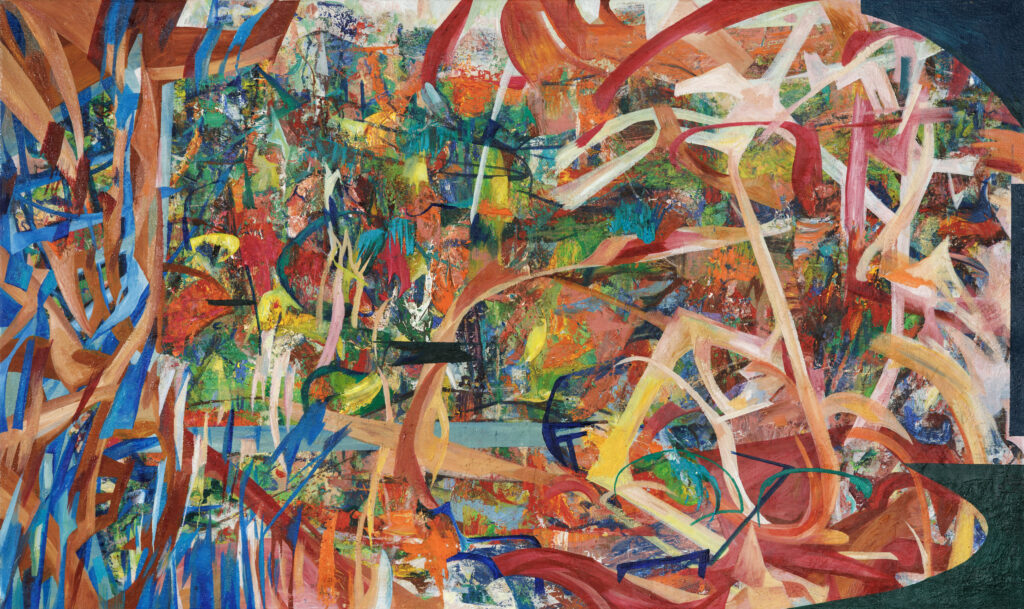
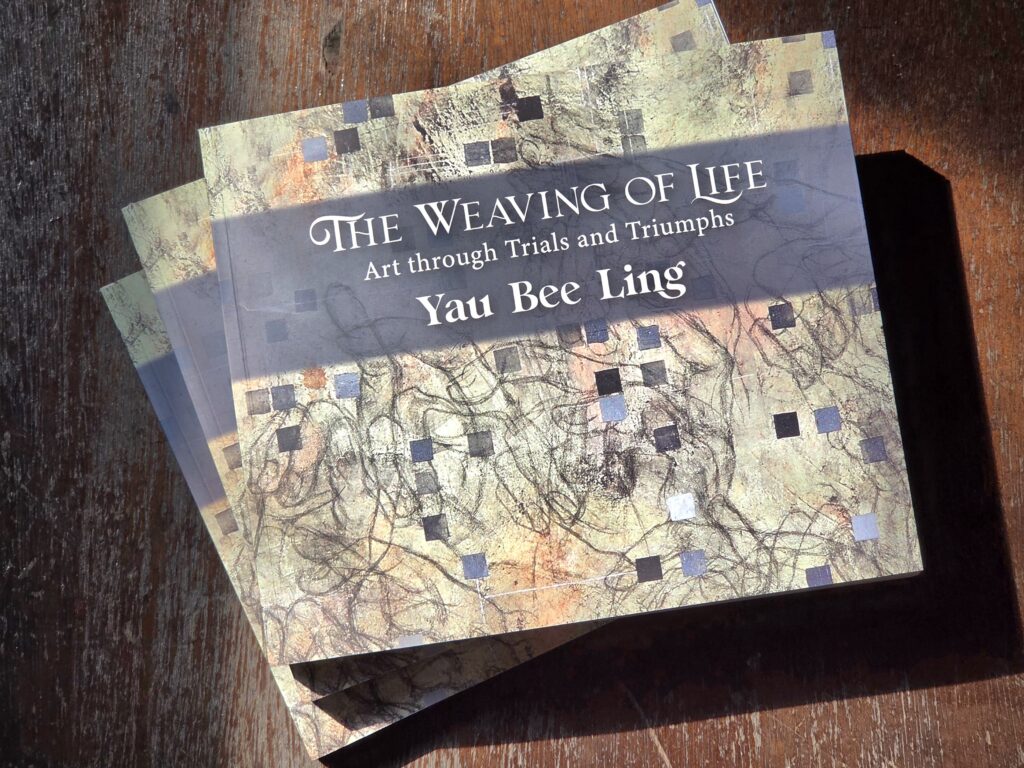
We meet at Wei-Ling Gallery in Brickfields, where her eighth solo exhibition, Structural Voids, occupies the walls with six large-scale oil paintings that pulse with colour and emotional weight. On the same occasion, the gallery launches her first monograph, The Weaving of Life: Art through Trials and Triumphs — a 250-page document of a practice that began in 1990 and has never stopped asking difficult questions. It is, by any measure, a momentous occasion. Bee Ling receives it with characteristic stillness.
Finding the Thread
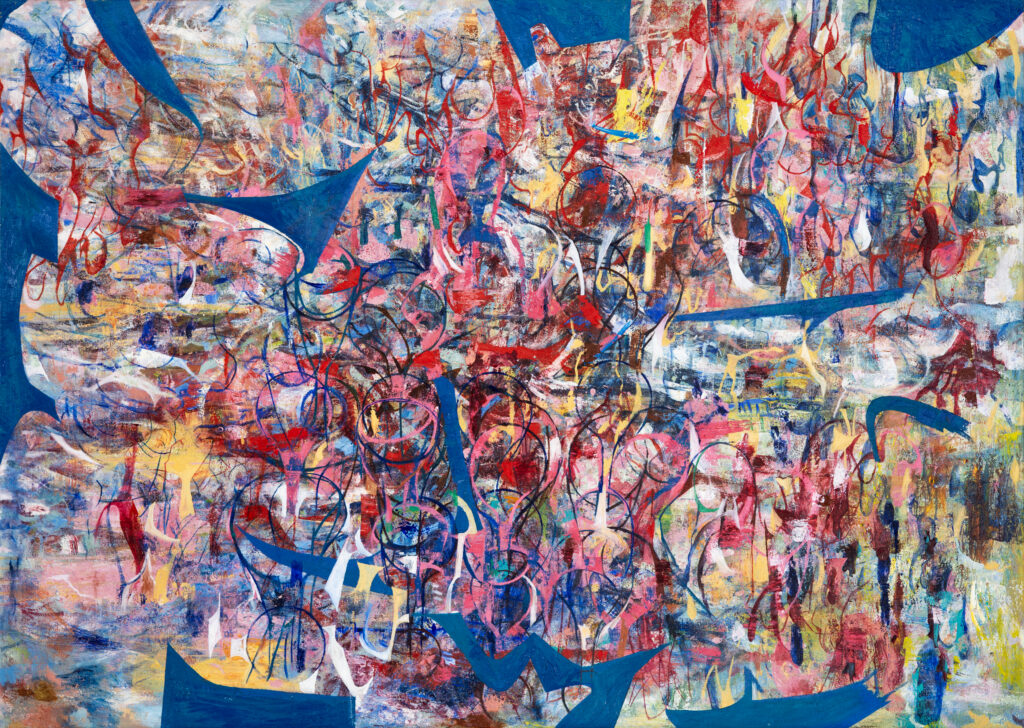
When I ask whether she can identify a consistent thread running through three and a half decades of work, she pauses thoughtfully before answering. “The thread was always beneath,” she says. “What is true, along the search. I simply didn’t have the absolute language for it.” She speaks of finding the chain gradually — of painting, in her younger years, to seek which part of herself was present in the work, a personal archaeological search for identity. Now, she says, something has shifted. “I paint with seeking, from understanding. To look and act, to my responsibilities — my action to the other, in care and love.” After thirty-five years, she has learned what her concern is, what her capacity is to hold love, forgiveness, and loss simultaneously. “I am able,” she says quietly, “to sit with my life journey.”
The Personal as Universal
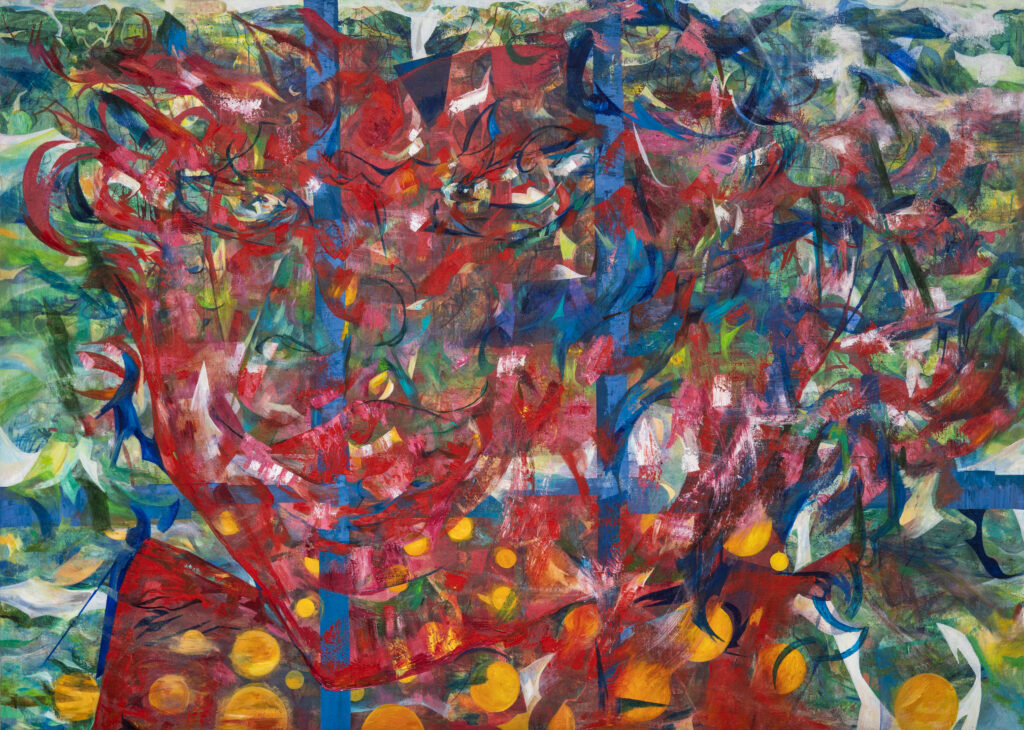
Born in Port Klang in 1972, Bee Ling graduated from the Malaysian Institute of Art on a full scholarship and came of age as an artist at a time when female painters in Malaysia faced quiet but persistent pressure to sidestep the intimate and the domestic. She never did. Her canvases have always held femininity, motherhood, marriage and identity with unflinching candour — not as political statements, but as simple, faithful acts of witnessing. Did she ever doubt whether such personal subject matter could carry wider significance? She shakes her head gently. “Honestly, I never thought about the doubt. I just continued painting like a diary of life.” She painted her topics naturally, following life’s events as they came. “These carry the full weight of human life experience — loves, loss, and striving to endure.” She pauses, then adds something that stays with me long after our conversation: “Universality lives inside each specific season of life. My feeling is that ordinary life, ordinary persons and events are worthy of devotion and attention.”
Losing Our Grip
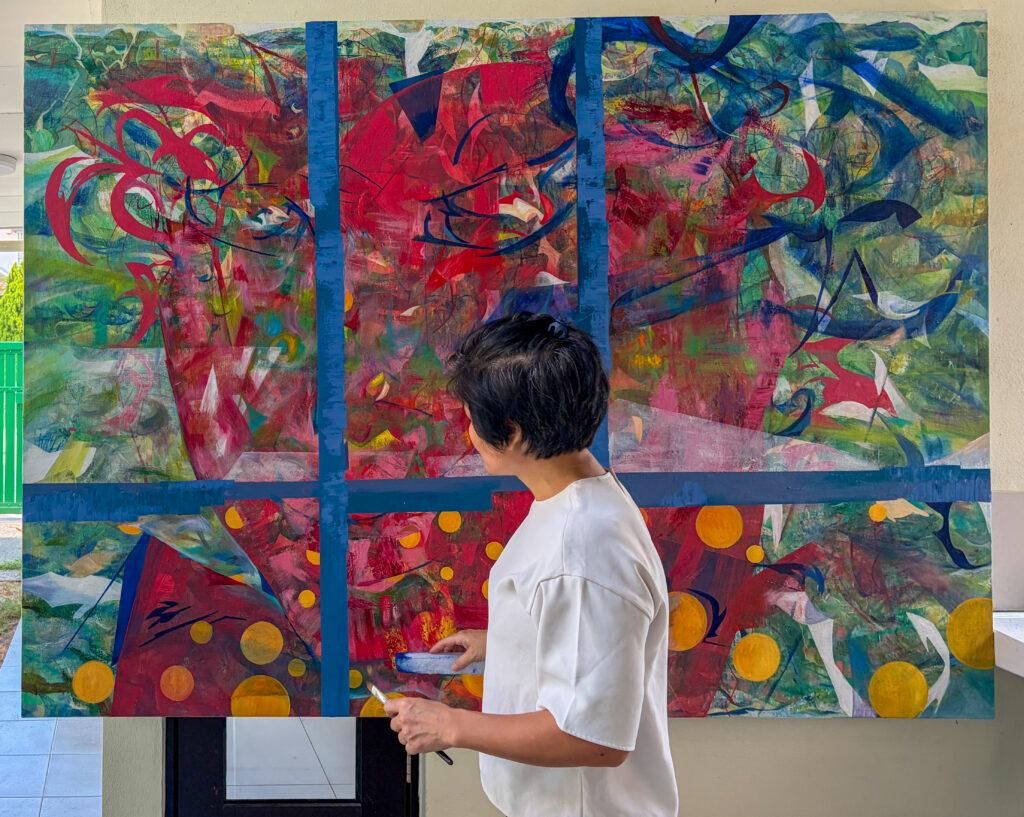
Structural Voids is, at its heart, a meditation on disconnection. The six paintings focus on the young — her own children and students — a generation she has watched with tenderness as they navigate a world that continues to fragment them. I ask whether genuine intimacy has become harder to sustain today. “I believe humans are still capable of becoming intimate at any time,” she says. “But in modern contemporary life, many surfaces have been built between ourselves and others. Screens. Permission of being who we are. We perform ourselves with others — curated versions of self.” She describes how we meet, how we surface-touch, how we cannot yet see ourselves within all of these performances — present, but without truly arriving.
In Structural Voids, she tells me, life is built on structures and systems — family, marriage, motherhood, friendship, faith, loss and death. The voids are what remain inside those structures when something is lost: left-in darkness, brokenness, guilt. “Not emptiness,” she is careful to clarify. “Psychological shape.” The connection she traces is one we recognise but rarely name — our refusal to enter into our own silences, our discomfort, our unresolved spaces.
Memory in Layers
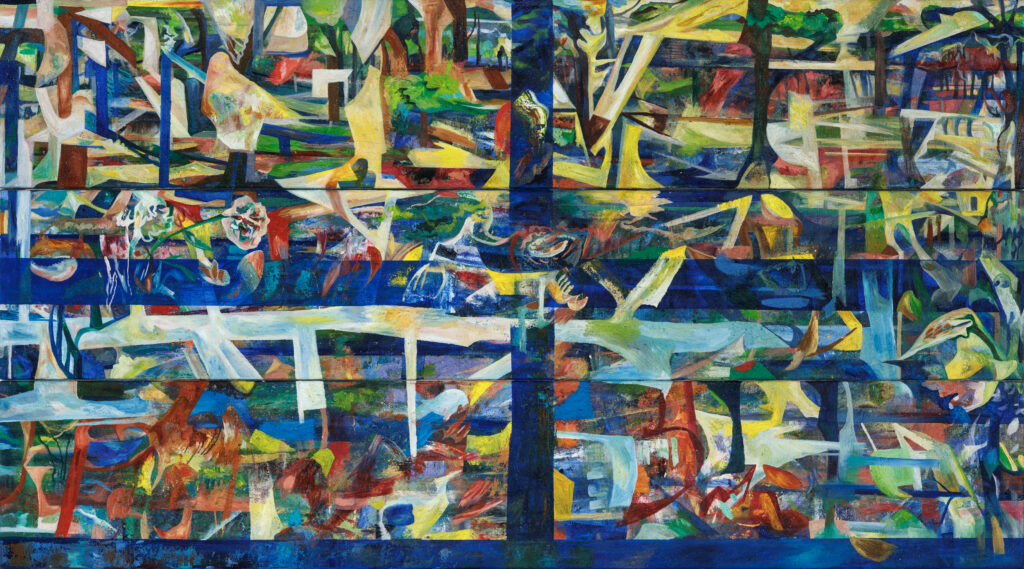
Her painting process is as geological as it is painterly — pigment applied and sanded back, earlier decisions embedded within later ones, the surface holding everything that went into it. It is an almost perfect metaphor for memory, and I tell her so. She smiles. “I didn’t intentionally plan the working that way — intuitively, overlapping paints, overlay layers, interrupted structures, complex spatial interplay of colour.” But she sees it now. Memories of grief become bearable. Trauma has colour and becomes visible. “Memories worked themselves over time. You can’t fully redo or erase what happened in the past.” She speaks of painting over and changing the working direction — memories left imprinted, effects on top of one another. “We move forward with the embedded. We make peace. Life shapes our gestures, our instincts. Our fears and guilt are at ease, honest too — our own history of life. We can love and be honest, easily.”
Two Projects, One Becoming
The monograph and Structural Voids arrived together, and Bee Ling feels their connection deeply. The book, she says, is life and artistic testimonies — documented, witnessed, survived. It represents what is permanent inside her, “me” being layered into artwork expression. “What rules me, what my spirit immortalised in me — loved, sacrificed.” She describes what she calls the “becoming landscape” — the gradual arrival of clarity, the parts of her old self that died together with time, beauty and uncertainty appearing simultaneously. Through Structural Voids, she became quieter, slower, clearer. “Someone I am only now becoming comfortable with,” she says, with a small, certain smile.
The Ordinary as Battlefield
Her favourite painter, she tells me, is Camille Pissarro — the French Impressionist who painted his family, his most ordinary and beloved subjects, with absolute devotion. “He never chased greatness. Simple life, lived honestly — great human love and artistic spirit.” He taught her to trust what her heart actually saw over years. “Ordinary life can be a real battlefield,” she reflects, “where the real courage lives. To love someone — we face day and night through the undramatic middle of life. That is how we are actually formed, during those moments of ordinary.” She still finds joy in the kitchen table, the unmade bed, the held-back tear, the old bicycle. “This history truly happens — ordinary day and night. In a moment.
What the Void Holds
At this stage of her life and career, I ask what she is still searching for within those spaces. She speaks of stillness — “like living still water, without fear” — and of courage for the empty spaces of uncertainty. For most of her art-making journey, she tells me, she had a strong tendency to feel anxious about empty space on the canvas. She wanted to fill it fully, resolve it overnight. “But I found out my art spoke to me — another reality.” Now, she is learning to trust what is yet to be created, yet not to demand immediate answers. “I can love someone who doesn’t really understand me. I can forgive someone without demanding justice.” She is searching, perhaps, for the painting that surprises even herself. “I am kind of meeting my another loving self through art,” she says softly.
A Good Day
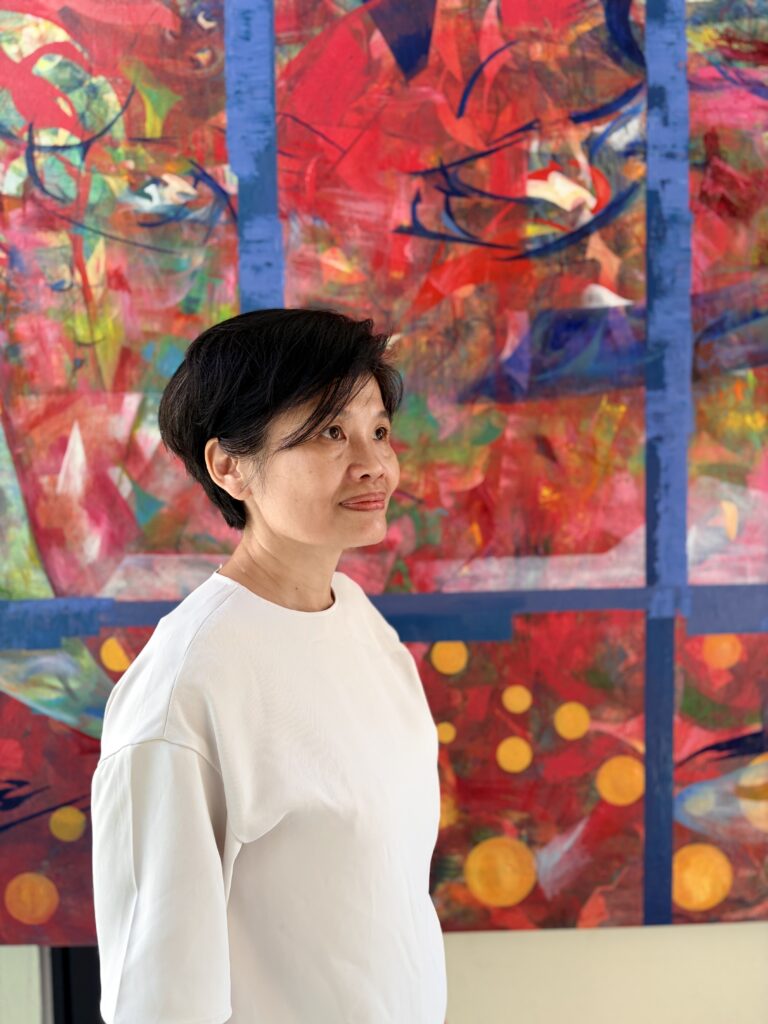
I save my favourite question for last. After thirty-five years, what does a good day in the studio look like? She arrives in the early dawn, with devotional music and prayer. She makes tea, cleans up, imagines inside since the night before — the colour sketches forming in her mind, some reading, some writing of thoughts. Sometimes, she confesses with a laugh, she ends up just cleaning all the tools while talking to her cats. A good day, she says, is when she is so excited to respond — simply, spontaneously — that she finds herself in all of a mess with colours. “The colours took over me. The brushes move faster than my heartbeat to capture.” She becomes a vessel for the painting to take over. She loves the large, huge canvas. End of sunset. “I discover I am the less author but more the witness of my painting that day.” After all, she goes home with total tiredness in her body, but full of contentment. She praises God.
“That,” she says, “is going to continue after thirty years. I believe.” So do we, Bee Ling. So do we.
Yau Bee Ling’s exhibition Structural Voids runs at Wei-Ling Gallery, Brickfields, Kuala
Lumpur until 6 June 2026. Her monograph The Weaving of Life: Art through Trials and
Triumphs is available at the gallery.