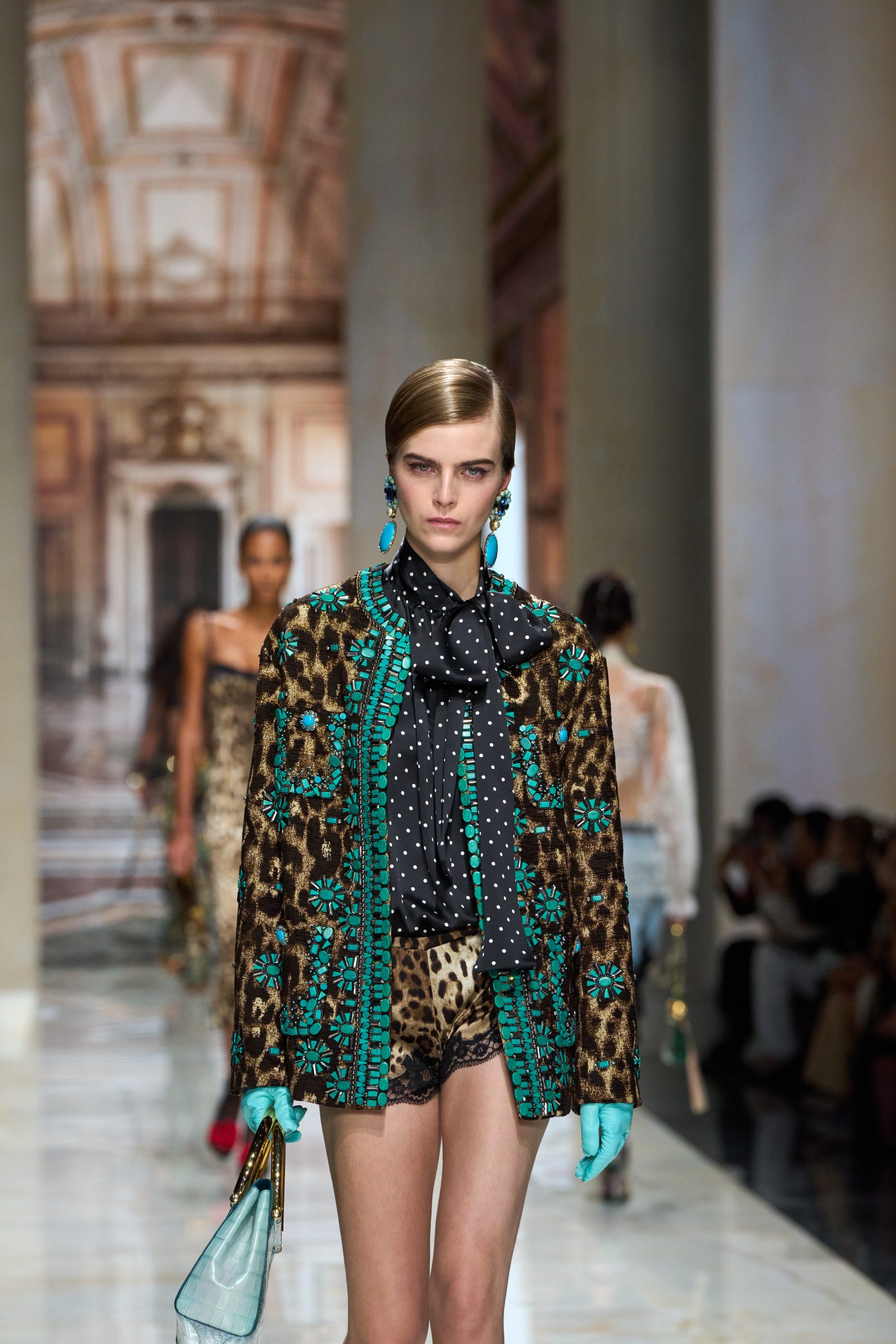
For Spring/Summer 2027, Domenico Dolce and Stefano Gabbana raid the family palazzo rather than the archive, letting a grandmother’s lace collide with a niece’s ripped denim — and finding, in that friction, the house’s most convincing argument yet for what inheritance actually looks like.
There is a scene in Visconti’s film of The Leopard — the one Lampedusa’s line comes from — where Burt Lancaster, ageing and magnificent as the Prince of Salina, watches the old order dissolve around him while insisting, with perfect Sicilian fatalism, that nothing really needs to change at all. It is one of literature’s great tricks: a line about survival through transformation that has been quoted so often it risks meaning nothing. Dolce&Gabbana have built a career on resisting exactly that kind of flattening, and for Spring/Summer 2027, they have gone back to the source material rather than the slogan.
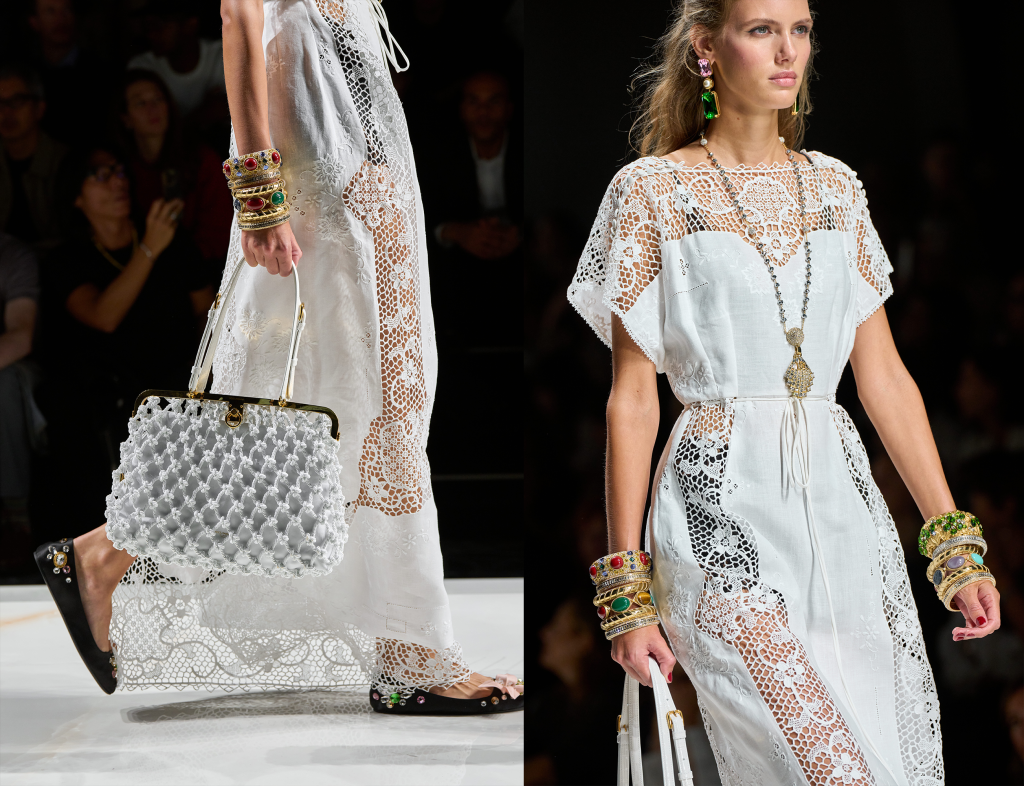
“Stravaganza Siciliana” does not attempt a straightforward homage to the Sicily the house has mythologised since its earliest collections — the black lace, the devotional imagery, the widow’s modesty giving way to baroque excess. Instead it proposes something closer to an inventory: the contents of a family palazzo, sorted not by decade but by feeling. A grandmother’s embroidered jacket sits next to a niece’s throwaway denim. A trousseau’s worth of lace turns up under tailoring rather than in place of it. The premise, as the house tells it, is that identity in these houses was never preserved in glass cases. It was worn, re-worn, cut down, handed off and occasionally ruined — which is precisely why it survived.
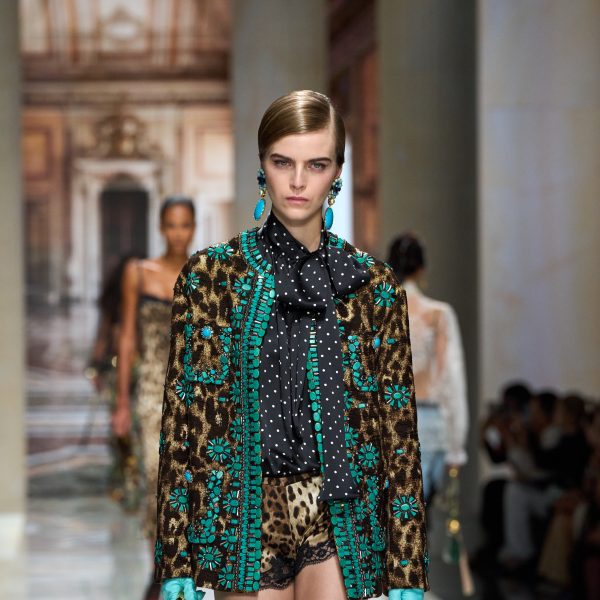
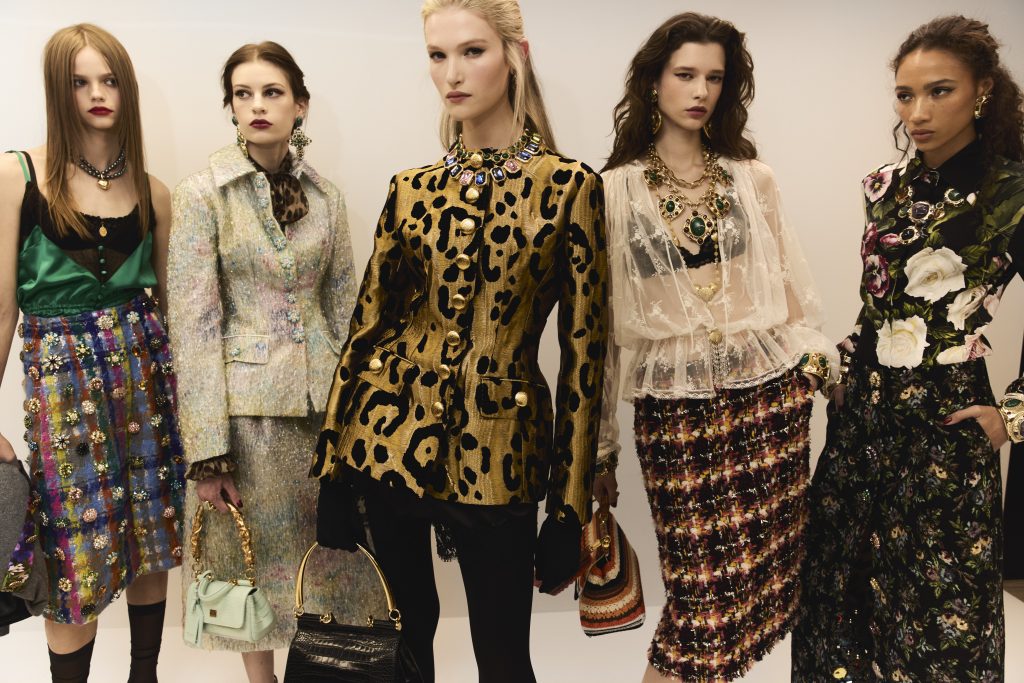
What that looks like on the body is a masterclass in controlled collision. In one exit, a leopard-jacquard jacket in old-gold and black — its buttons oversized, its construction almost architectural — is worn with black lace-trimmed leggings, itself an unlikely pairing for a house that has spent decades perfecting the art of leopard-as-grand-statement. Elsewhere, that same motif turns fully unruly: a bouclé jacket studded with red and gold beading over a leopard-print blouse, finished with a blush chiffon pussy-bow at the throat and — the detail that makes the look, rather than merely decorating it — a raw-hemmed denim mini skirt scattered with more of that same coral beading. Grandeur and disposability, worn as one outfit. That is the stravaganza the house keeps invoking: not chaos, but a kind of fearless editing where nothing outranks anything else simply because it cost more or came first.
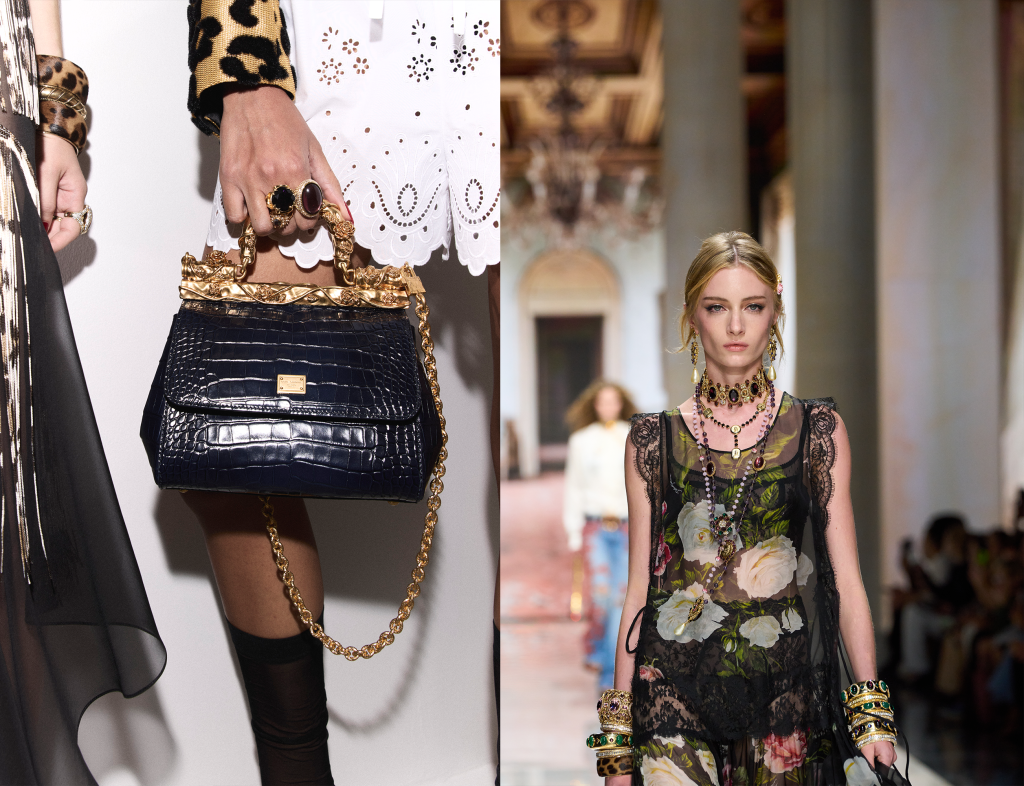
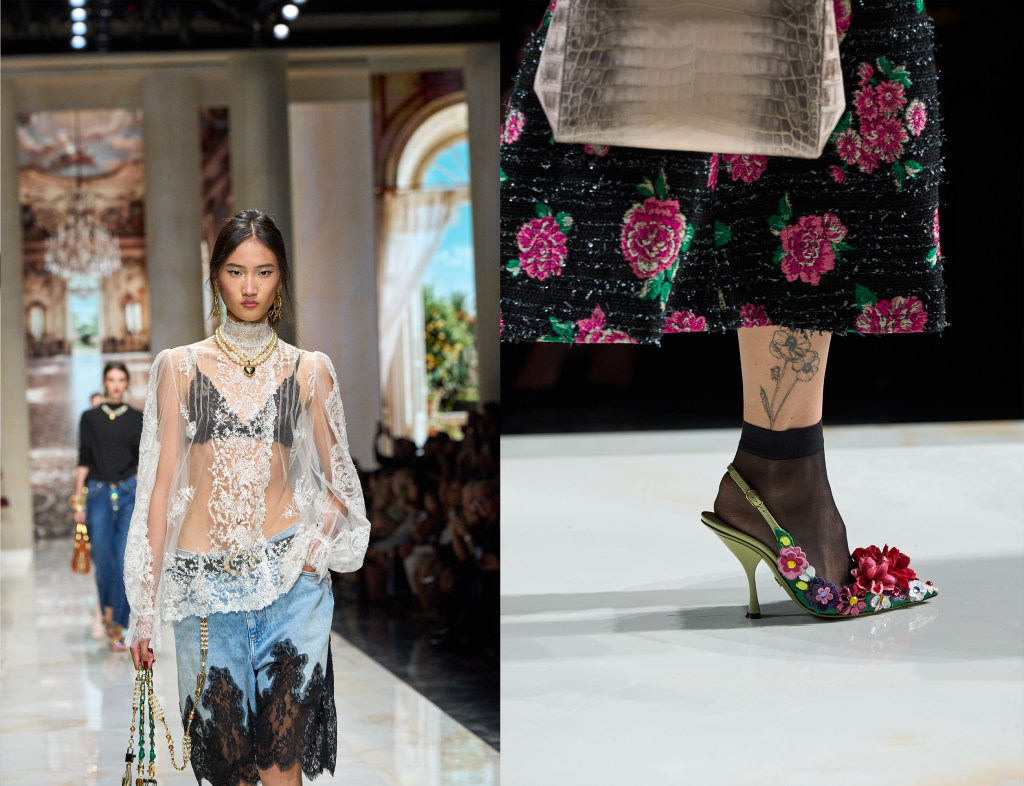
Denim, in fact, turns out to be one of the collection’s more interesting through-lines, and one the official messaging rather undersells. A pair of flared jeans, distressed at the knee, climbs with coral-branch beading from ankle to hip, worn beneath a cream blouse and cinched with a jewel-encrusted belt buckle the size of a small brooch — the kind of piece that would, in another era of the house, have anchored a full evening look rather than dressed down a pair of trousers. It is a genuinely useful thesis for what “heirloom” might mean to a generation that did not necessarily inherit palazzi: the fine and the everyday, forced into conversation, neither one winning.
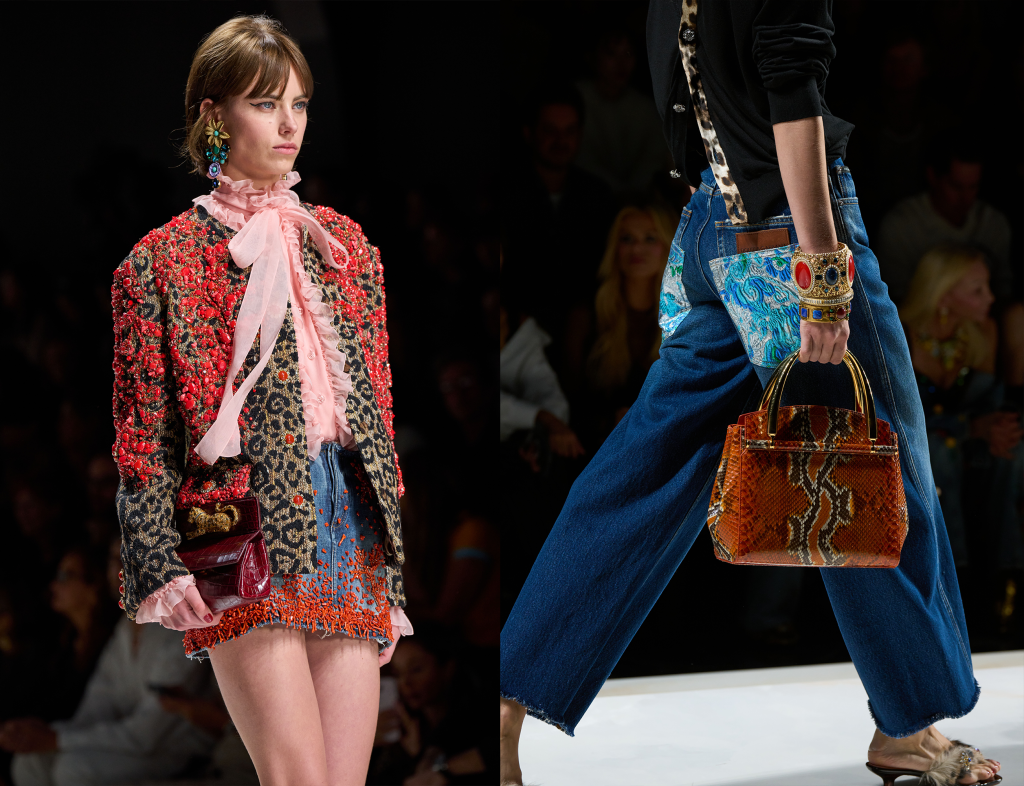
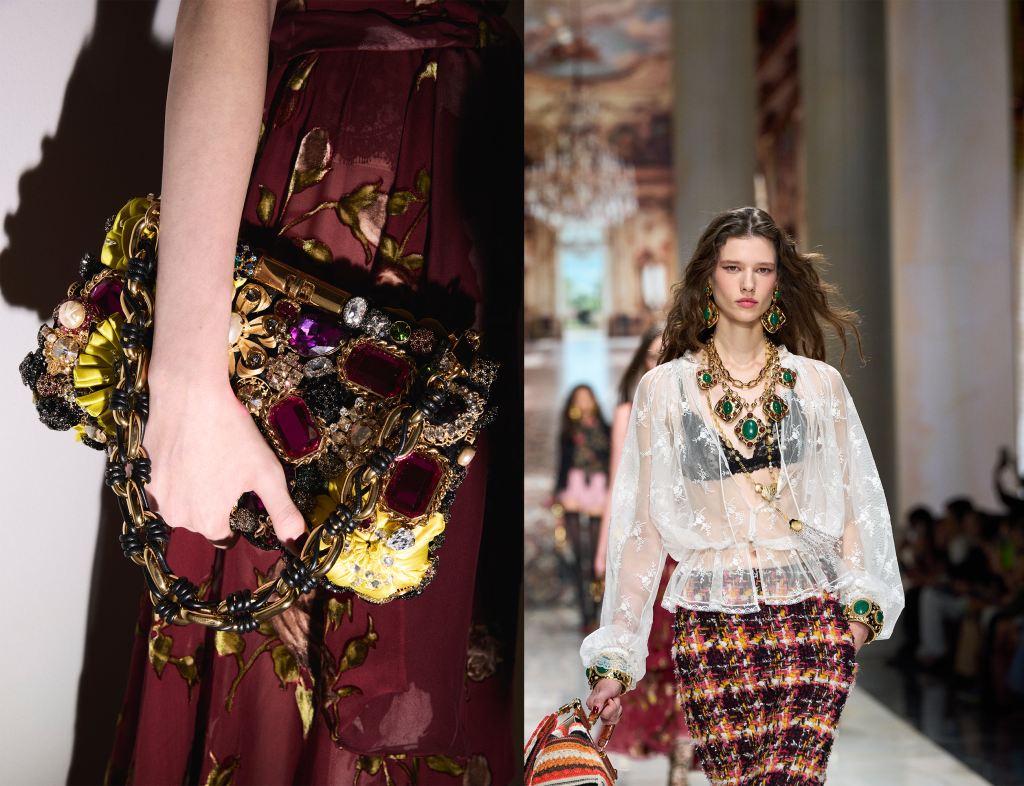
The accessories carry their own argument. Structured top-handle bags — a hard-shell mint-green Sicily, a python-effect clutch, a beaded evening piece scattered with fabric flowers in cobalt, tangerine and crimson — appear less as finishing touches than as the collection’s actual centre of gravity, each one small enough to read as personal rather than performative. Jewellery, meanwhile, is applied with what can only be described as generational excess: chandelier earrings, stacked crosses, cameo pendants and coloured-stone collars piled on with a logic that owes more to a dressing table accumulated over sixty years than to a single stylist’s edit.
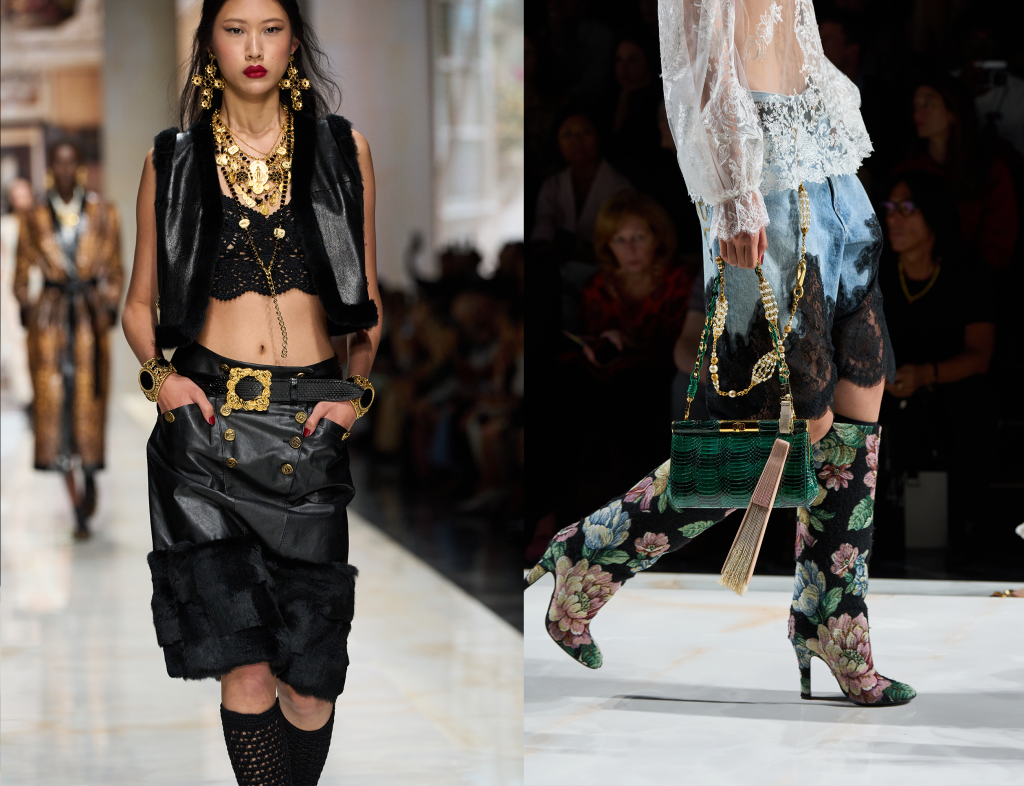
There is a version of this collection that could have played as costume — Sicilian signifiers reheated for an audience that has seen this particular vocabulary from the house many times before. What saves “Stravaganza Siciliana” from that fate is its evident interest in friction rather than harmony: lace against denim, precision tailoring against a slip of visible lingerie, a family jewel resting against a raw hem. Dolce&Gabbana have understood something the Lampedusa quote is usually stripped of when it appears on a runway note — that the line was never really about preservation at all. It was about the discipline required to let something change enough to keep mattering. Whether that discipline holds up once the collection reaches the shop floor, diluted into its more wearable exits, remains, as ever, the more interesting question than the one the press release is asking.