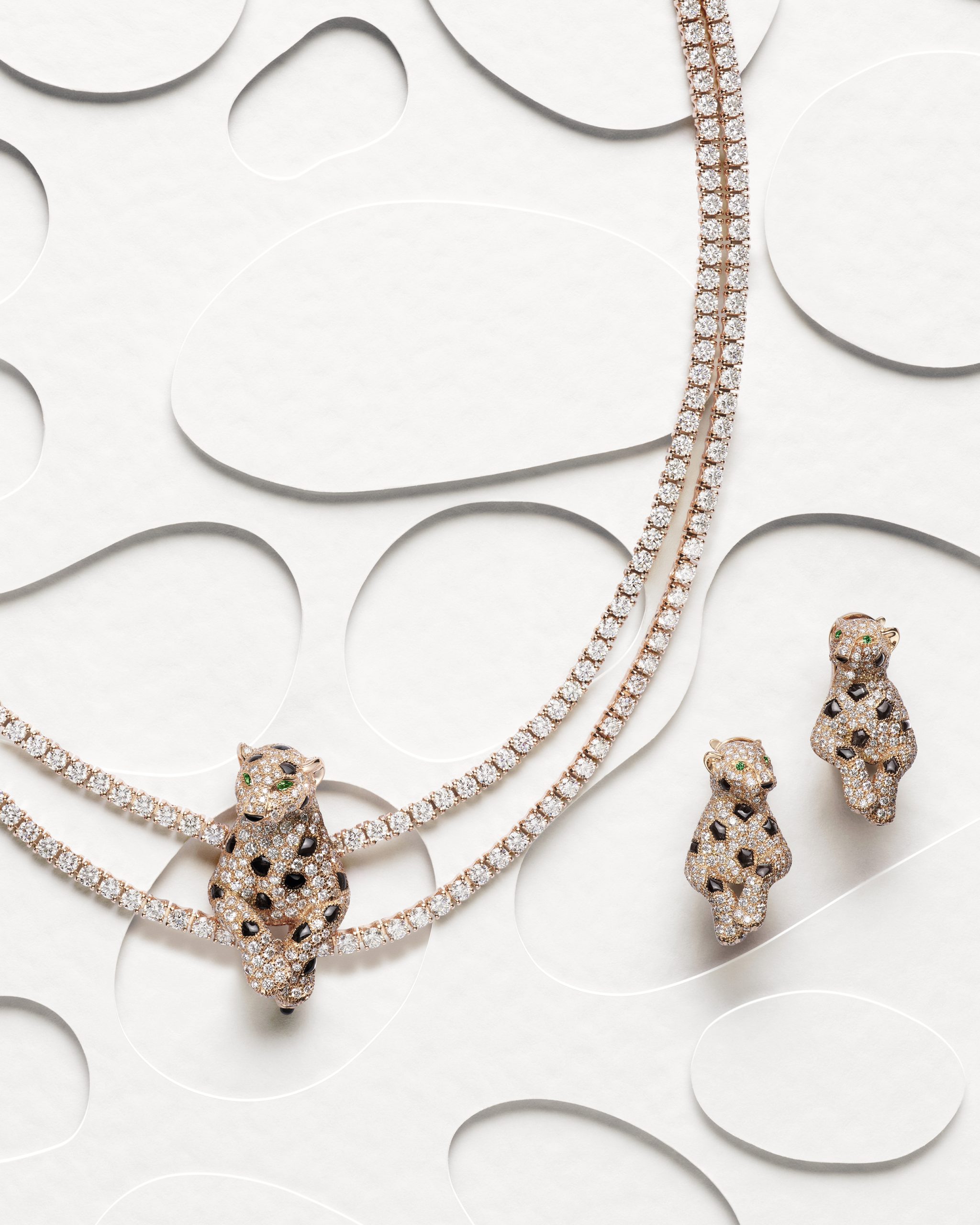
Cartier’s new campaign puts Tilda Swinton in five bejewelled animal heads and leans into a century of panthers, tigers and crocodiles. The interesting part isn’t the concept, it’s what it took to make a ring’s jaw actually bite shut.
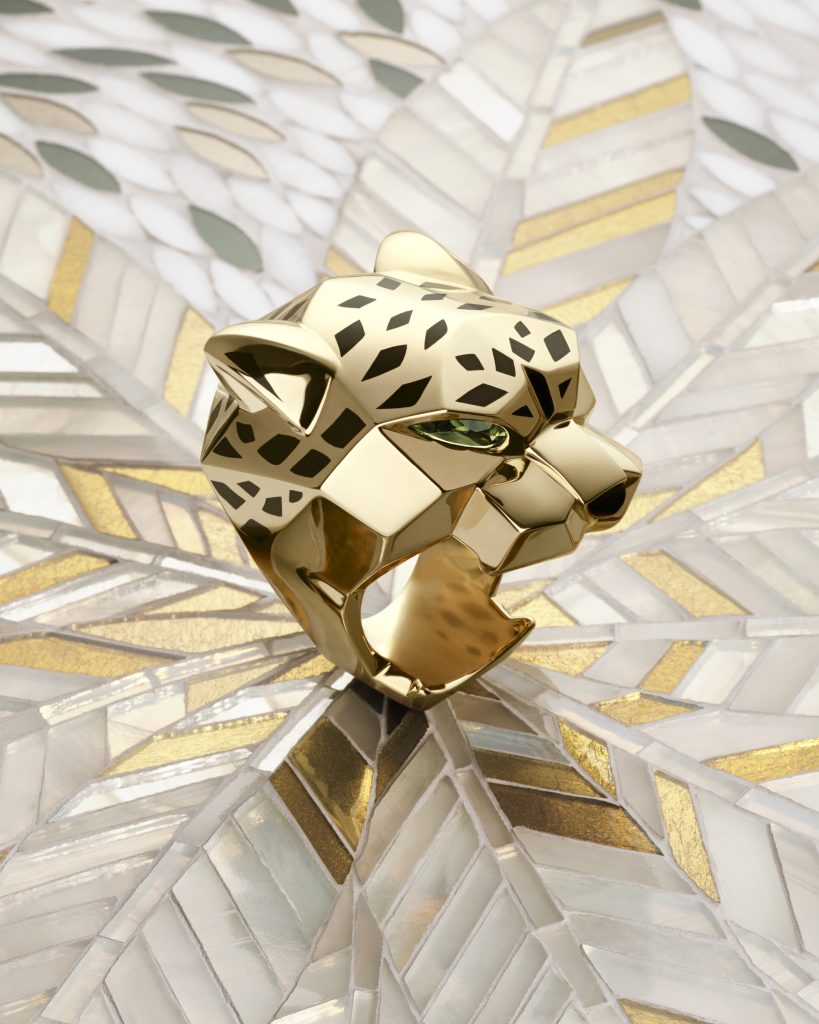
Cartier has been putting animals on people’s hands and wrists since the early 1900s, first birds, then insects, then, by mid-century, a menagerie serious enough to include reptiles, chimeras, a zebra, an elephant. The house’s latest instalment, Into the Wild, doesn’t pretend otherwise. It leans into a century of precedent and asks a fair question: after this many decades of panthers, tigers and crocodiles, is there anywhere left for the animal jewel to go?
The answer, mostly, is craft. Cartier’s director of image, style and heritage, Pierre Rainero, has described the house’s fauna as a way for a wearer to “deliver a message about yourself,” which is the kind of line a brand says about jewellery it wants taken seriously as more than jewellery. It’s also, in this case, not entirely wrong.
In the campaign’s most photographed image, actor Tilda Swinton, the house’s newest ambassador, appears with her knuckles stacked in rings from the five-creature Faune & Flore line, a parrot’s head, a tiger’s, a crocodile’s, and what holds the attention isn’t the concept (Cartier does animals, everyone knows this) so much as the specificity.
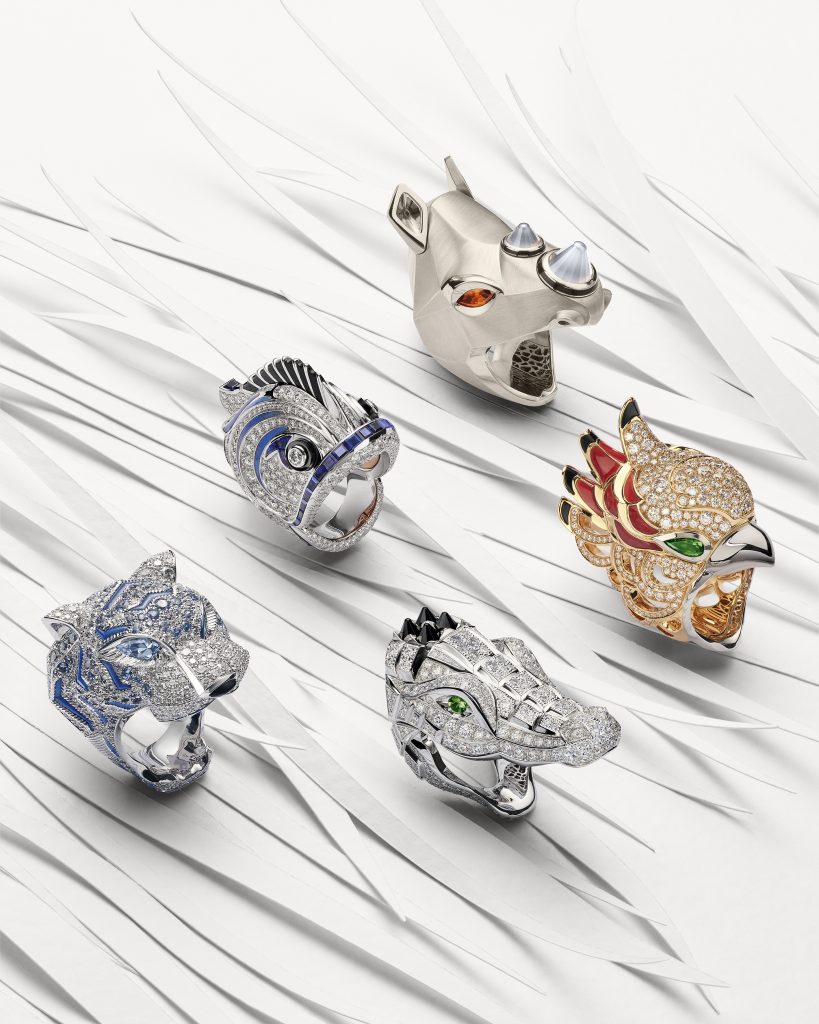
The rhinoceros ring works its horn in opalescent smoky quartz, edged with a hairline of black lacquer. The carp’s gills are carved from dumortierite quartz. The tiger’s stripes, cut from the same stone, are fine enough to read as texture rather than pattern. None of this needed to happen: a ring can suggest an animal well enough with a shape and a gemstone or two. Cartier is choosing the harder route on purpose, a jeweller, a lapidary and a gem-setter working in sequence on a single head, because the alternative is a novelty ring rather than a small sculpture.
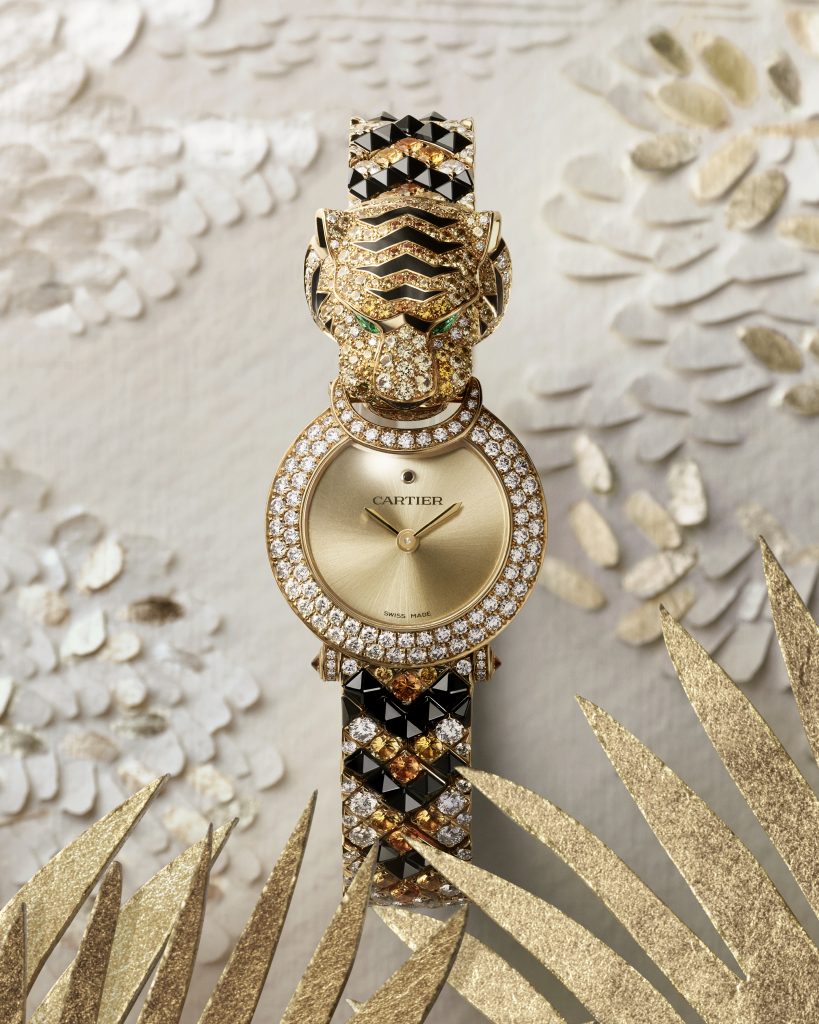
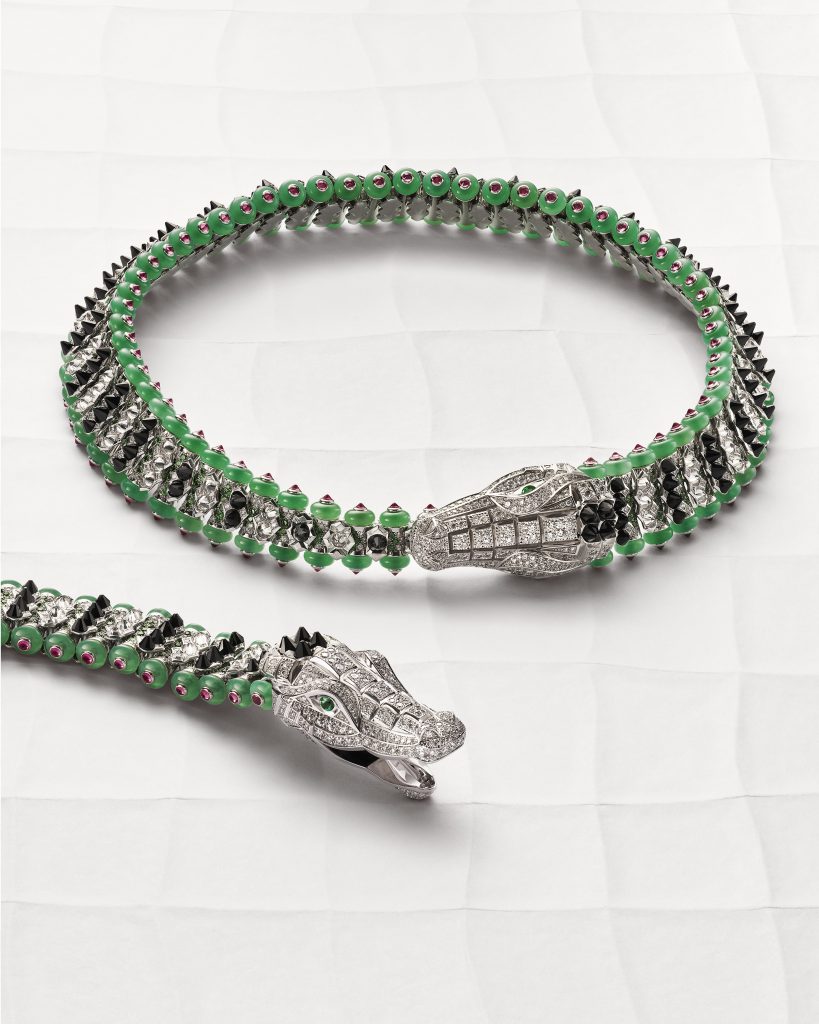
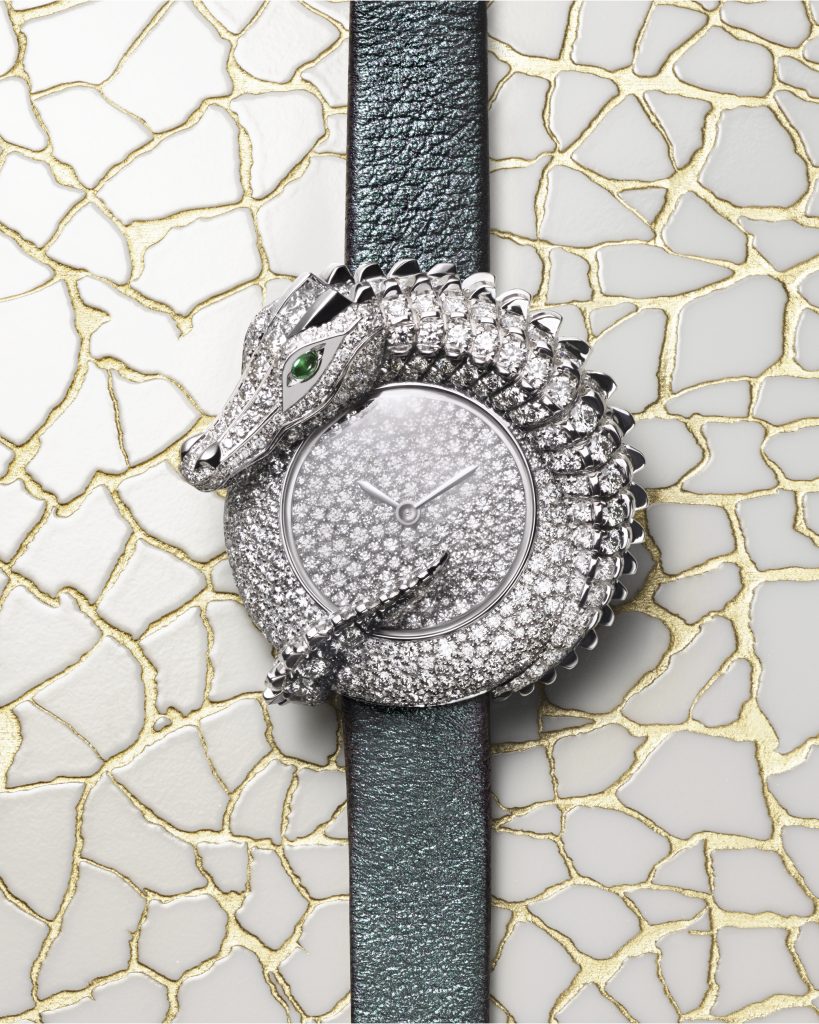
The two sensory bracelets, one crocodile, one tiger, make the more interesting argument. Both split the animal into two registers: a head rendered close to anatomically accurate, and a body that drops realism entirely for an abstract, fully articulated chain built to move like an actual spine. The crocodile’s jaw hinges shut on the clasp, its scales a lattice of diamonds echoing the geometry of the onyx spikes along its back, the strap punctuated with chrysoprase and rubellite, a colour decision that has nothing to do with what a crocodile looks like and everything to do with the house’s own palette.
The tiger takes a parallel approach: sapphire paving on the head, dumortierite quartz for the stripes, aquamarine eyes, a body built from moveable gold links set with chalcedony beads. Worn, either piece is meant to feel less like something shaped like an animal and more like the animal itself, loose on the wrist.
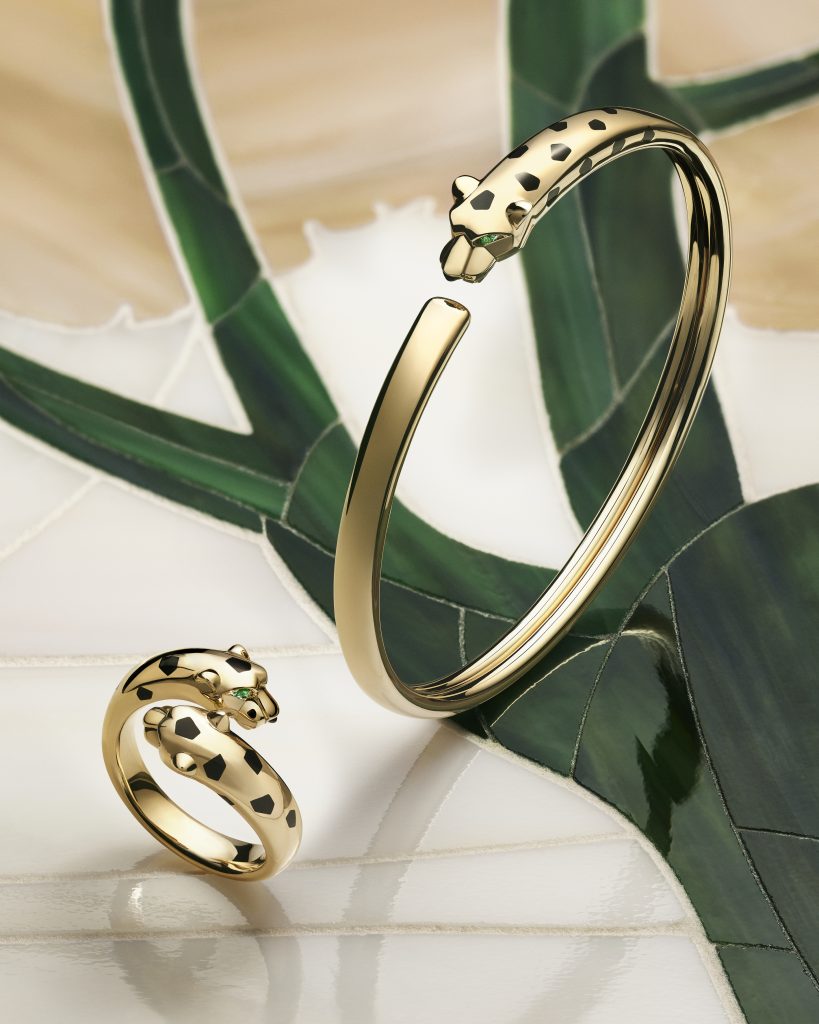
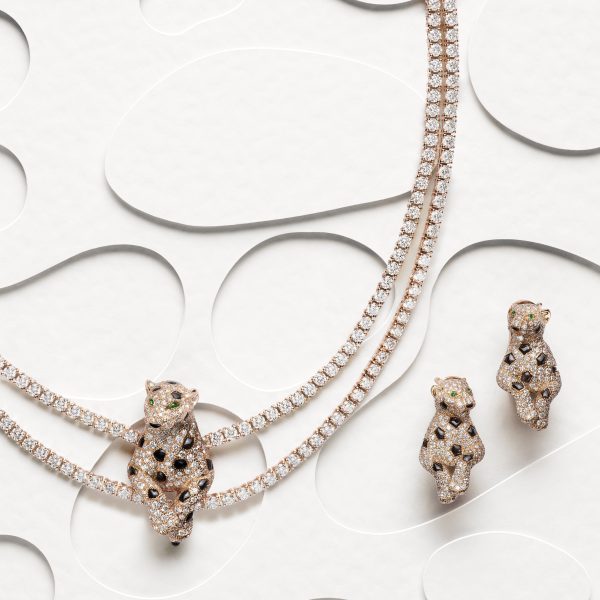
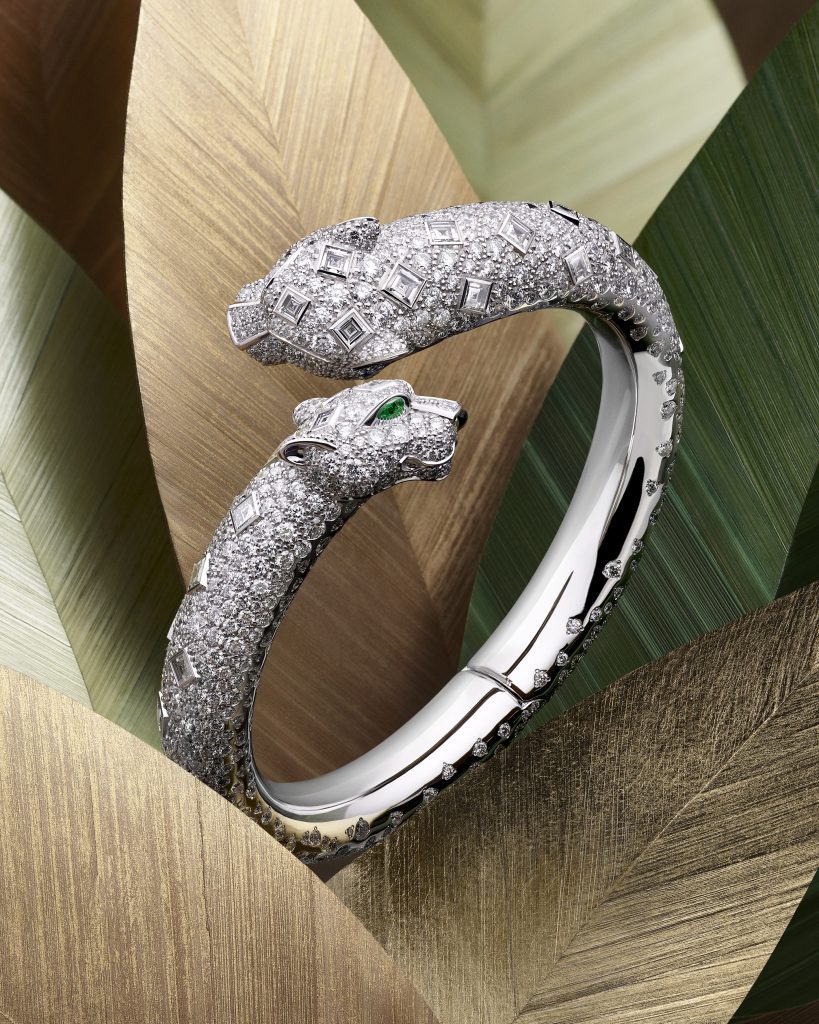
Then there’s the Panther, who has outranked every other creature in Cartier’s bestiary since she first went three-dimensional in 1948 and shows no sign of giving up the position. The new Panthère de Cartier bracelet, a solid white gold cuff entirely paved in diamonds, uses two setting techniques on the same surface, a denser caviar paving against a looser, fur-effect one, so light behaves differently depending on which patch of the coat you’re looking at. It’s a technical flex dressed up as a coat pattern.
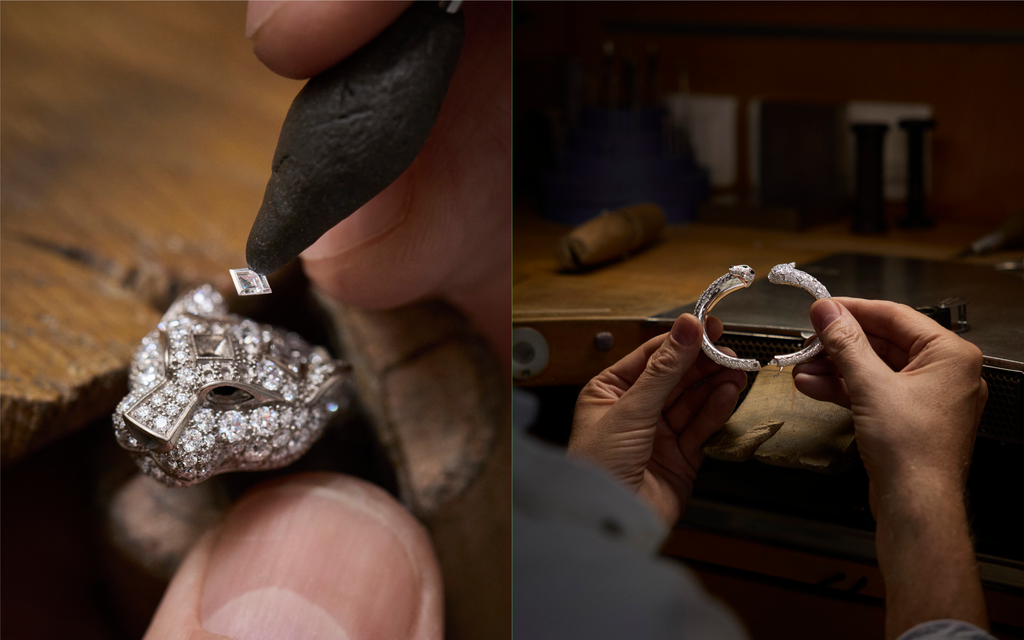
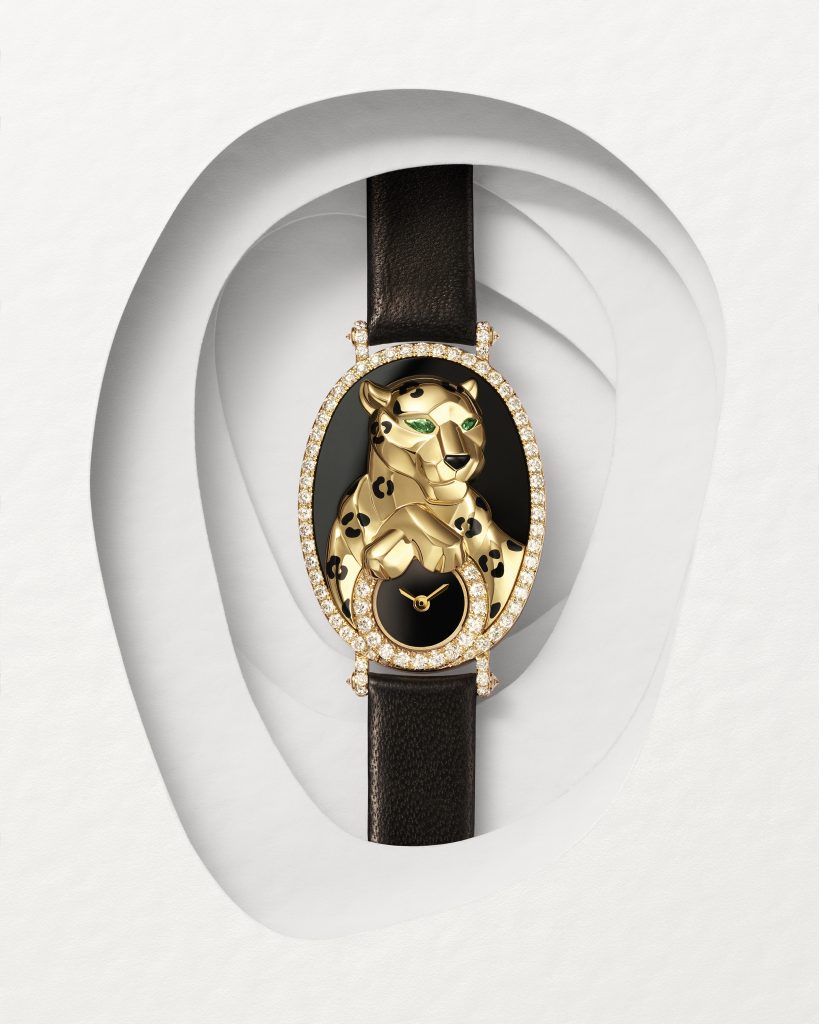
The strangest piece in the collection might also be the least showy: a medallion-shaped jewellery watch, made at Cartier’s Maison des Métiers d’Art in Switzerland, where the panther’s face is worked in cameo-style relief, onyx for the nose, tsavorite garnets for the eyes, diamonds along the bezel, the whole thing finished by a lacquerer trained to paint the animal’s spots by hand. It took three separate craft traditions to make a watch face.
Whether that’s the most honest thing about Into the Wild, or simply the most Cartier thing about it, is hard to say. Possibly both.