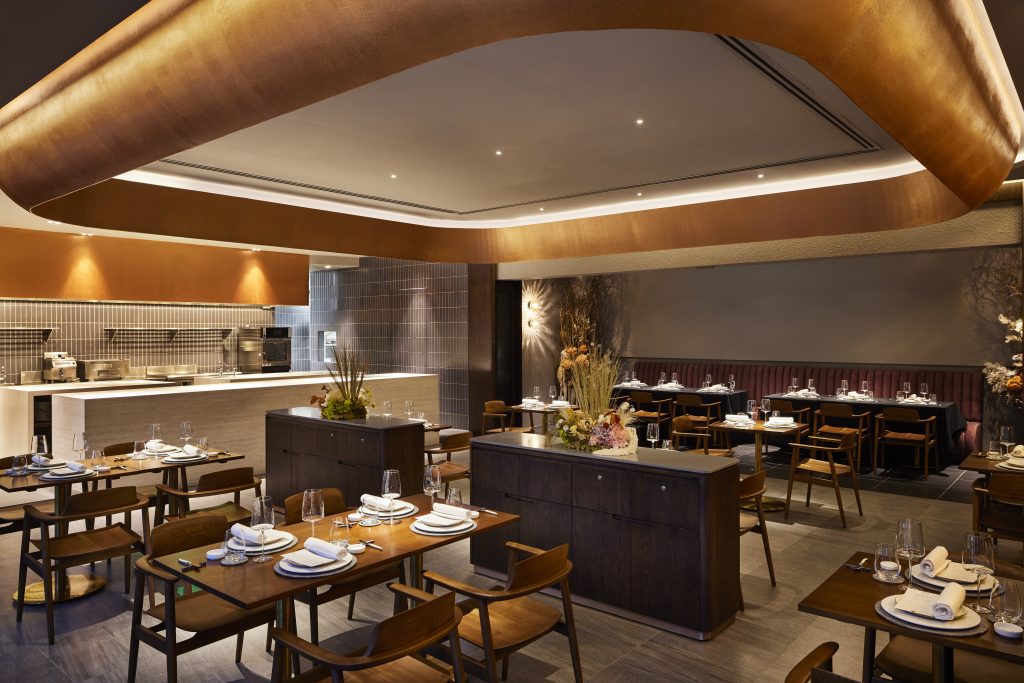
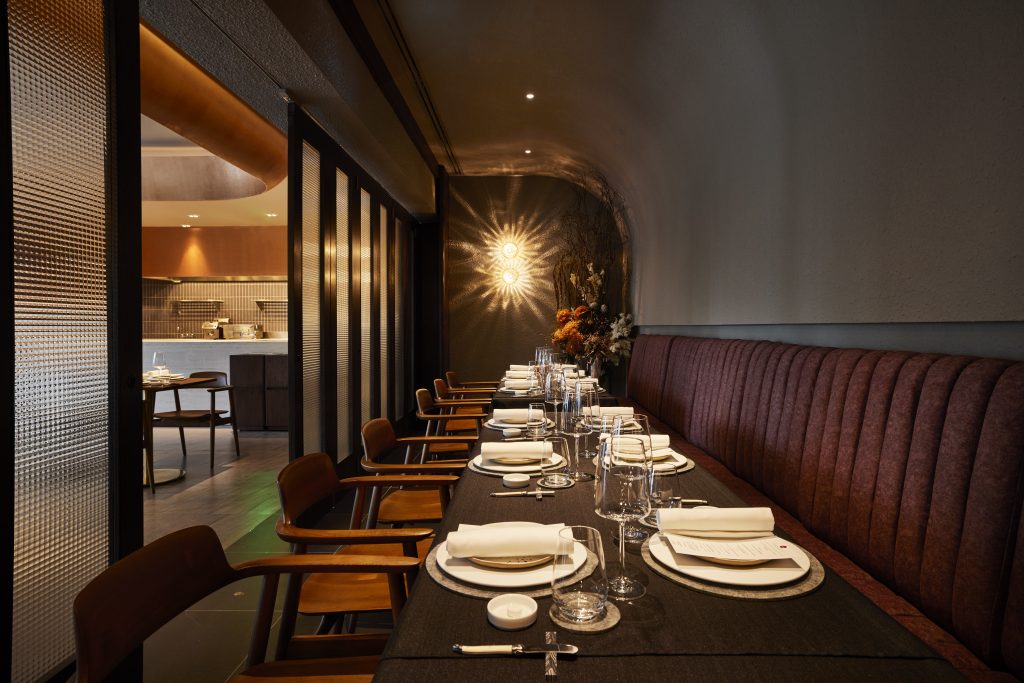
In its eleventh year, Skillet has done what few restaurants manage at that age: it has gotten quieter about itself. Not smaller. The dining room at Menara Hap Seng 3 (marble counter, dark wood, floor-to-ceiling glass, amber lighting, dried florals) is the same one that opened in 2024; it’s just less interested in performing sophistication for its own sake. “We’ve become more confident in who we are,” says Raymond Tham, the restaurant’s co-founder and executive chef, “less about proving ourselves through complexity, and more about creating meaningful experiences through seasonality, terroir, and memories.”
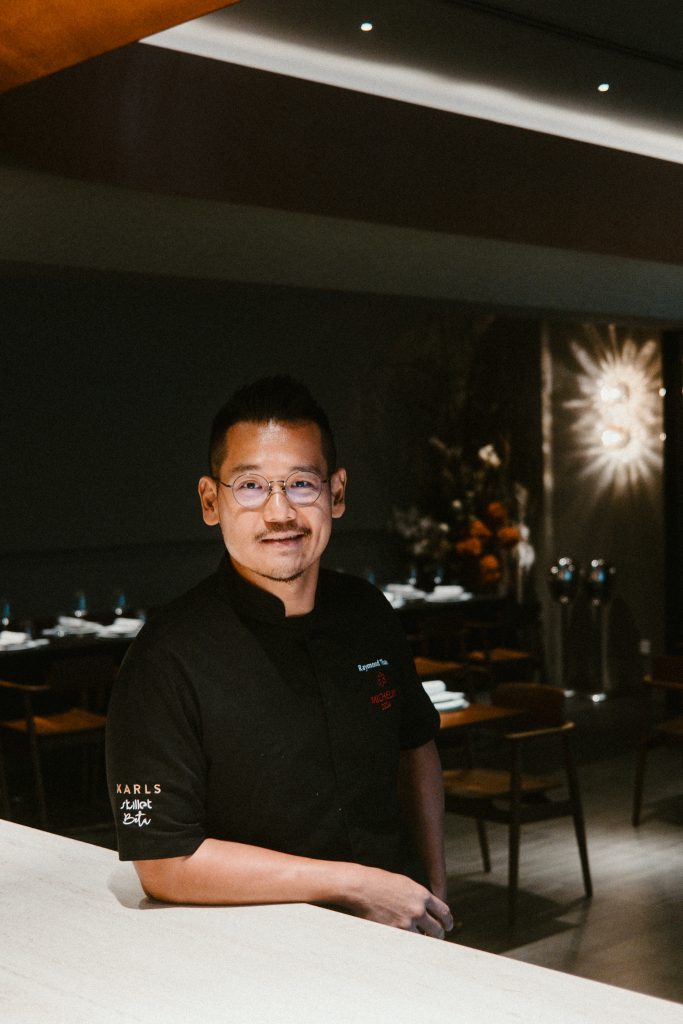
That confidence is the throughline of Midsummer Terroir, the seasonal menu marking Skillet’s anniversary. Tham opened the restaurant in 2015 after training in the UK and Bermuda, bringing back a version of modern European cooking built on structure and technique rather than spectacle. It has held Michelin recognition every year since 2023. Three years after Skillet, he opened Beta KL, a restaurant built around Malaysian regional cooking, which earned its own Michelin star in the guide’s second year in the country. For a long time, Tham treated the two kitchens as separate conversations, one European and one Malaysian. Midsummer Terroir is where that separation starts to give way. “The techniques we’ve refined at Skillet allow us to interpret local ingredients with more precision and clarity,” he says, “while the sensibility from Beta KL reminds us to stay grounded in culture, memory and local flavours. It’s not about merging them into one identity, but allowing them to coexist in a more honest way.”
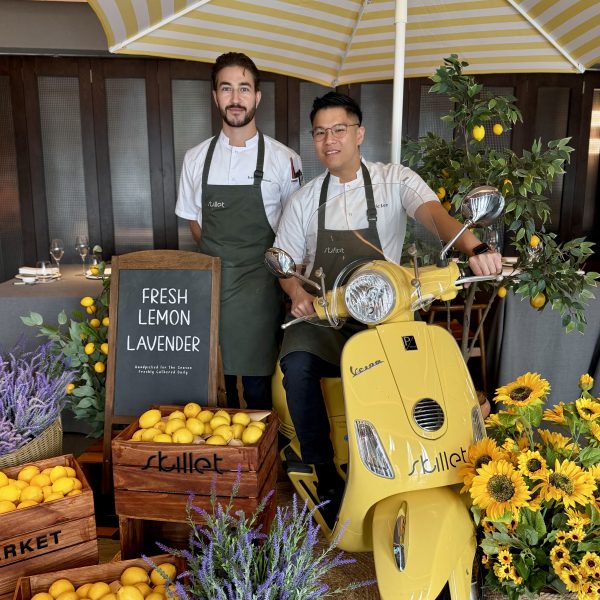
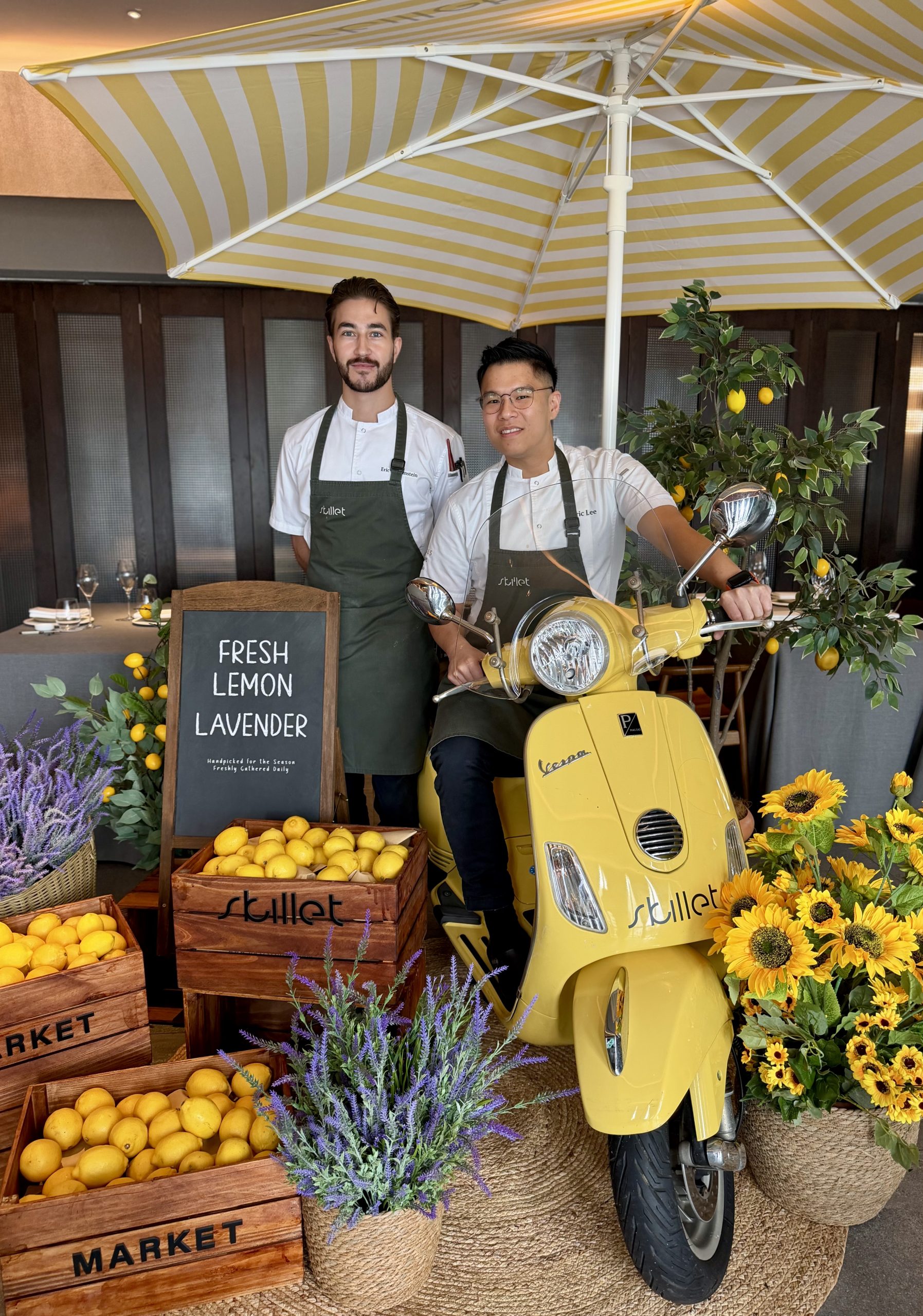
This is also the first menu built with a fuller kitchen. Chef de Cuisine Eric Lee has been at Skillet since 2018, working his way up from a Bachelor’s in Culinary Arts at Taylor’s University and an apprenticeship at Restaurant Émile in Toulouse to two Gold Medals in the Fish and Seafood category at Culinaire Malaysia. He is now joined by newly appointed Sous Chef Eric Lichtenstein, arriving from Stockholm by way of a MasterChef Sweden run and a restaurant he opened from scratch in his home city. For co-founder Alex Cheah, the hire was less about geography than about friction. “It’s less about geography and more about perspective,” Cheah says. “We wanted someone who brings discipline, creativity, and a different culinary lens that complements our existing team. It signals an openness to global influence while staying rooted in our core philosophy of precision and seasonal expression.”
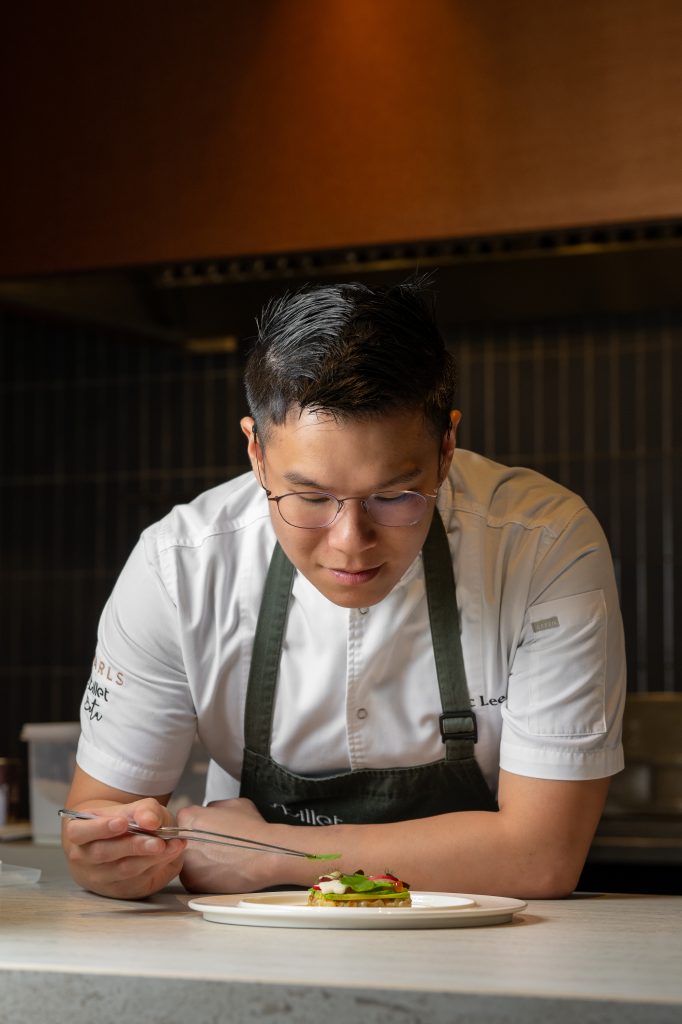
Tham describes his own role in that kitchen shifting accordingly, from author to editor. “My role has become more of a mentor — setting the direction, guiding the philosophy, and making sure the identity of Skillet remains clear,” he says. “The menu is not created by one person alone; it’s a conversation between generations, experiences, and ideas.” That conversation isn’t always smooth. “There are moments where perspectives differ. In a creative kitchen, disagreement is part of the process — whether it’s about flavours, techniques, or how far we should push an idea. The goal is never about one person being right; it’s about finding the version that best represents Skillet.”
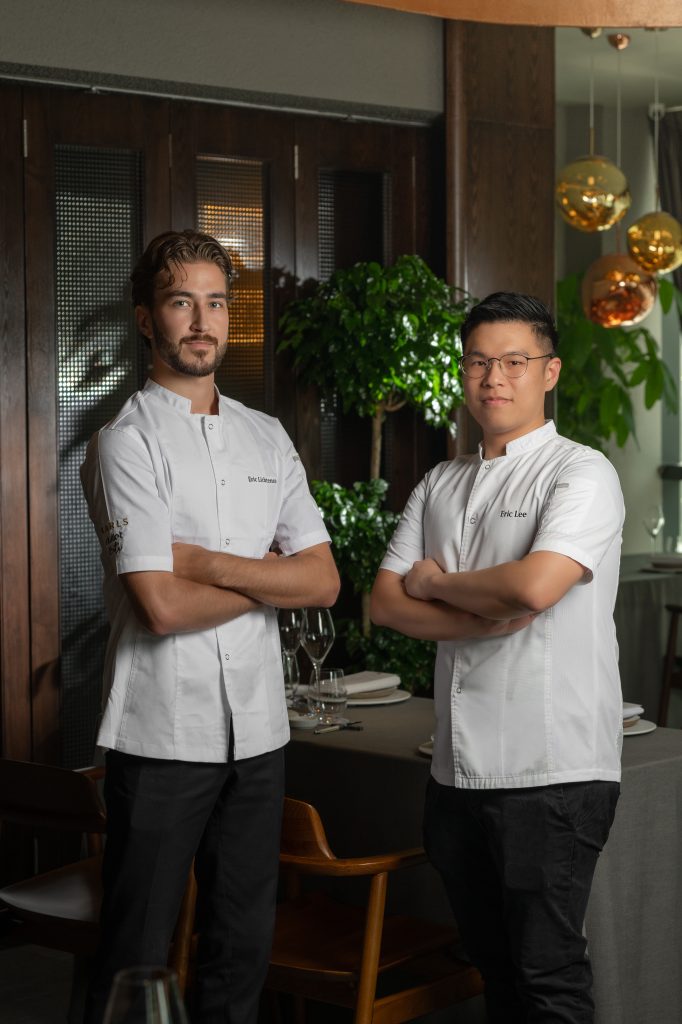
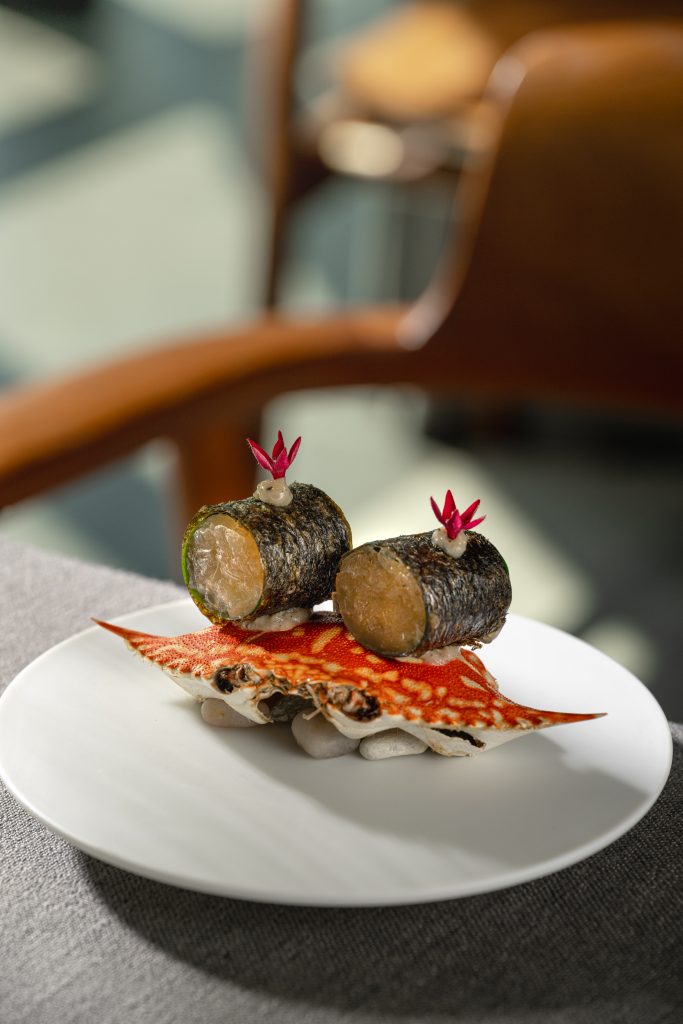
The menu itself opens on a trio of amuse-bouches that make the point plainly. Blue Swimmer Crab, sourced from the waters of Taiping, arrives with gazpacho and a crab shell jelly, cut through with watermelon and its pickled rind. The Sweet Potato Raggmunk borrows its base from a Swedish potato pancake, Lichtenstein’s contribution to the opening course, topped with Banon goat cheese from Provence and wild Tualang honey harvested from Taman Negara. The honey is not an incidental garnish. It comes from Honey I’m Home, a supplier working with the Batek community to source it directly from the forest, a relationship Tham points to when asked what provenance actually means to him. “It goes beyond just having a good ingredient,” he says. “It’s about supporting a system where nature, tradition, and livelihood are all connected. When we use ingredients like this, we’re not just cooking with flavour — we’re also acknowledging the people and cultures that make it possible.”
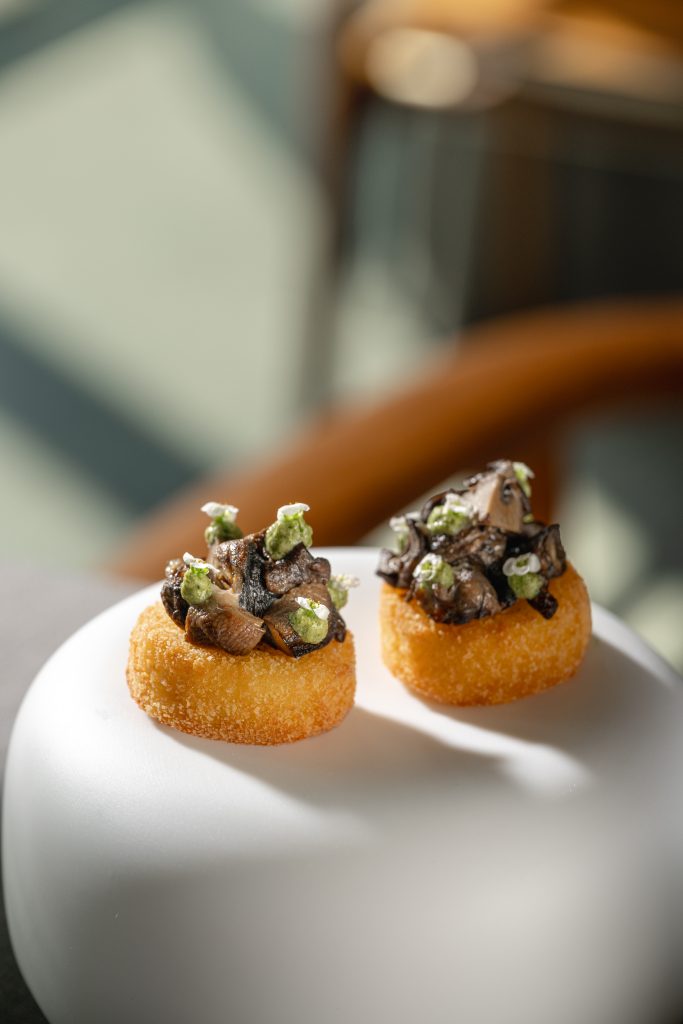
The third amuse-bouche, Escargot, is the clearest statement of the menu’s method. Paired with pickled mustard greens, it sets a French classic against a preserved vegetable central to Chinese cooking. “That combination actually came from our continuous exploration of identity and memory,” Tham says. “Pickled mustard greens carry a lot of cultural memories — the acidity, fermentation, and depth of flavour are things many of us grew up with. Pairing it with escargot was not about changing the French classic, but creating a conversation between two traditions.”
After bread and a seasonal tomato butter, the appetiser course turns more technical. Striped Jack is served raw-leaning and clean, lifted with kombu, dill and pomelo. Squid (local sotong jarum, stuffed with a delicate farce and lightly charred over charcoal in a nod to Provençal stuffed-squid preparation) is glazed with lavender and finished with a lemongrass emulsion, with celtuce added for crunch.
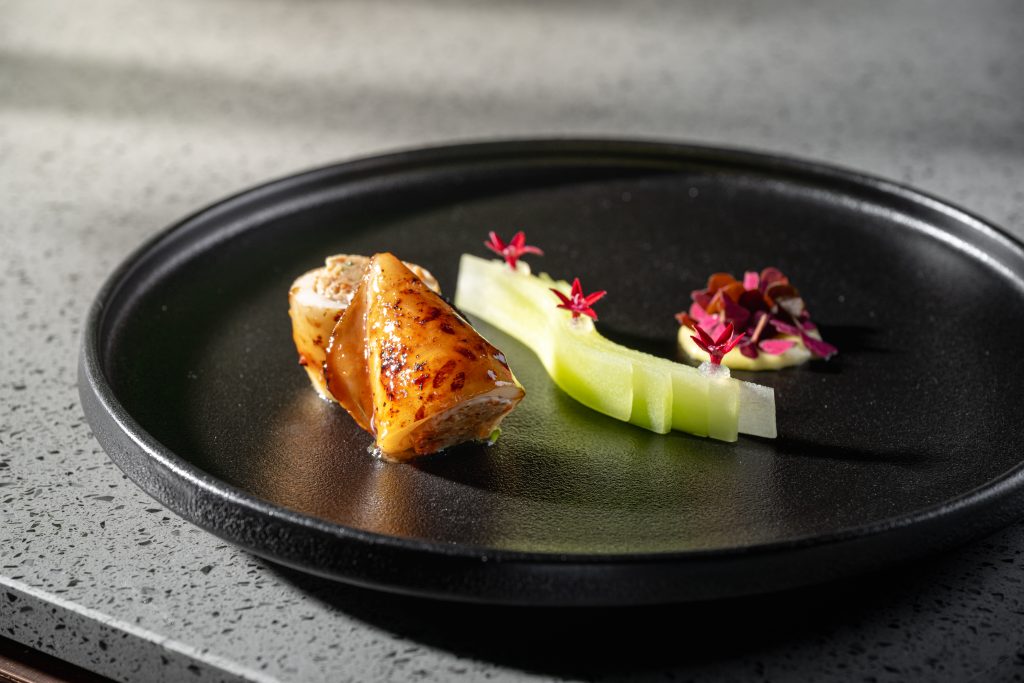
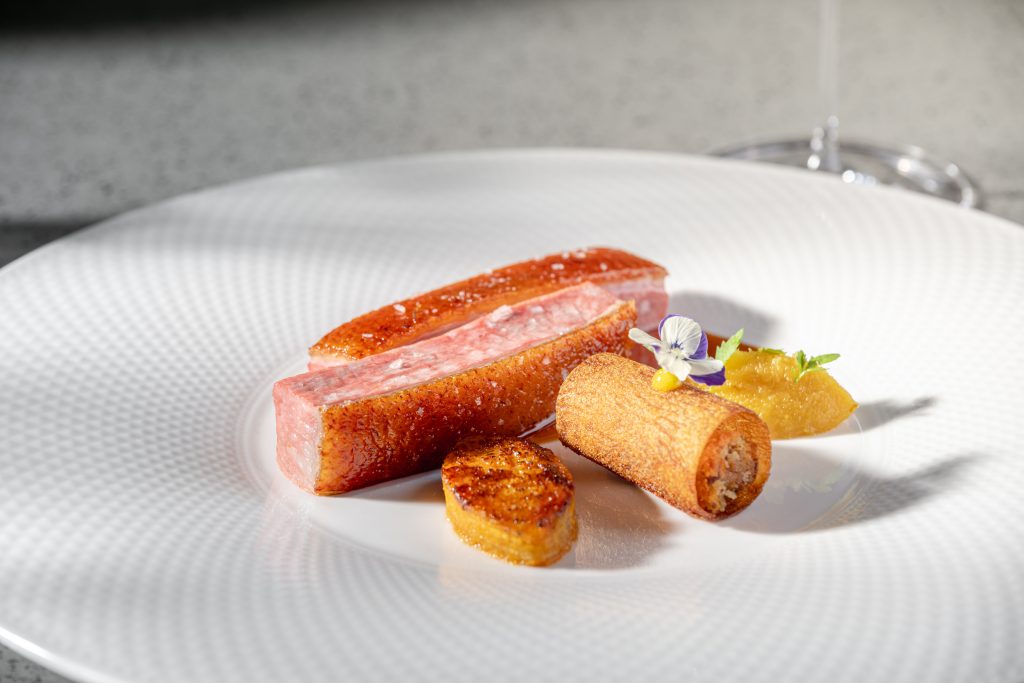
Quail follows, plated with burdock root, cherry and koji, a savoury-sweet combination that leans on koji’s slow fermentation rather than reduction for depth. The main course is where the menu’s three sensibilities sit most literally on one plate. Dry-aged, pan-seared Cherry Valley duck breast is served alongside kroppkaka, a traditional Swedish potato dumpling, a crisped potato cylinder dauphinoise, and fermented MD2 pineapple from Melaka to cut the richness: Swedish technique, French plating discipline, and Malaysian produce, arranged rather than blended on the same plate.
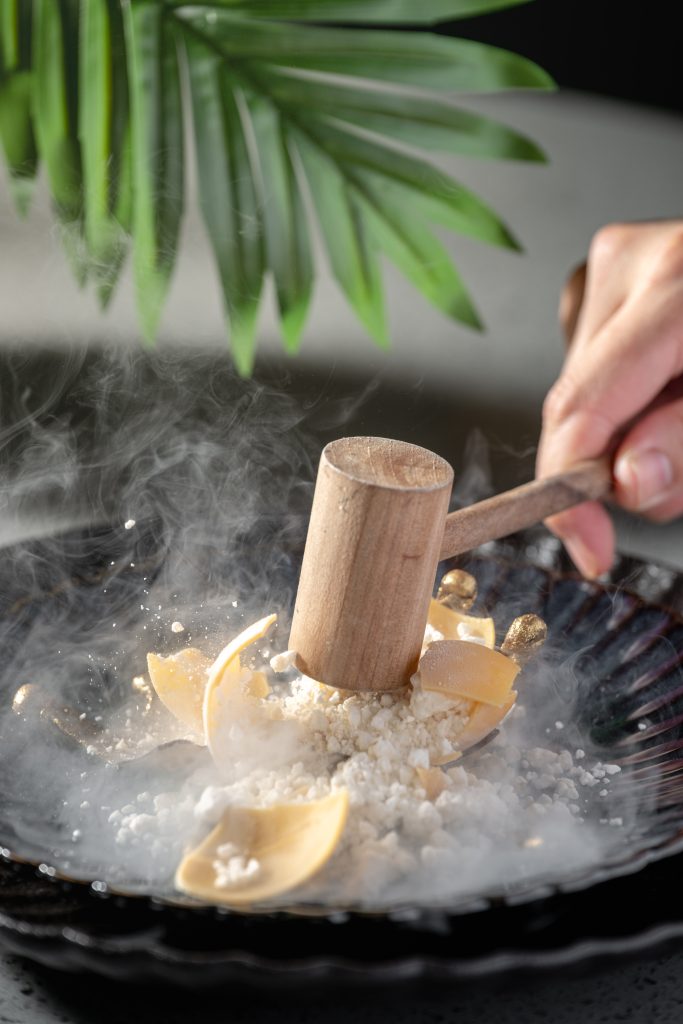
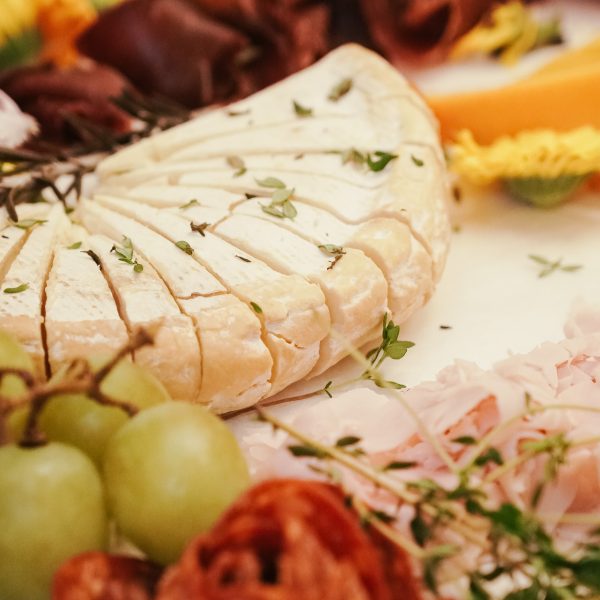
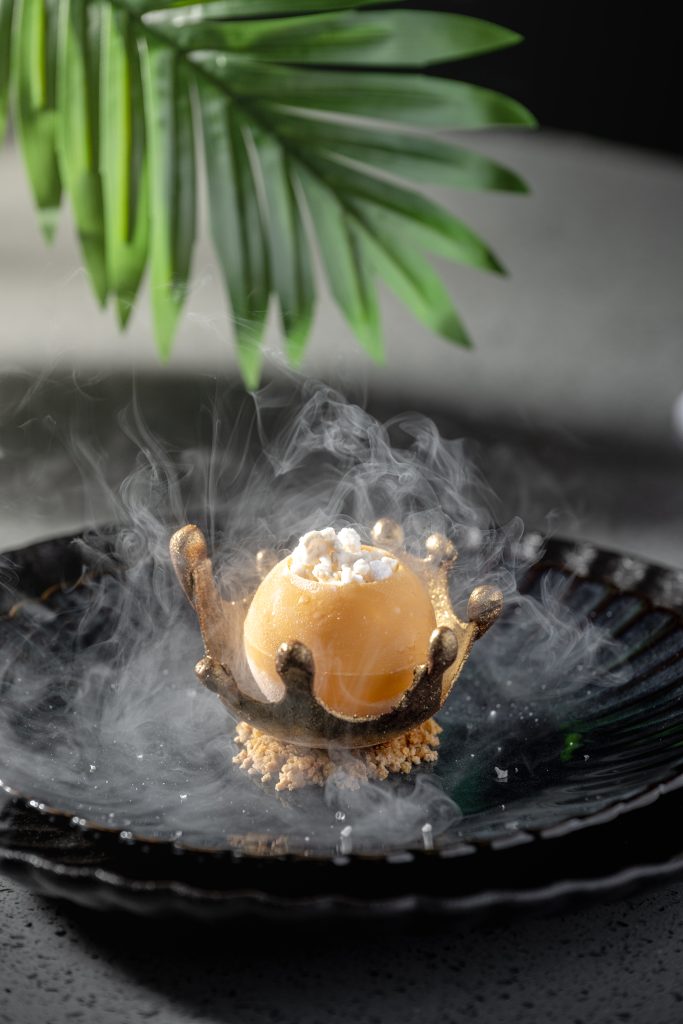
An unusual pre-dessert course follows: aged Comté, paired with Cameron Highlands purple corn and black rice, a cheese course doing the work a palate cleanser might elsewhere. It leads into dessert proper, Texture of Chocolate, a Skillet signature rebuilt each season rather than retired. This year’s version takes its shape from Barcelona’s Sagrada Família. Tham has described standing beneath the cathedral’s ceiling and recognising the same organic geometry the kitchen has been chasing in its chocolate work for years. Each piece on the plate is hand-sculpted, flavoured with smoked tea from the Wuyi Mountains, lemon, and blonde chocolate, before mignardises close the meal.
For Cheah, the measure of whether all of this has worked isn’t really about any single dish. “For Midsummer Terroir to be considered successful, it must resonate on multiple levels,” he says. “For guests, it should feel memorable, immersive, and emotionally grounded. For the team, it should be creatively stimulating yet operationally cohesive. For the brand, it should reinforce Skillet’s direction — consistent evolution without losing its identity. Success is when the experience feels both intentional and effortless.”
He places that ambition against a Kuala Lumpur dining scene he’s watched change shape over eleven years. “Fine dining has evolved from being largely 5-star hotel and international chain-led to something far more mature and experience-focused,” Cheah says. “There is now a stronger emphasis on storytelling, sustainability, and identity — not just technique. Skillet has grown alongside this shift, and today sits in a space that balances refinement with accessibility, while continuing to evolve its own voice rather than following trends.”
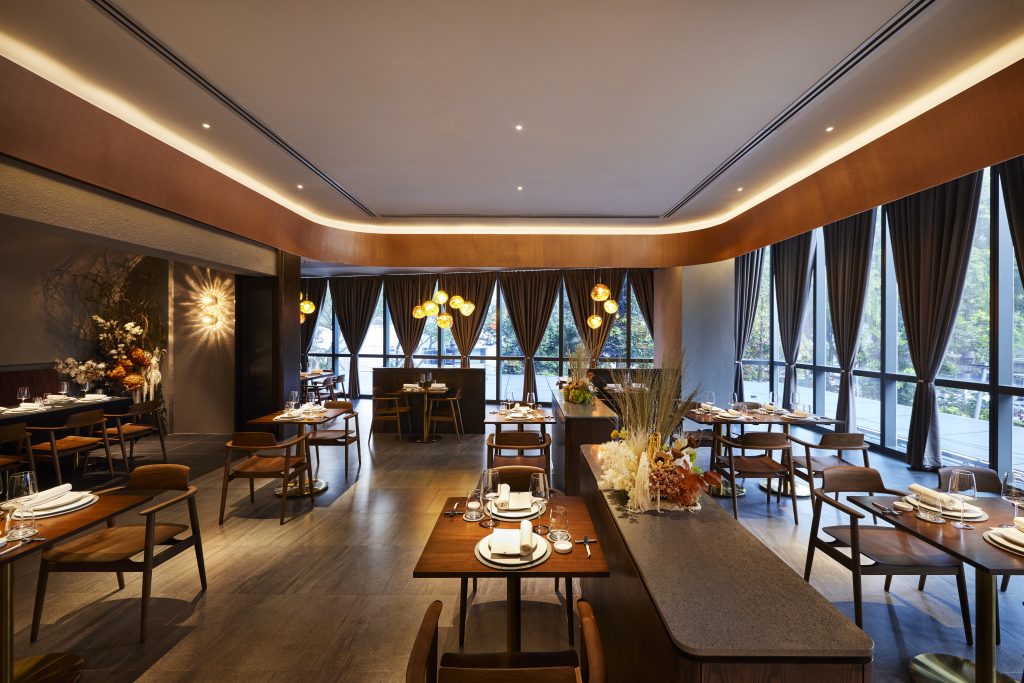
That positioning has been backed up on paper: Michelin recognition every year since 2023, a Tatler Best Spotlight in 2026, and a place within KARLS Group’s wider portfolio of dining concepts in Malaysia. But none of that was the point of this particular menu, on Cheah’s telling; it was a way of checking whether the kitchen, in its current, larger form, could still say something specific rather than simply competent.
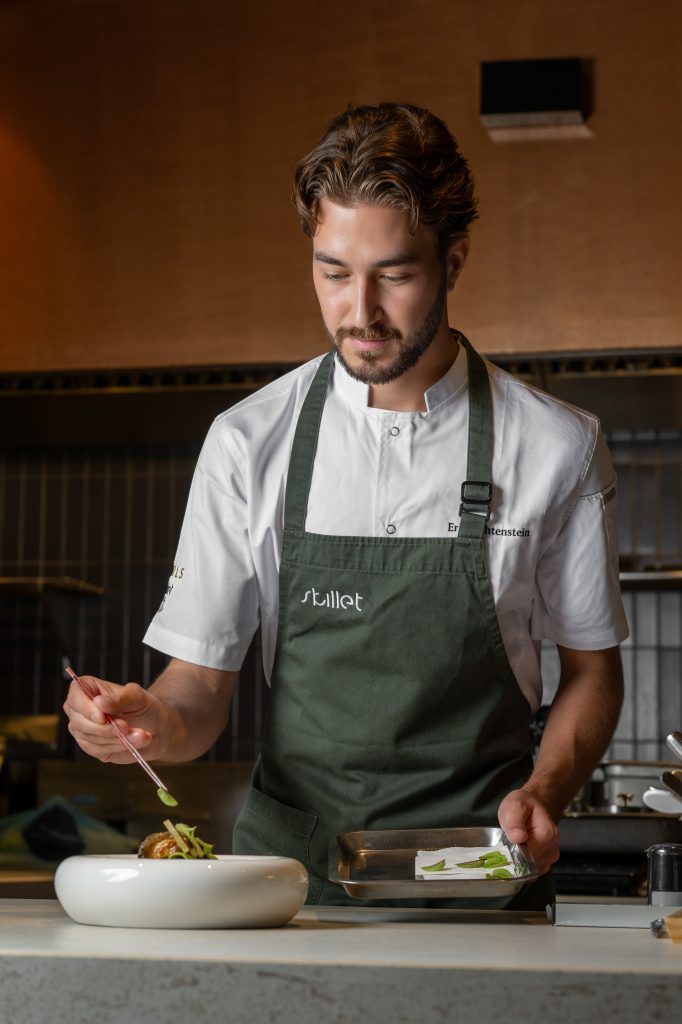
It’s a fitting way to sum up a menu that spends four courses folding a Swedish pancake, a French mollusc, and a Melaka pineapple into the same conversation without asking any of them to apologise for the others. Eleven years on, Skillet’s argument hasn’t changed: provenance and precision aren’t opposing forces. What has changed is how quietly it makes that case.