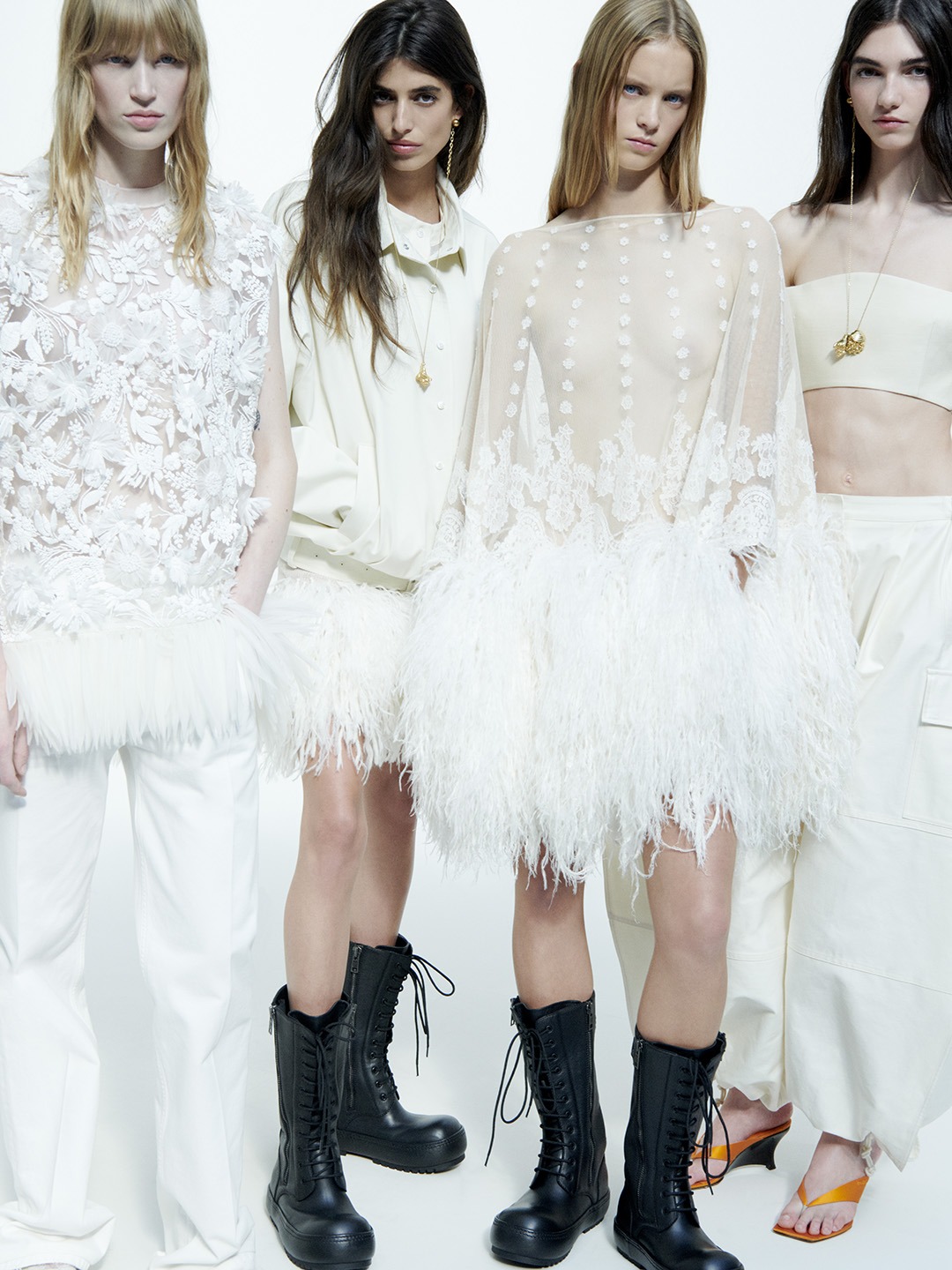
Couture usually lives behind a rope. For Summer 27, Pierpaolo Piccioli has taken Balenciaga’s out of the atelier and put it on denim, leather jackets and a sneaker that has given up holding its shape.
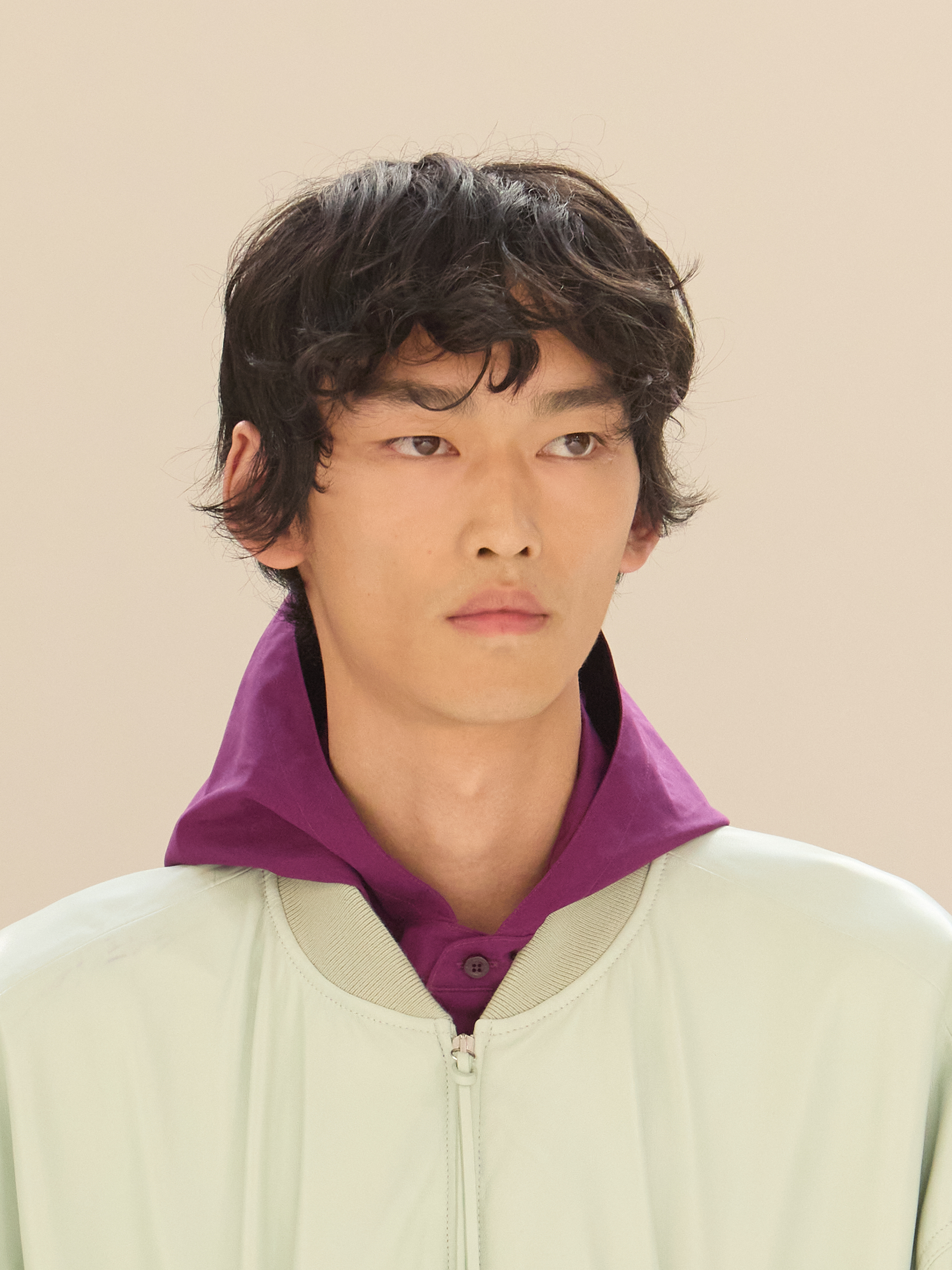
Couture has an image problem. It lives behind velvet ropes, sells to a few hundred people and tends to be discussed in lowered voices, like a very rich relative who rarely visits. For Summer 27, Pierpaolo Piccioli has decided that Balenciaga’s couture should come out to dinner. The techniques first used in the House’s 55th Couture Collection are applied to ready-to-wear for women and men, and the garments they land on are deliberately ordinary: denim jeans, shirts, t-shirts, bombers.
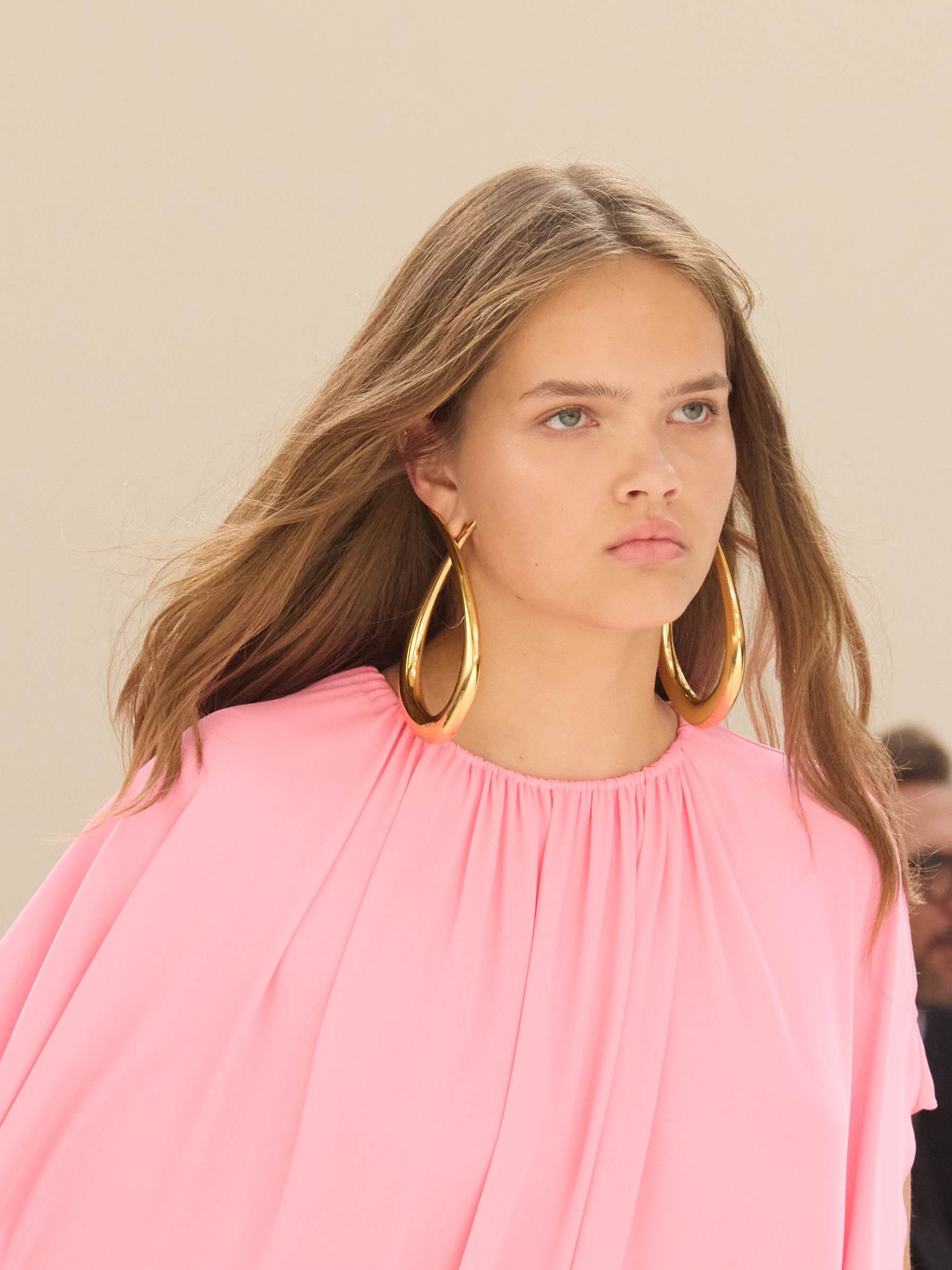
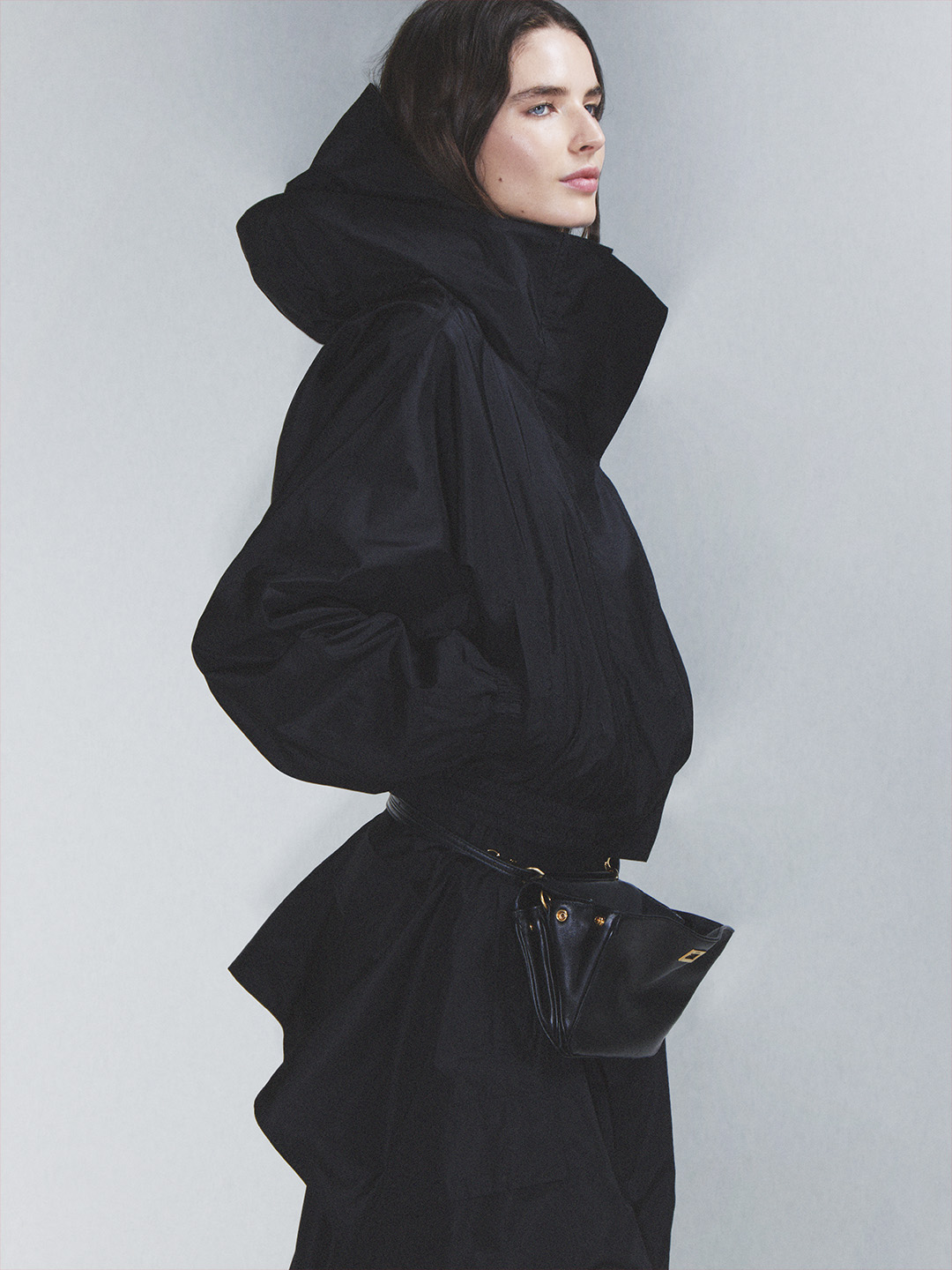
The idea, as the House puts it, is couture as a working method rather than a luxury. Each piece begins in the ateliers, where draping and forming decide its architecture before anything else happens. The notes return again and again to the hand, to what a person does to cloth that a machine cannot quite be asked to do. Couture, they point out, can be translated as stitching, and a stitching technique borrowed from the inner structure of tailoring now gives new volume to leathers and cottons. The result is basque shapes that refer to Balenciaga’s archive and turn up on t-shirts and leather jackets. A basque on a t-shirt is the kind of thing that makes you look at the t-shirt again.
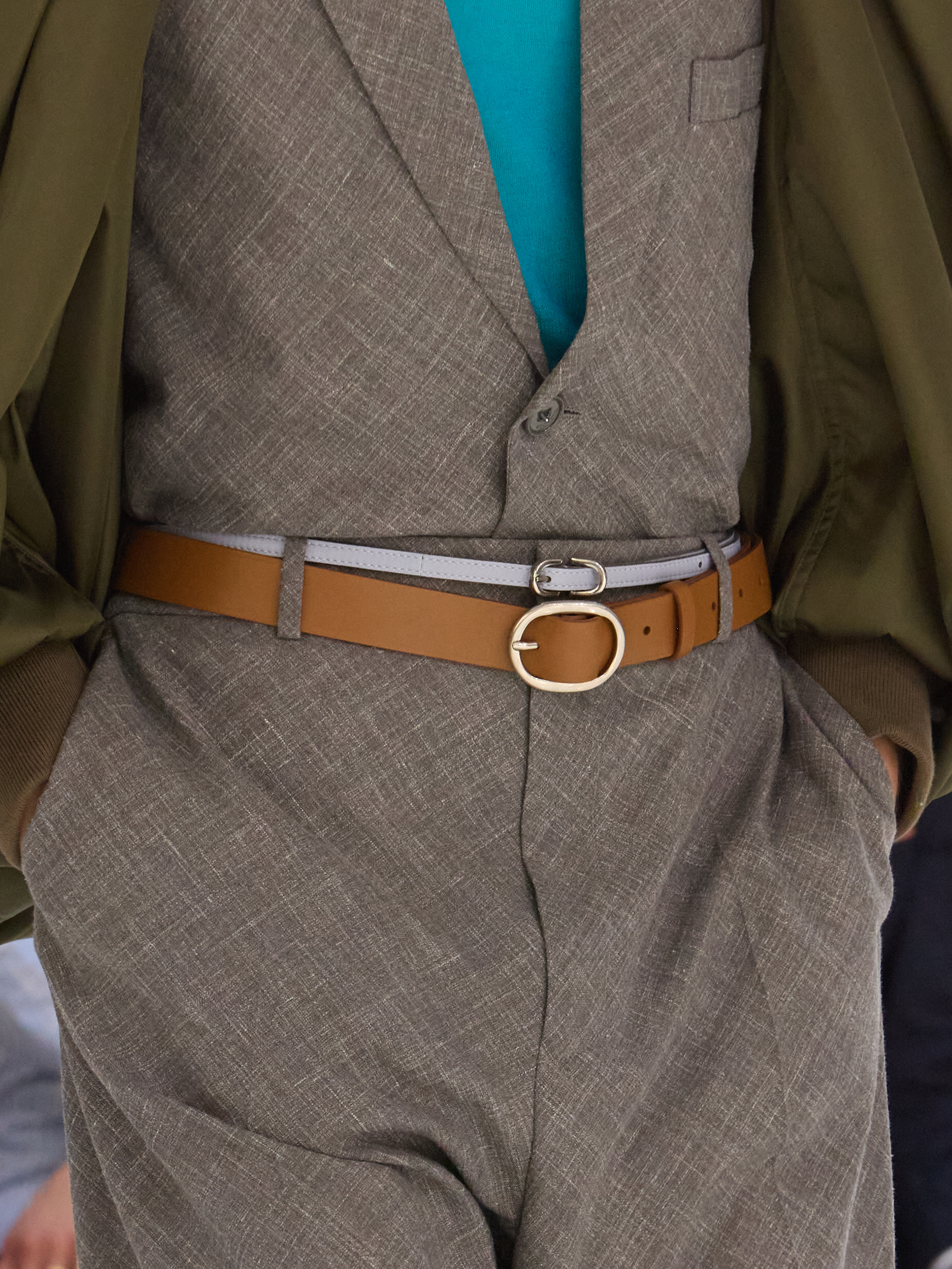
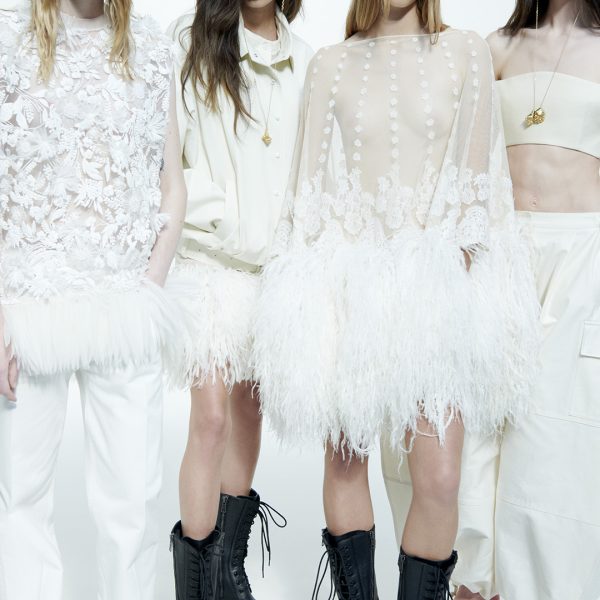
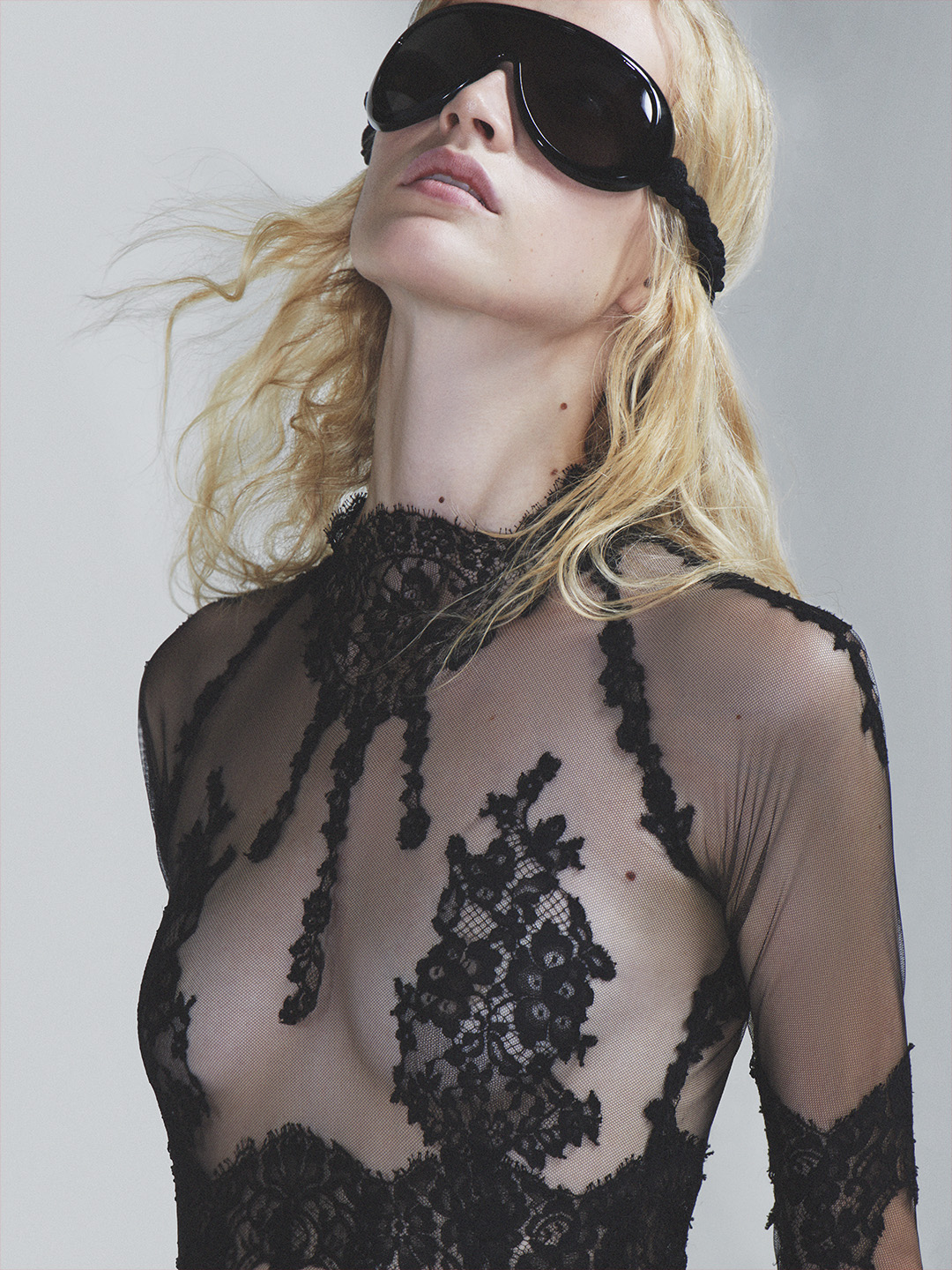
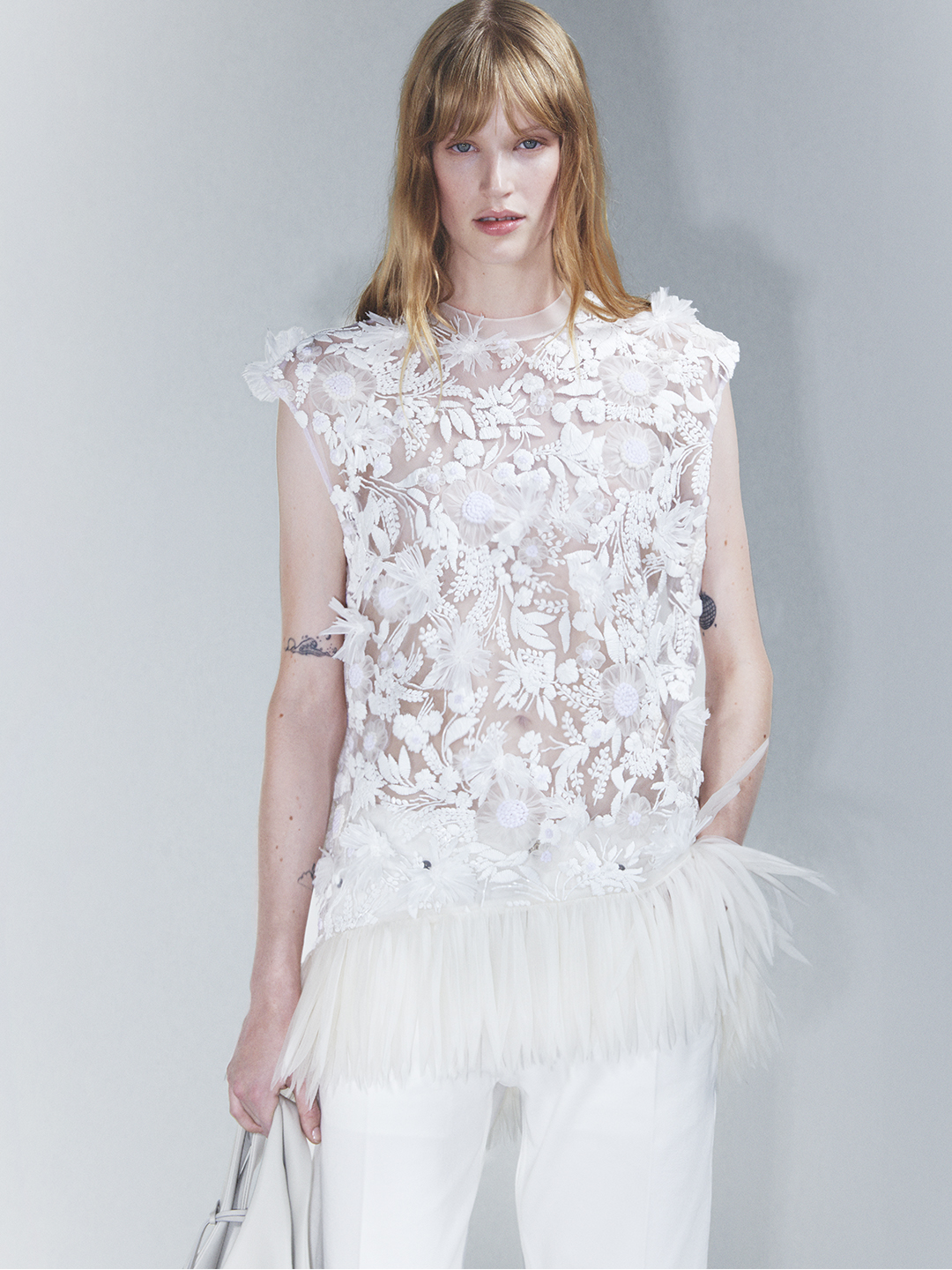
Bias cutting does similar work on the familiar. Evening dresses get it, but so do jeans, shirts and men’s suiting, which keep their identity while changing how they sit on the body. Calais lace insertions and cutwork open small windows onto the skin, and the House is careful to say they are there as structure, not decoration. The overall aim is softness and ease, clothes that feel “as if in your own skin”.
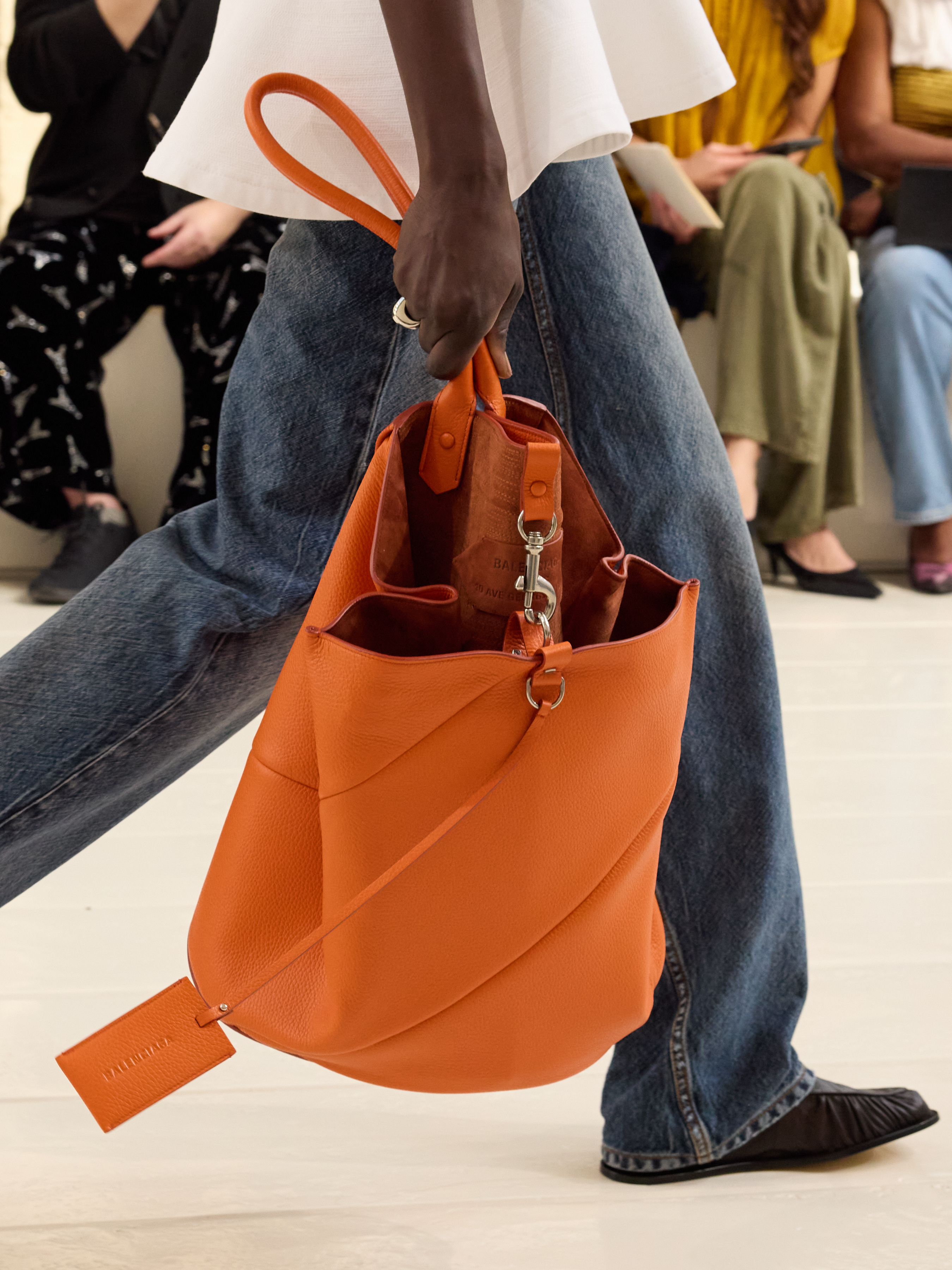
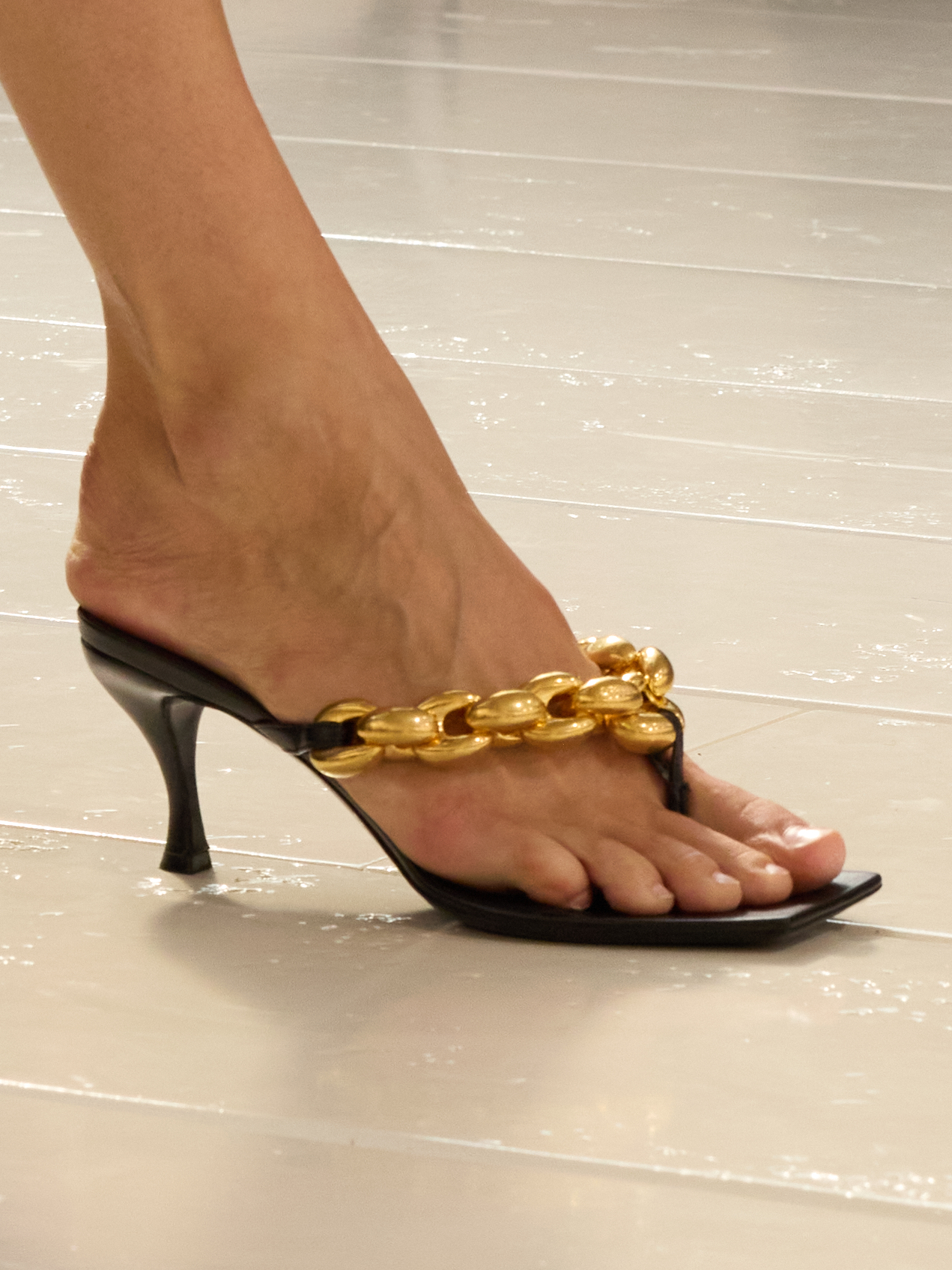
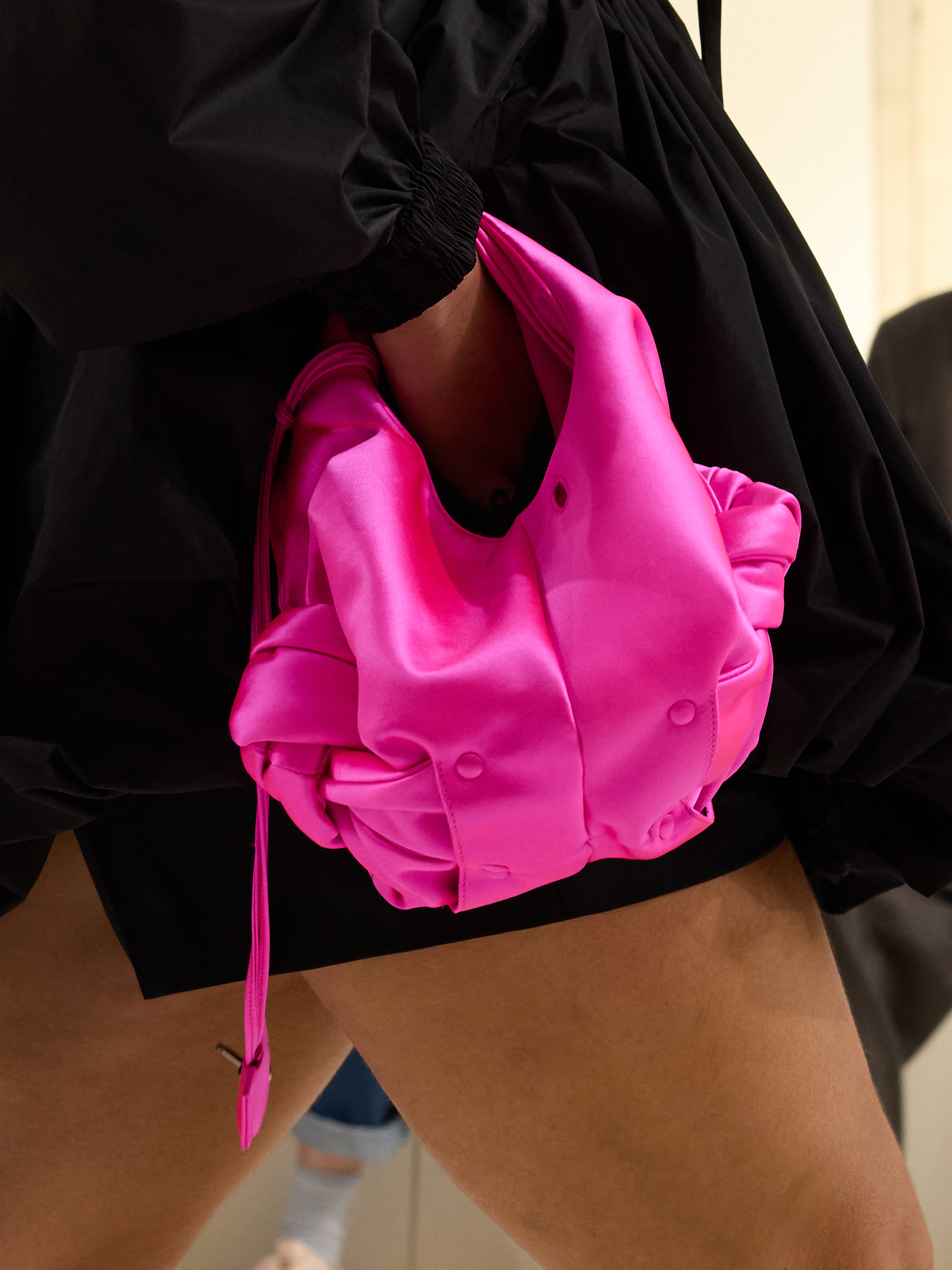
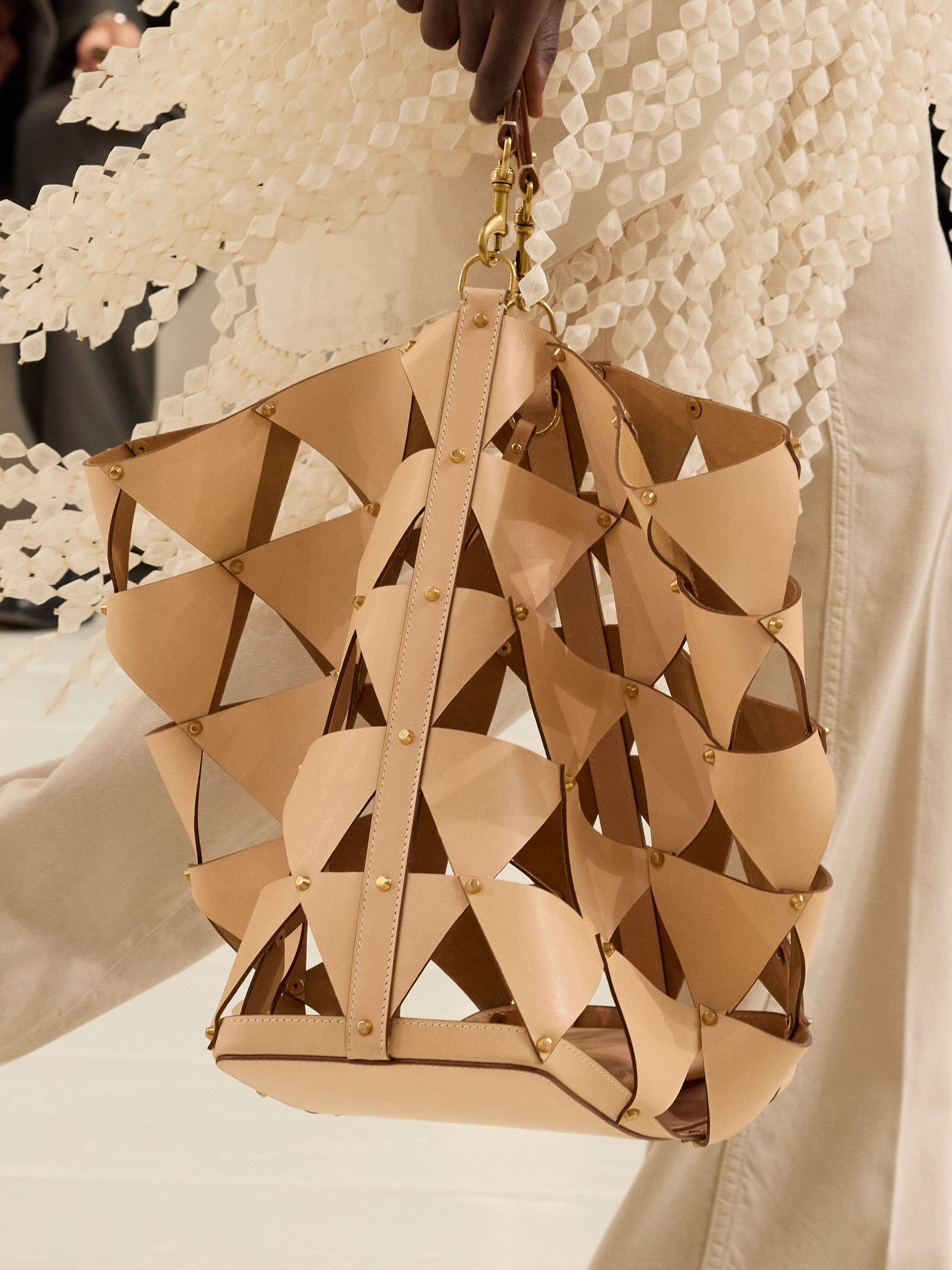
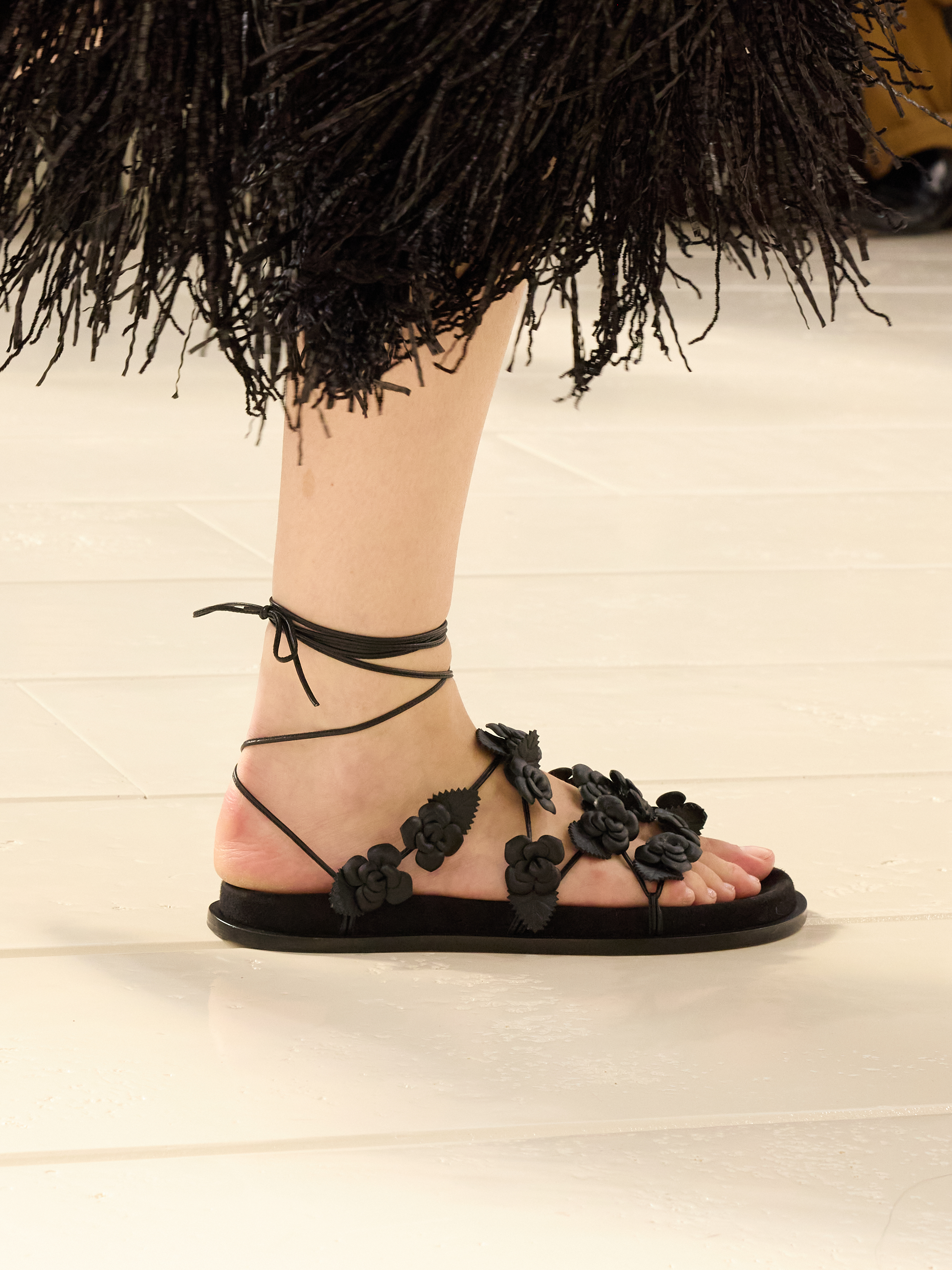
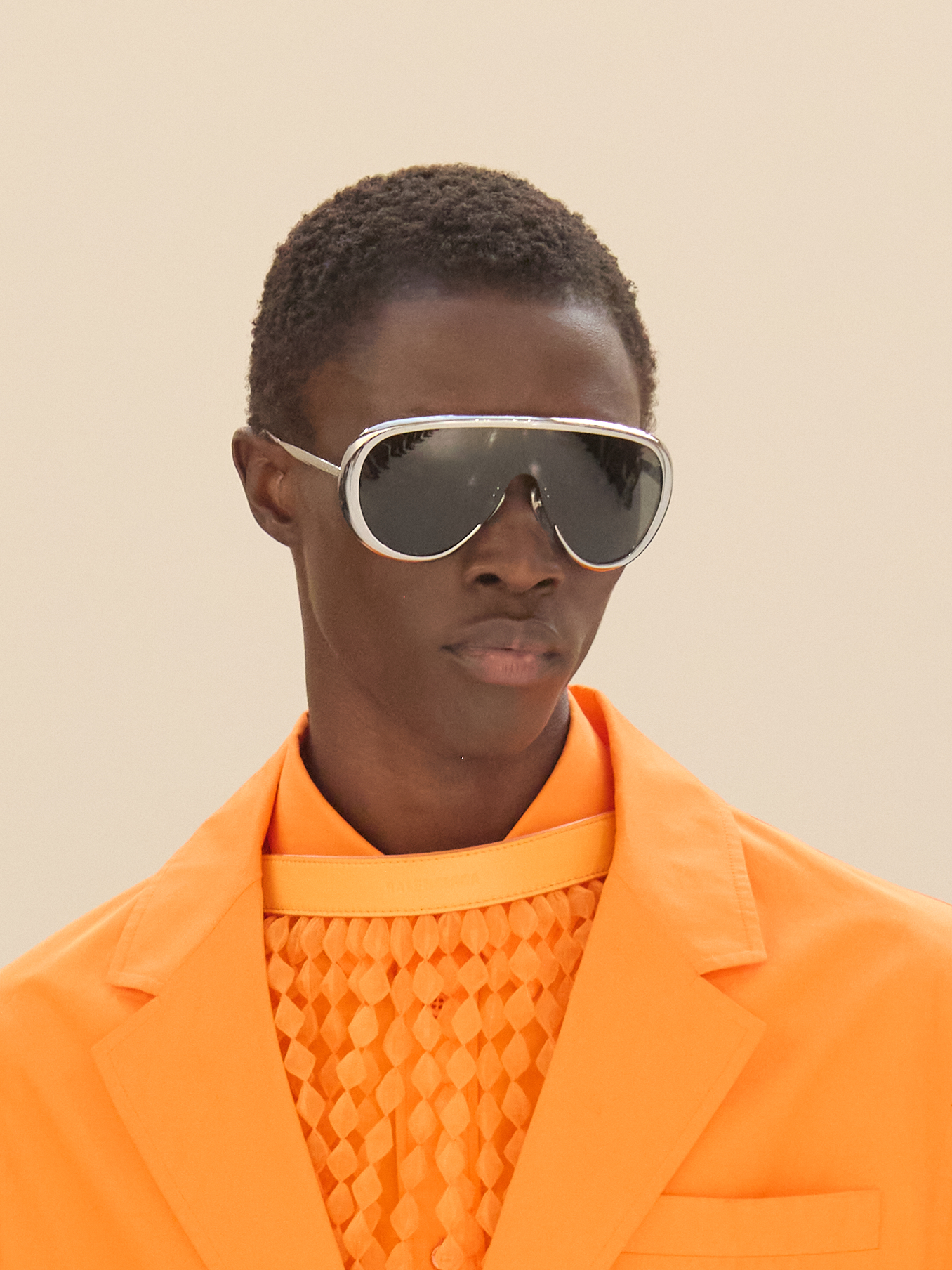
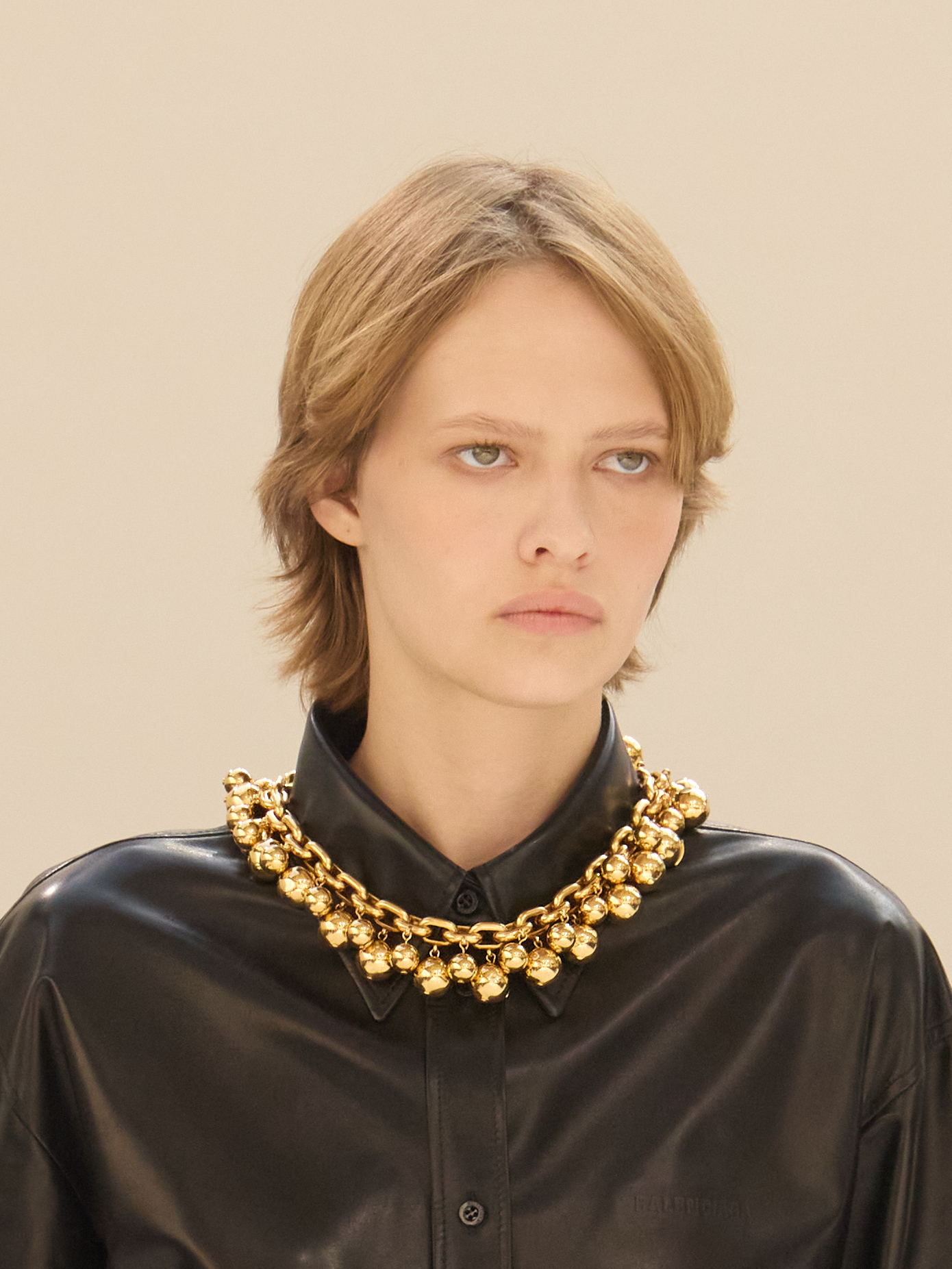
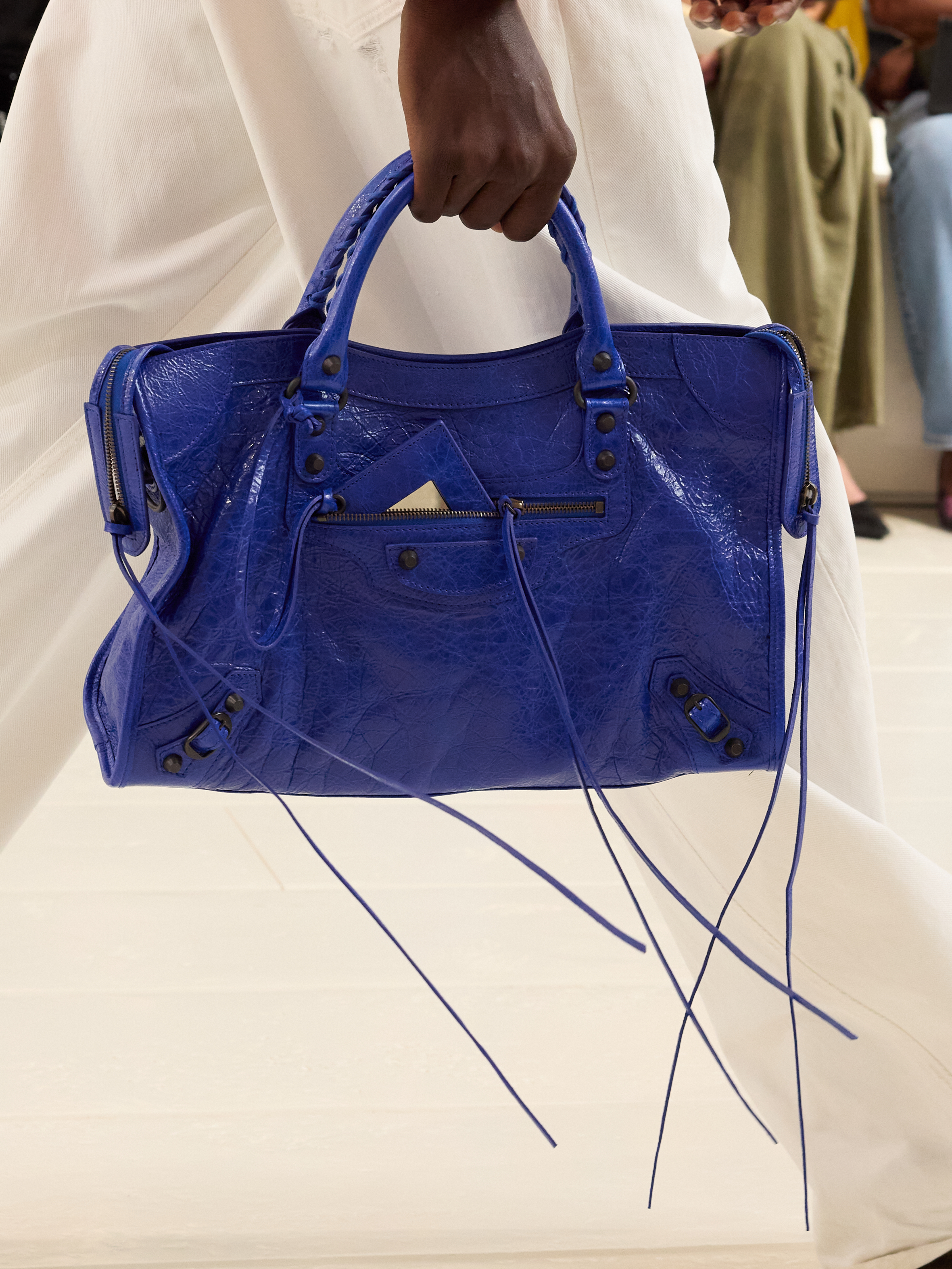
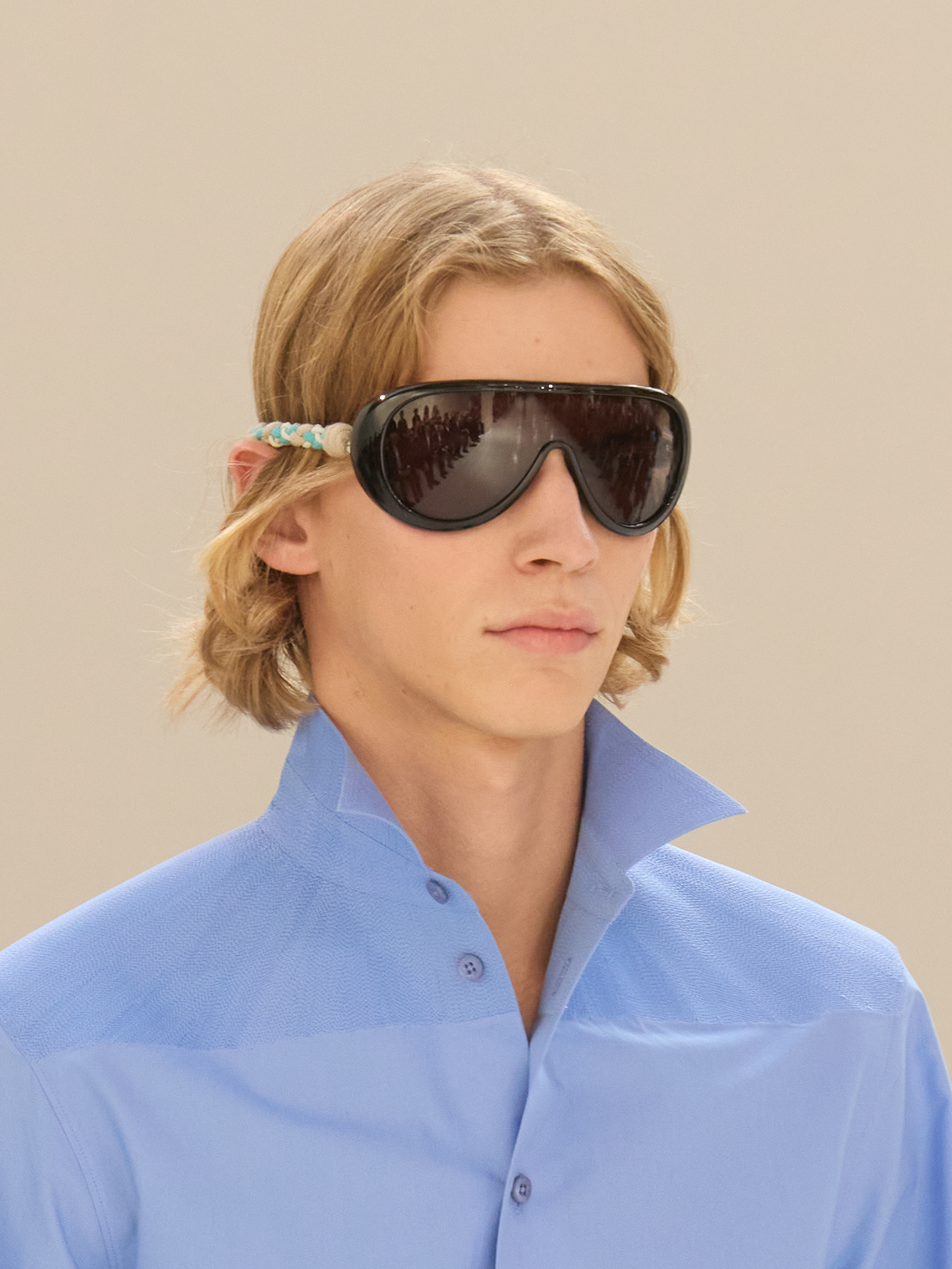
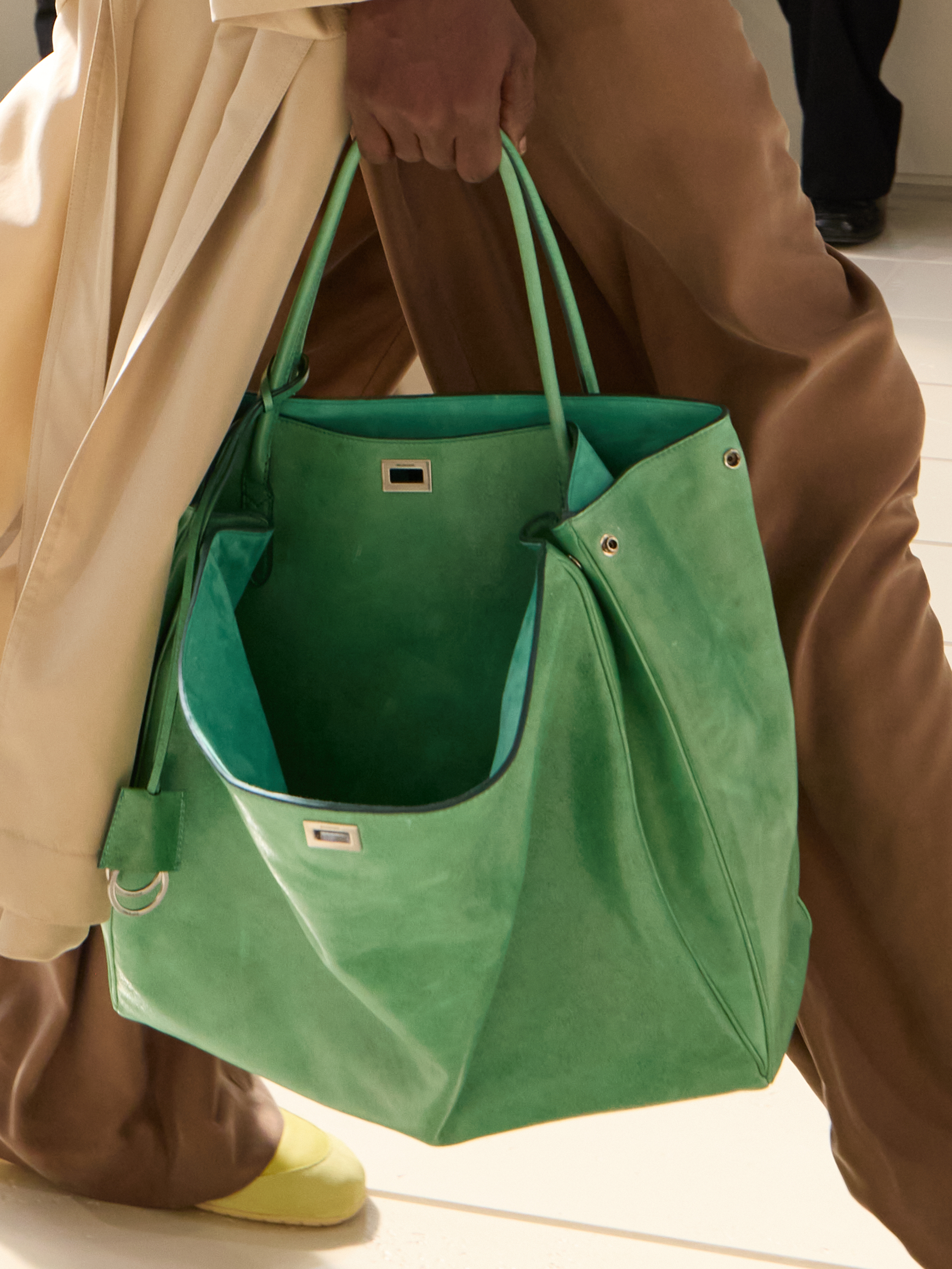
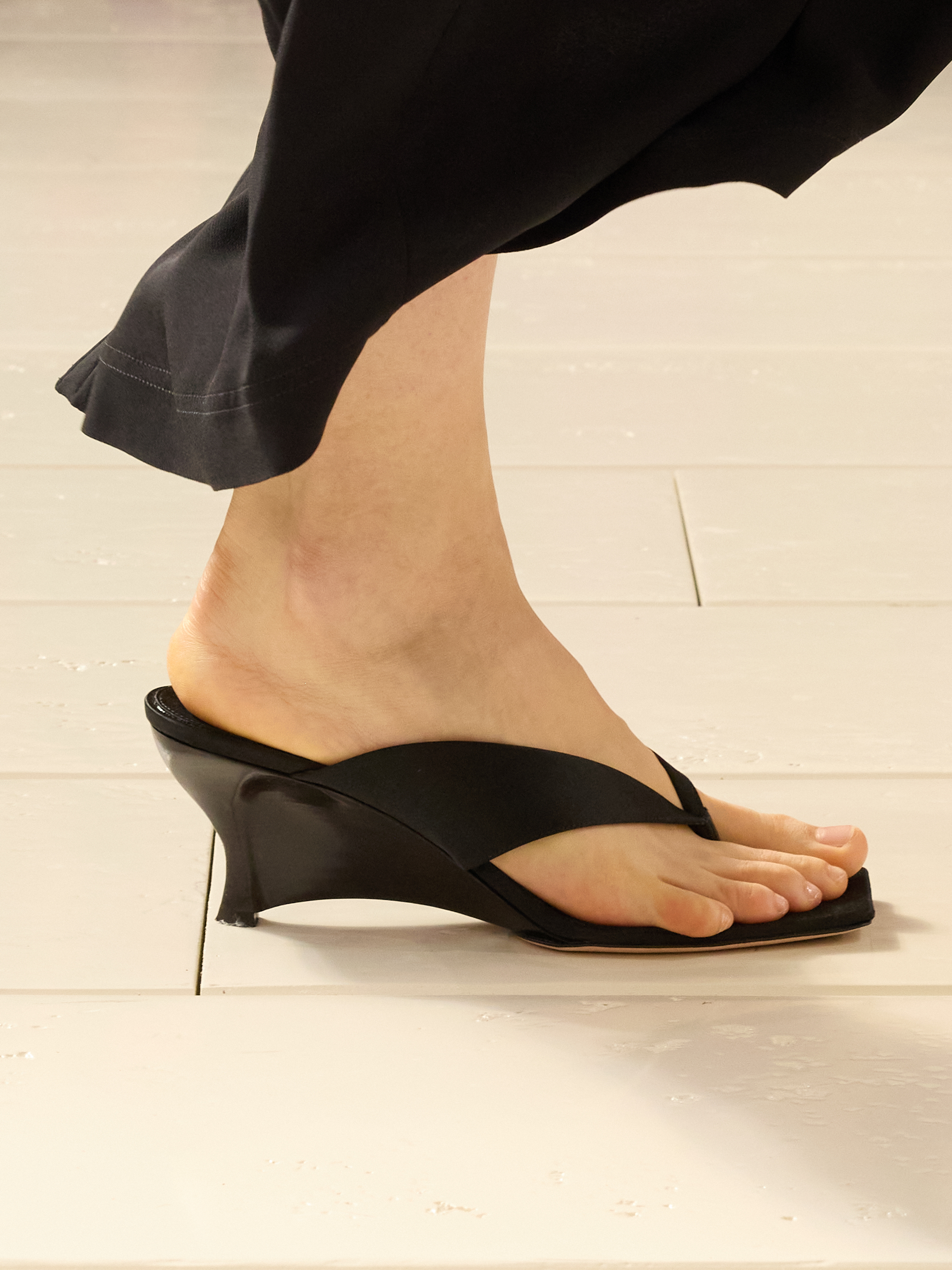
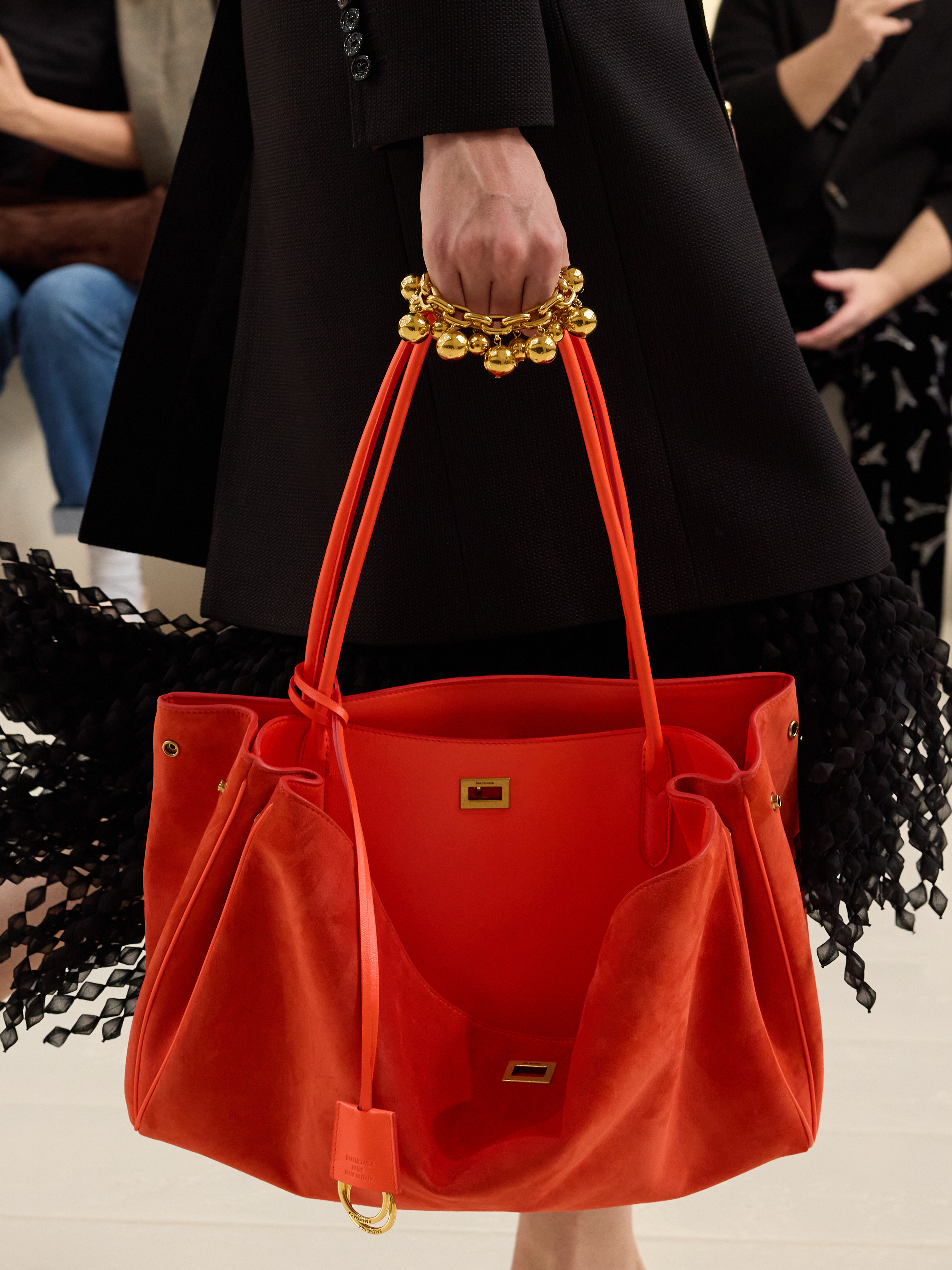
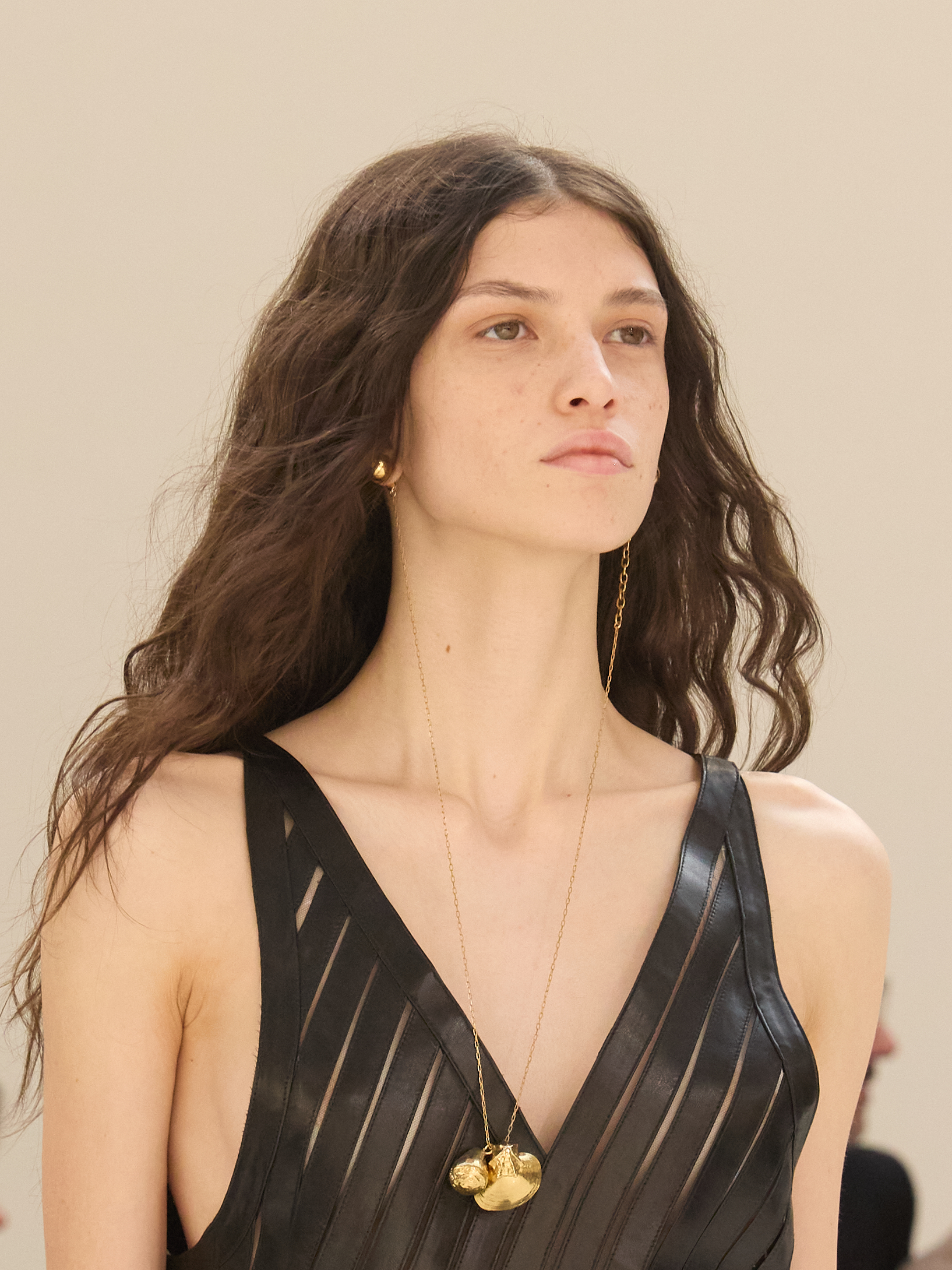
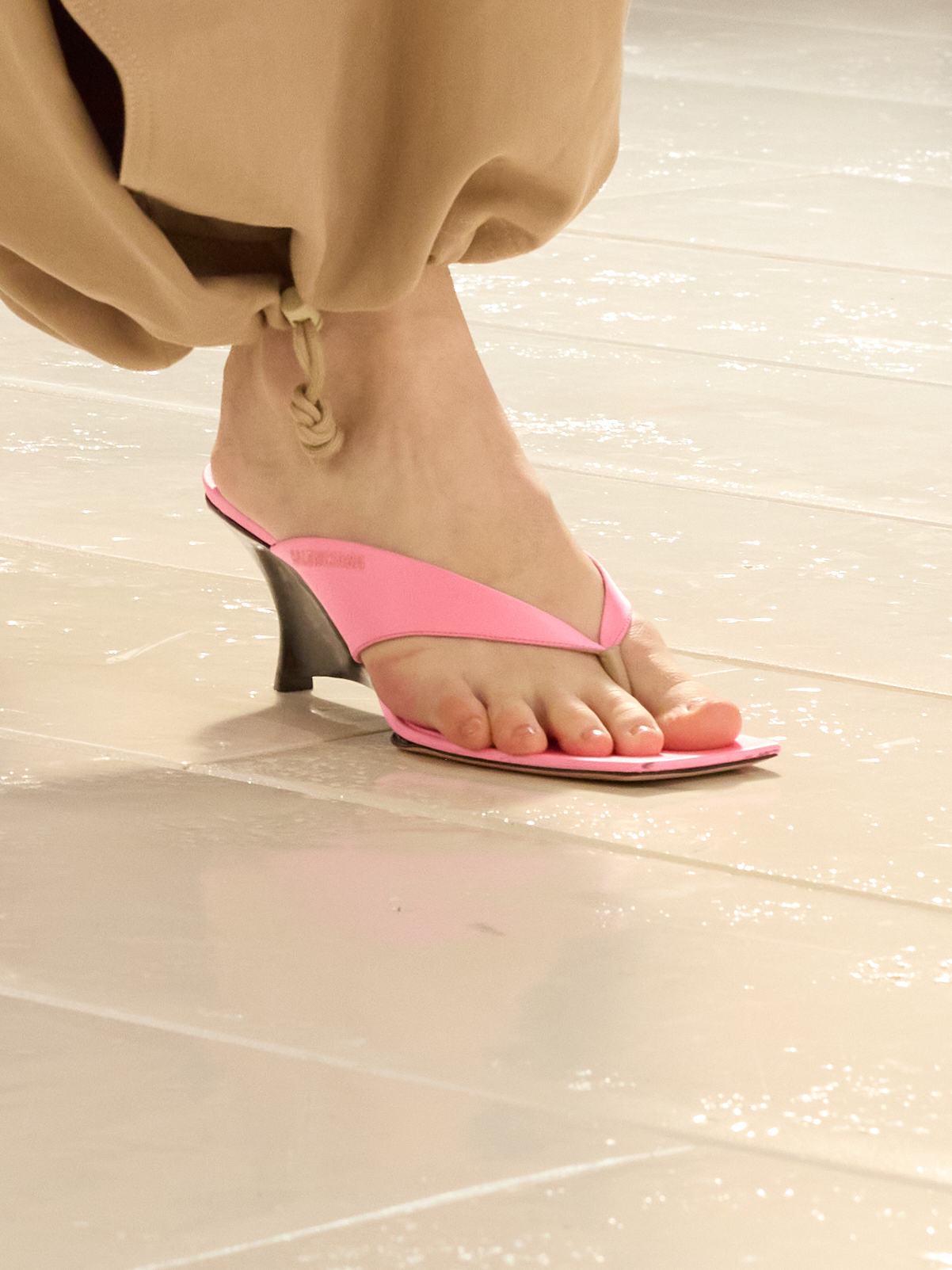
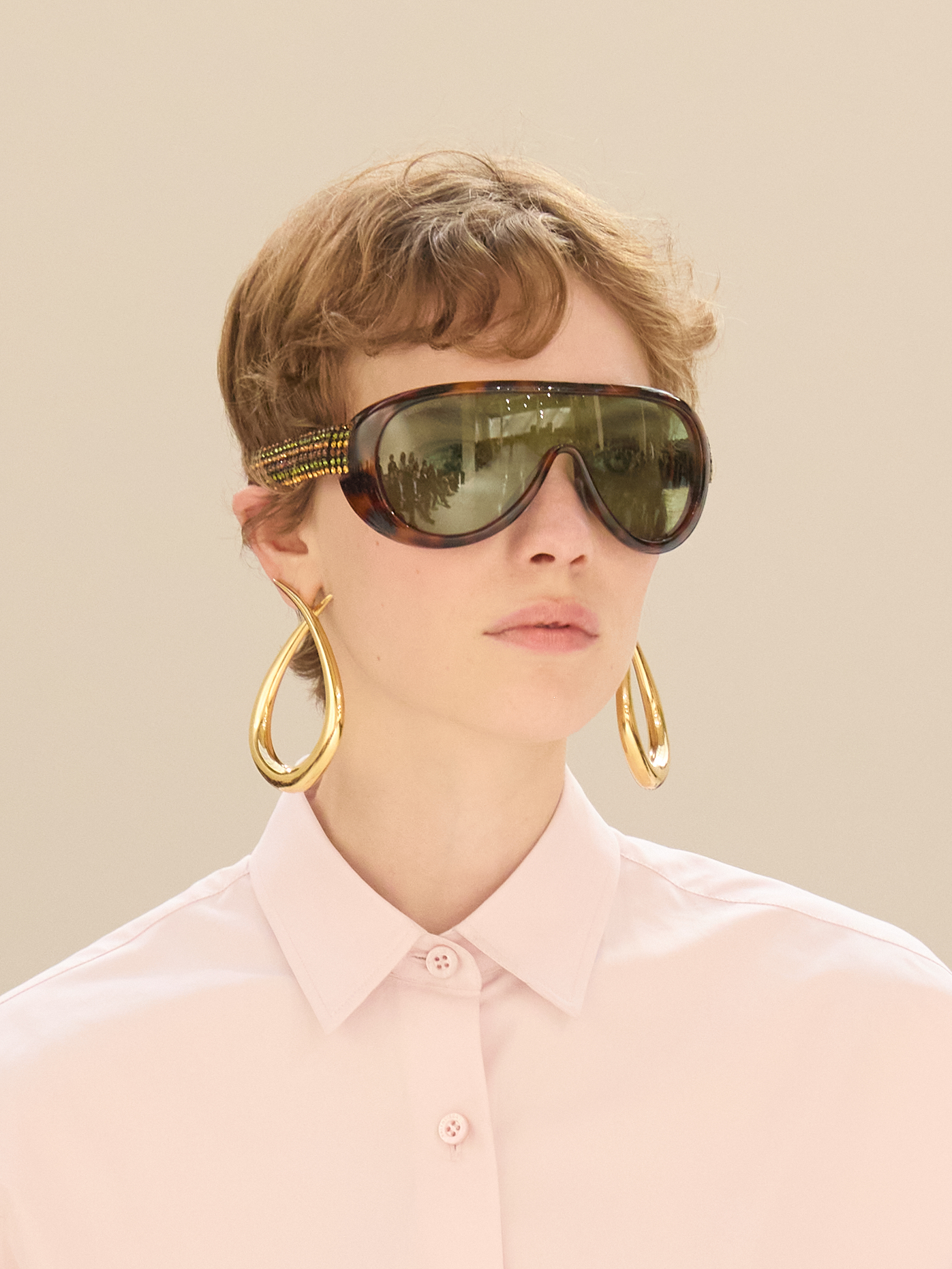
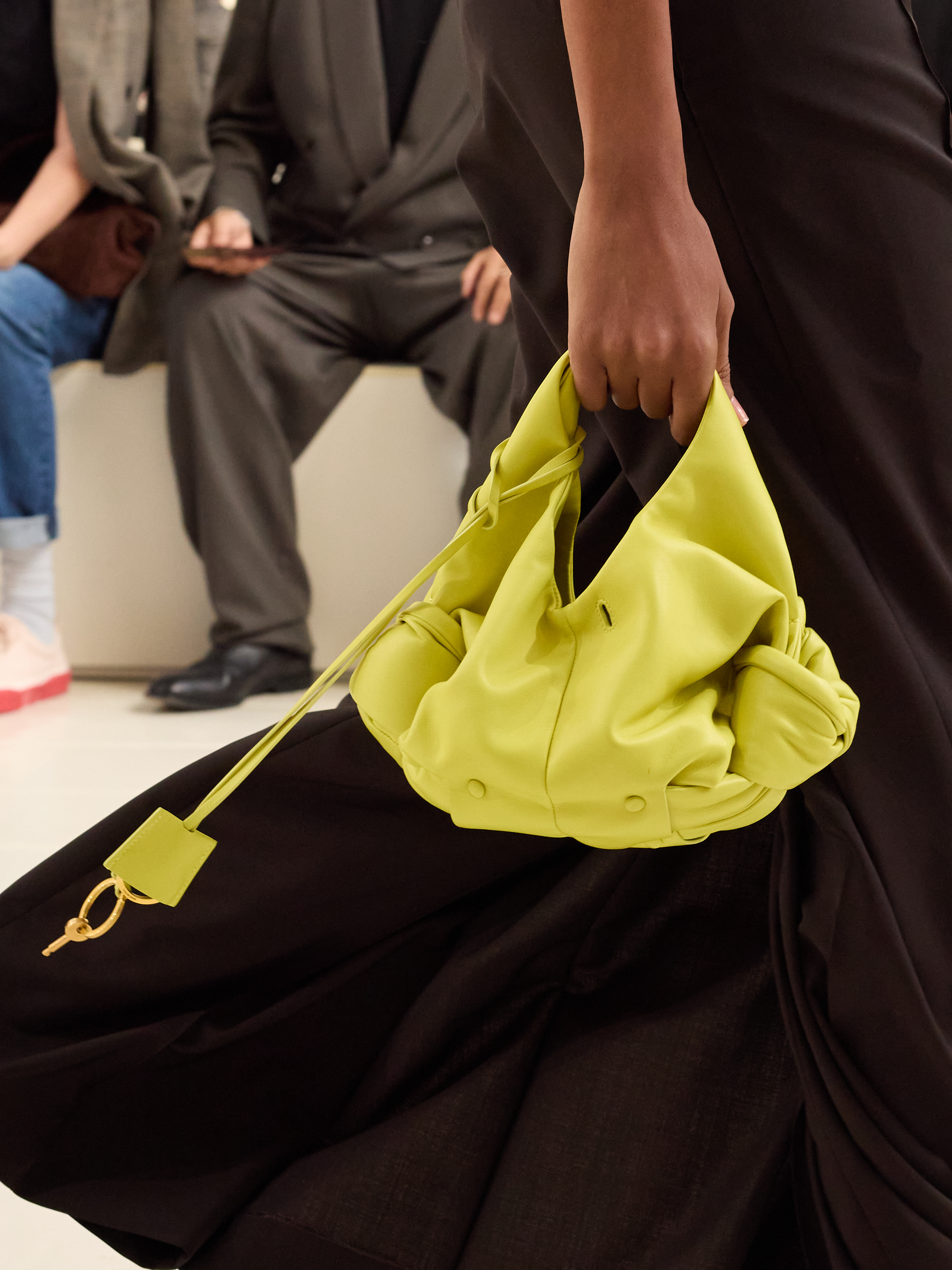
The accessories follow suit. The shoes are pliant and soft: the Wave Thong Sandal, a flat in toile canvas, the heeled Dahlia Mule and a new Lounge Sneaker, which is unstructured, or in other words a sneaker that has given up holding its shape. The Nodo and Silhou Tote bags are leather, shaped and draped by hand. The Bow Mask sunglasses have braided arms made by artisans, and the Getaria jewellery takes its cue from seashells.
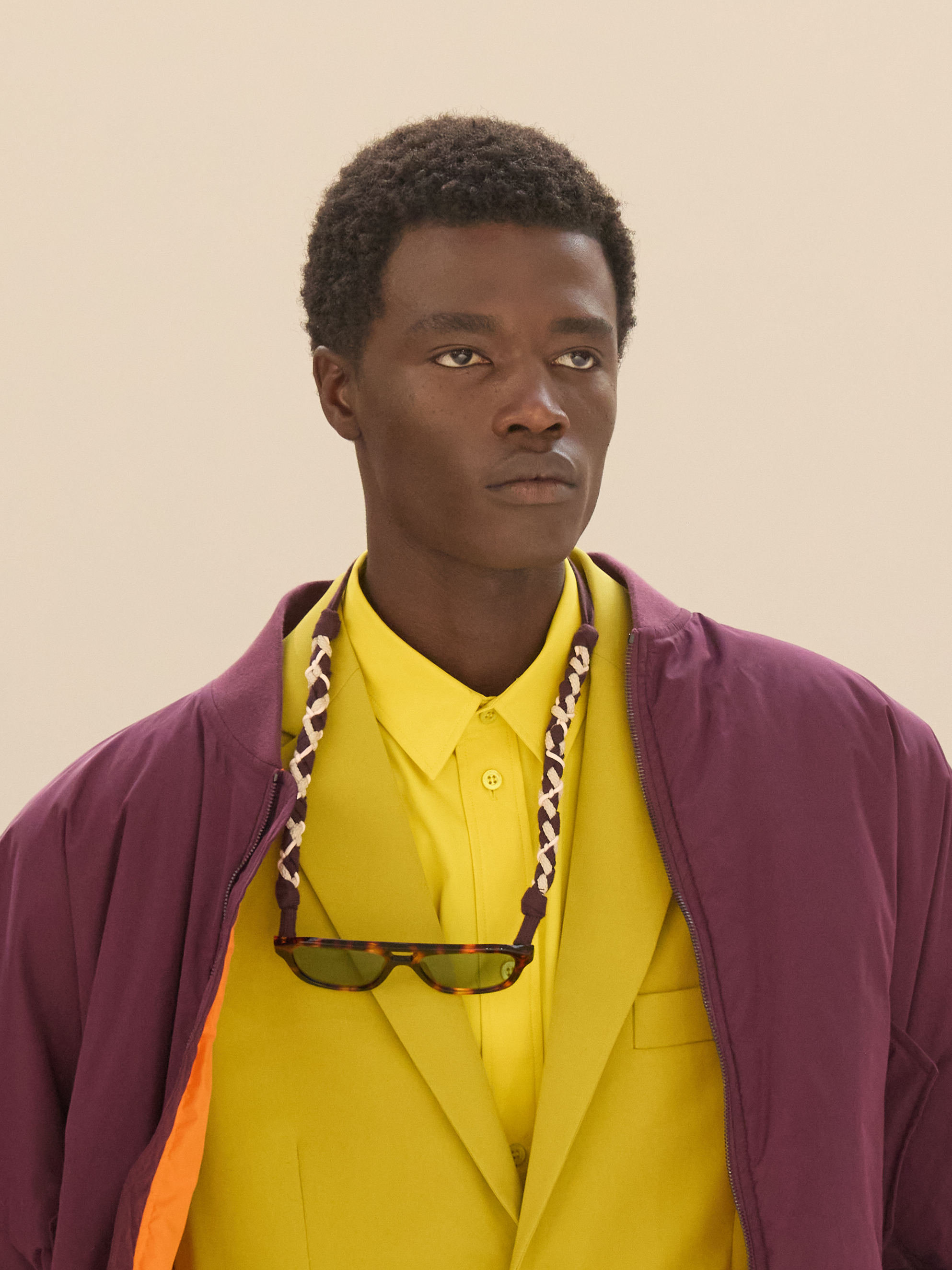
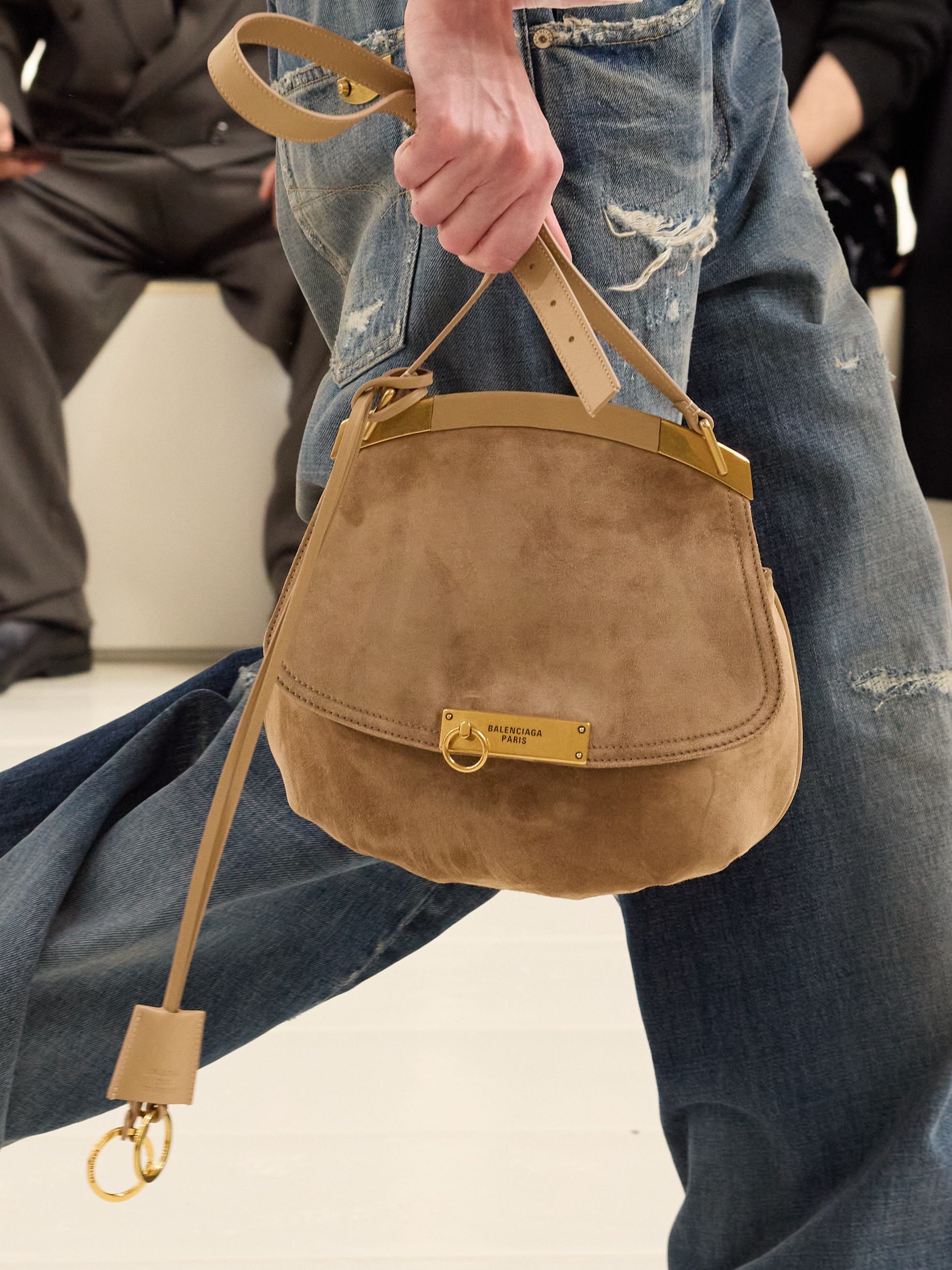
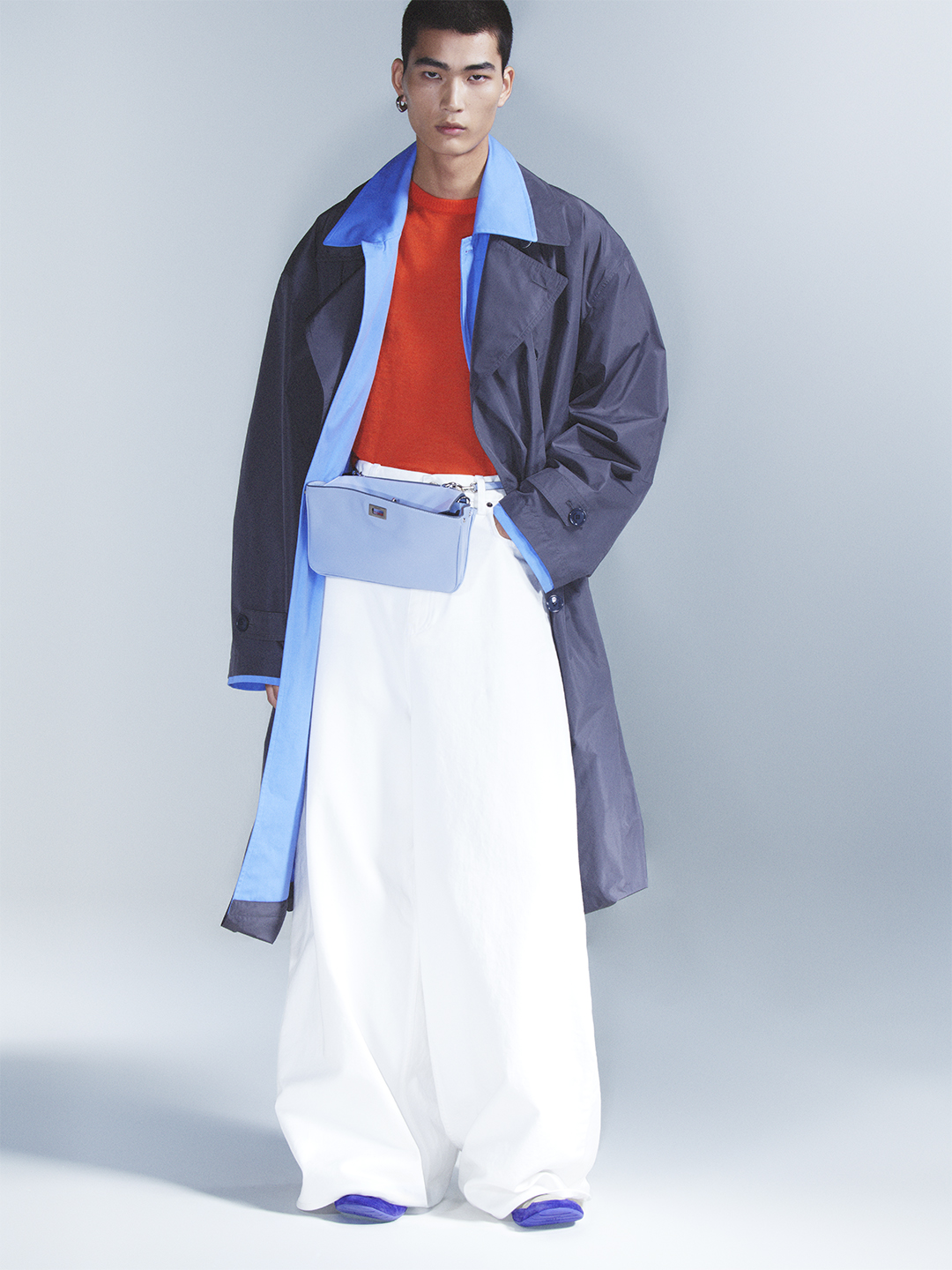
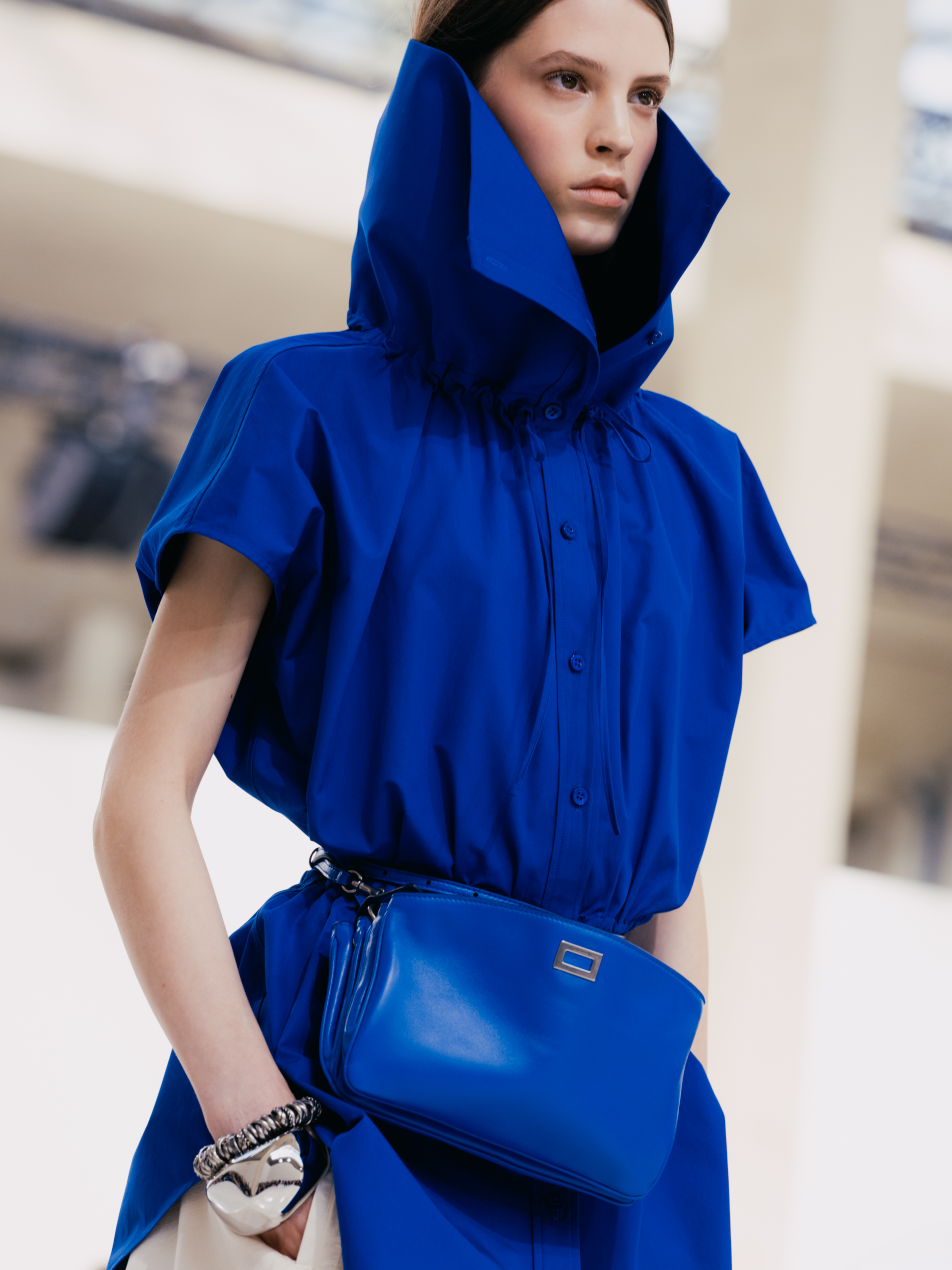
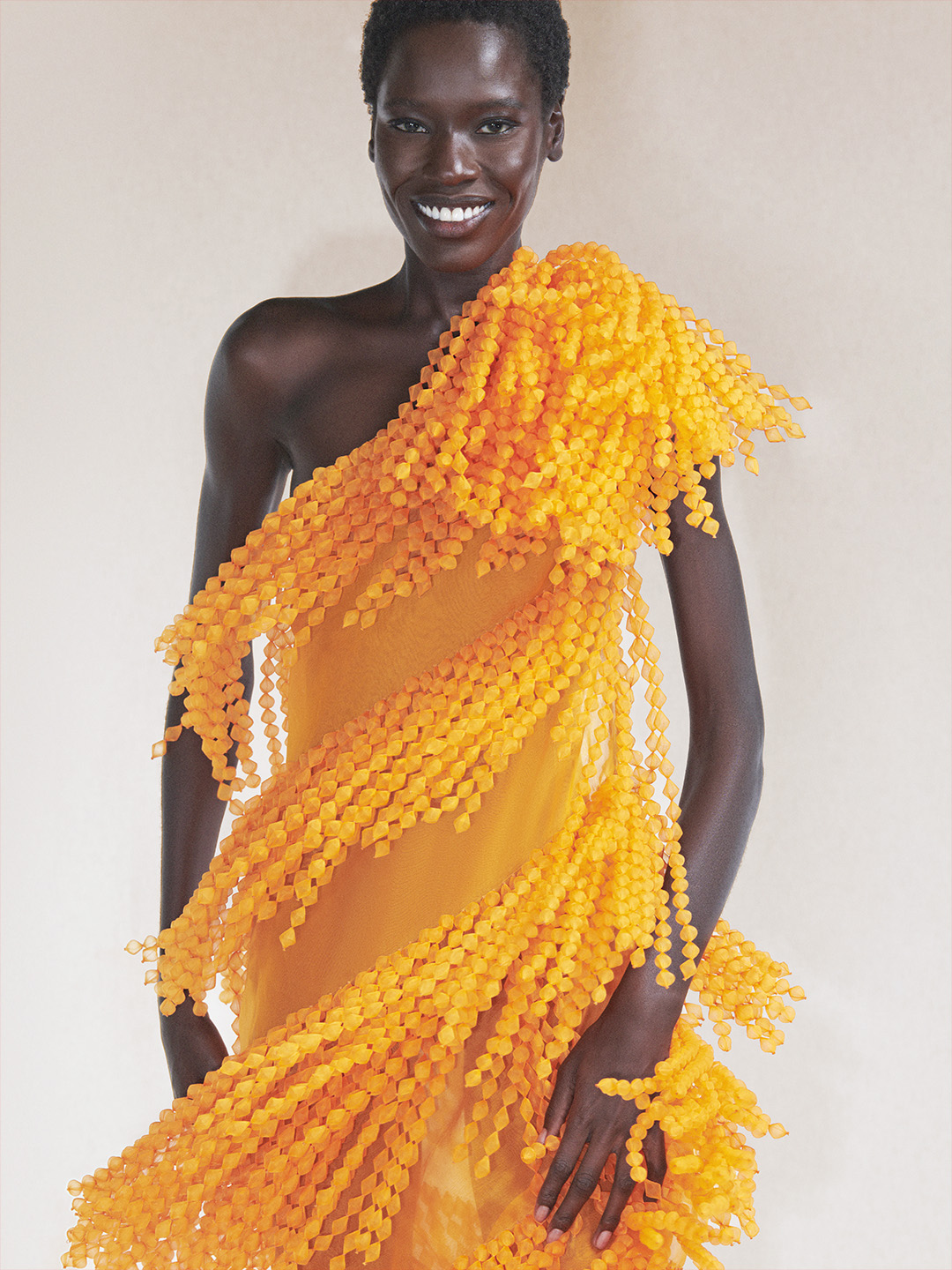
Then there are the flowers. Imagined, abstract ones in organza, filled with compressed air, are used to echo the volumes of the clothes with what the House calls a mathematical rhythm. It is a slightly absurd image, inflated flowers, and also a neat one. The notes insist that decoration here is never in service of artifice, that it has to function. The same goes for the drawstrings and buttoned collars that recall earlier Balenciaga silhouettes through plain, practical means.
The title comes from the middle of the set. Les Coraux de la Liberté, made in 2025 by the French artist Aude Franjou, sits at the centre of the scenography, a sculpture of wrapped linen that the House reads as a picture of a couture house: not just a building, but an ecosystem. Franjou explains that she wraps linen thread around raw fibre in a repeated, almost meditative gesture, performed thousands of times, until a supple material becomes a monumental work running from immaculate white to deep purplish red. She calls it an inscription of time into the material. It is not hard to see why a house built on hand labour would feel a kinship.
Piccioli takes the coral further in a note signed with his initials. Corals, he writes, have shown their colours for more than 160 million years only through a close partnership with algae, and ideas, like corals, need protection and an exchange with others to thrive. “No one shines alone” is the line that sums it up, and it neatly connects the atelier, the artist and the person who ends up wearing the jeans.
It is a lot of philosophy for a collection of denim and cotton, and the notes alone cannot say whether the clothes carry it. That will be settled by how a bias-cut pair of jeans hangs, how a basque t-shirt sits, how a sneaker without a skeleton behaves on a pavement. But the argument is a sound one to make. A coral reef is built one small wrap at a time, and so, it turns out, is a good pair of jeans.