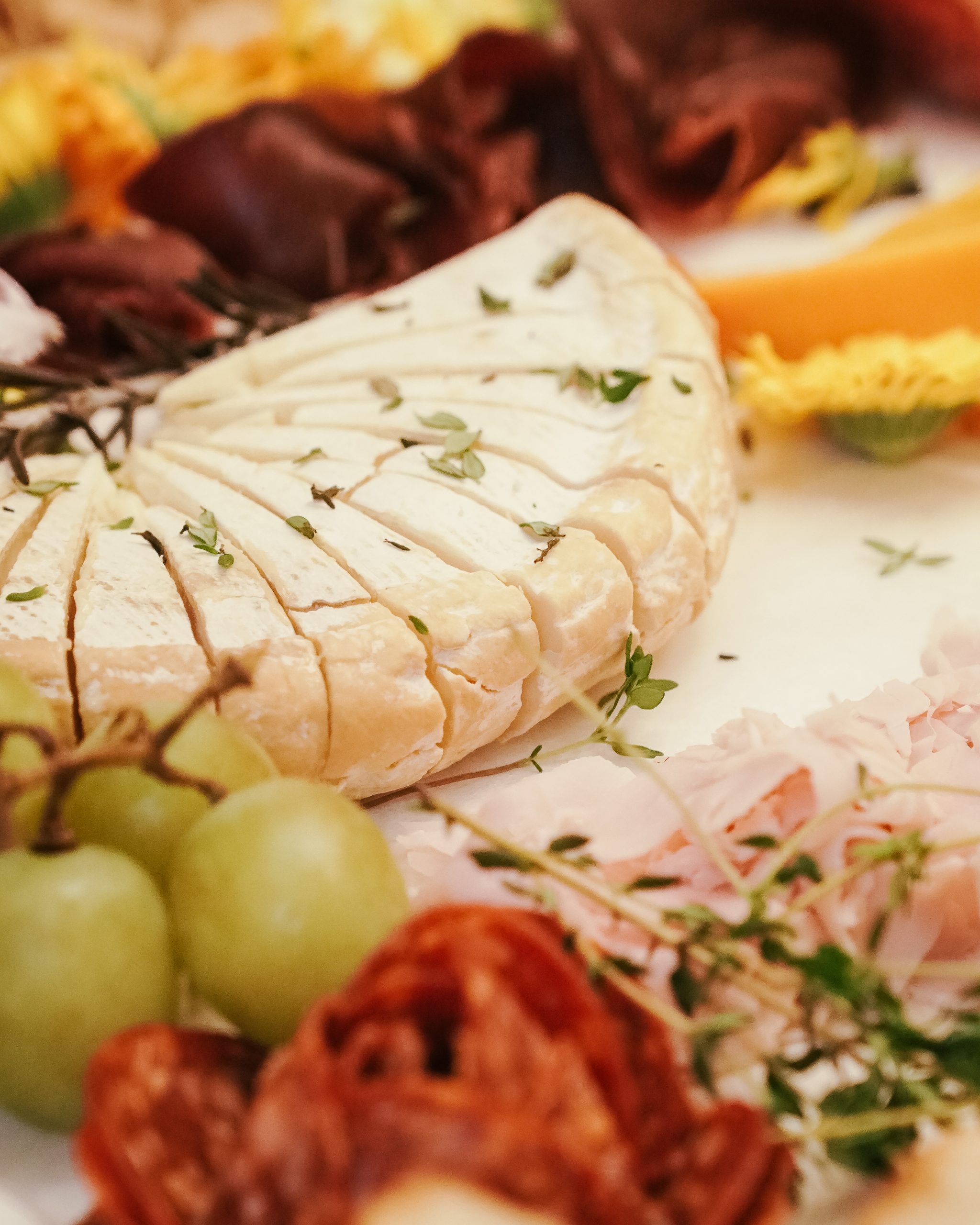
Etienne Delaune of Fromage on provenance, patience, and building cheese literacy in KL — one 200-gram wedge at a time.
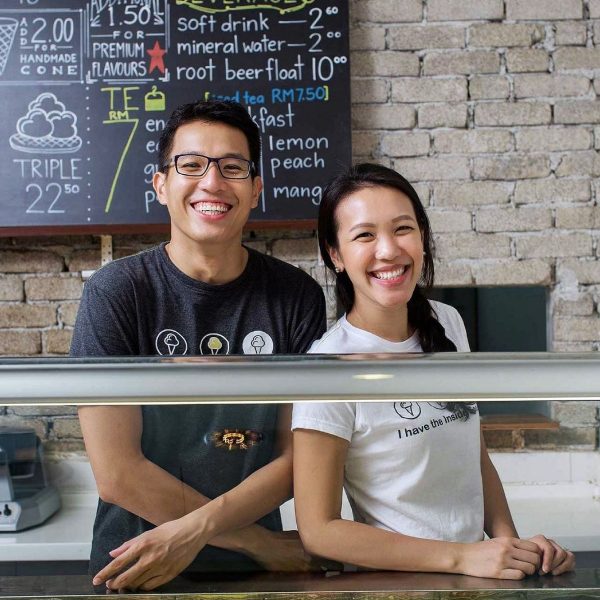
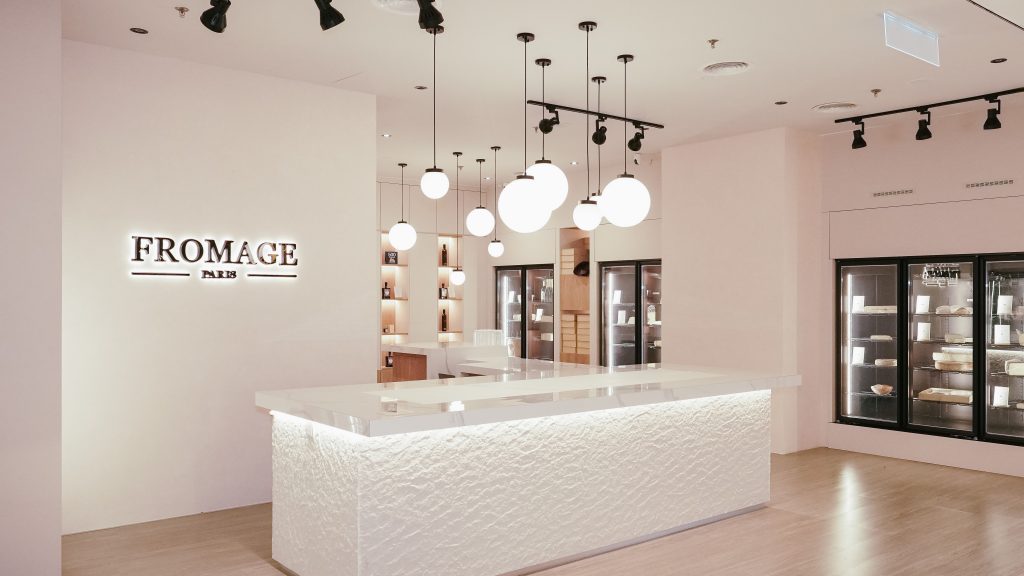
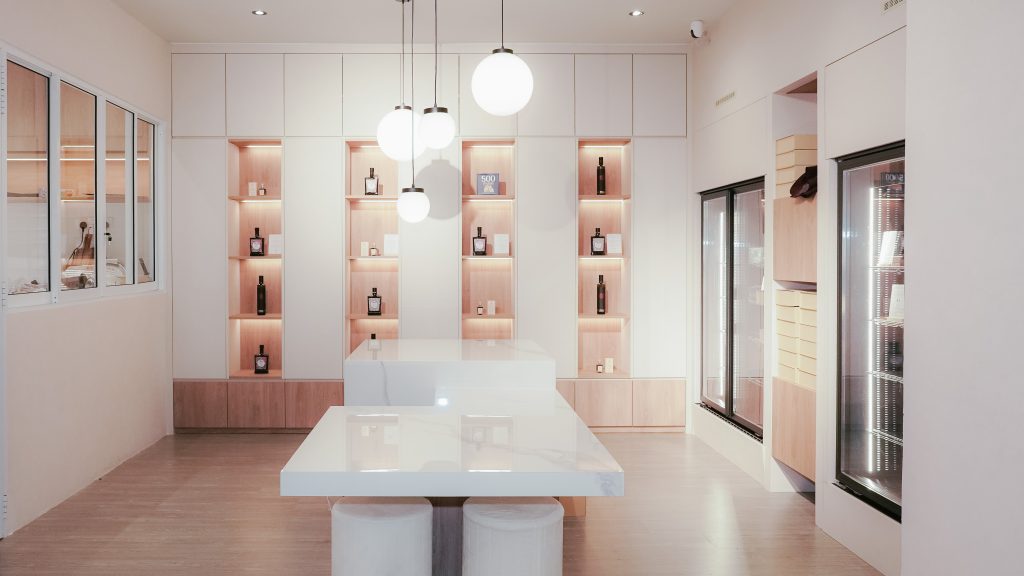
At the main entrance of Bangsar Shopping Centre, past the usual churn of handbags and skincare, a wheel of Comté is being cut to order. The cheesemonger works slowly, reading the paste before the knife goes in, and a small crowd gathers the way people do around anything unhurried in a hurried city. This is Fromage — 575 square feet, thirty to forty cheeses at any given time, and, according to its founders, absolutely nothing industrial on the shelves.
For Etienne Delaune, the French-Malaysian entrepreneur behind the boutique’s brand positioning and digital growth, the opening on 29 April was less a bet on Kuala Lumpur’s readiness than a correction of an oversight. “It wasn’t a matter of waiting for Kuala Lumpur to hit a specific luxury milestone,” he says. “The demand was already present, but the retail infrastructure was completely fragmented.” Cheese, he points out, is a living product — it needs to be cut to order by someone who understands its state of maturation. “We didn’t create the appetite for cheese in KL; we simply built a direct, reliable supply chain to service it properly.”
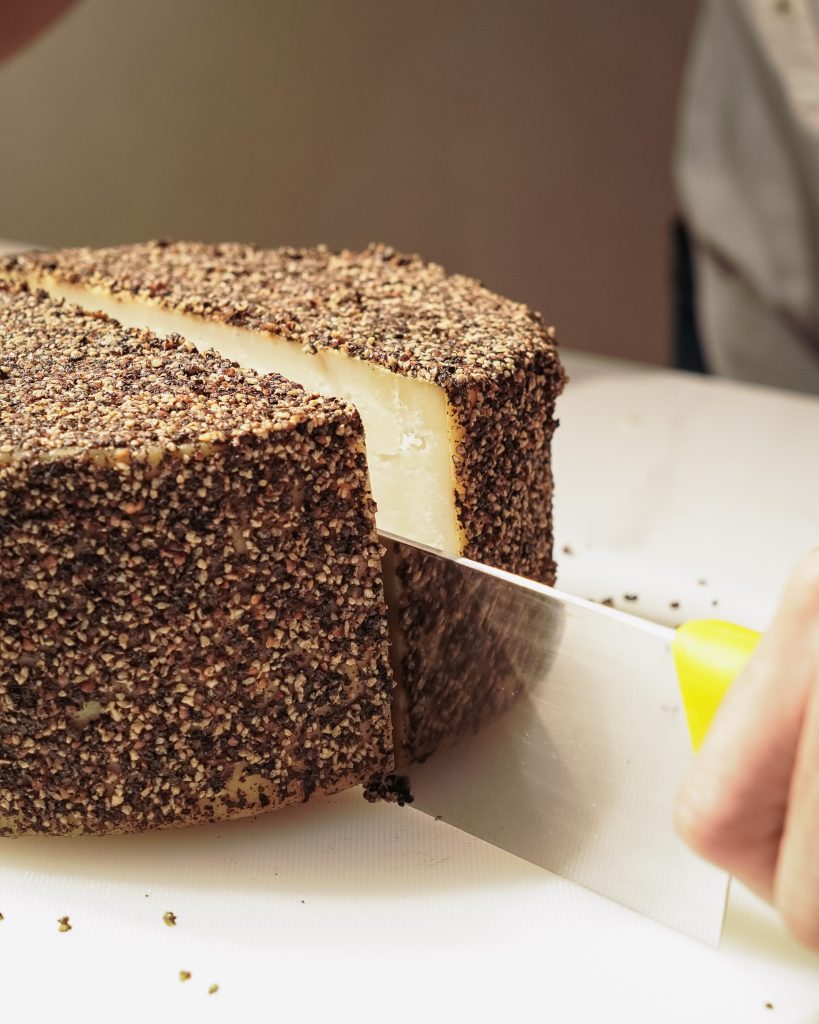
That distinction — between manufacturing desire and simply meeting it — runs through everything about Fromage, starting with its size. The boutique’s intimacy is not an aesthetic flourish but a deliberate constraint. “We deliberately avoided taking a larger footprint,” Delaune explains, “because a vast retail space forces you to pad your shelves with industrial fillers and volume products. Here, we rotate a tight selection of thirty to forty cheeses, and every single wheel must earn its square inch.” Placing the cutting counter at the mall’s main entrance was equally intentional. In Paris, watching a cheesemonger slice a wheel is a form of consumer education — a way of learning to see the difference between a pristine cut and a tired one. “The sensory experience isn’t just theatre,” he says. “It’s transparency.”
That transparency is aimed at a customer Delaune insists has been underestimated. Malaysians, he argues, are already fluent in the kind of intensity cheese demands — they eat sambal and rendang, after all, dishes built on deep fermentation and umami. What’s missing isn’t palate but vocabulary. “Customers often assume a washed-rind cheese that smells incredibly sharp on the outside will be equally aggressive on the inside, when in reality it is mild and creamy,” he says. “Our job isn’t to teach people how to taste, but to provide the technical vocabulary around affinage, handling, and temperature so they can integrate these cheeses into their existing food habits.”
Vocabulary, in this case, comes with paperwork. Every cheese at Fromage carries an AOP or DOP certification — a Comté that must come from the Jura, from a specific breed of cow, grazing on defined pastures, aged in a regulated cave. Break one link in that chain and, legally and literally, it stops being Comté. For Delaune, the labels are less about prestige than protection. “An AOP certificate isn’t a badge of snobbery,” he says. “It’s a rigid technical specification sheet.” Once that authenticity is verified, he adds, the real conversation is simpler than people expect: “whether you enjoy eating it on a Tuesday night.”
That ease is by design. Luxury food retail often trades on intimidation, but Delaune describes the opposite instinct at Fromage — a bias toward the customer who admits, unprompted, that they know nothing about cheese. “Those customers are our absolute favourites,” he says, “because we get to introduce them to something raw and watch their immediate physical reaction.” Building a wall of exclusivity, he argues, would alienate exactly the person the business depends on: not the once-a-year corporate client buying an ornamental board, but the regular walking out with a 200-gram wedge of Comté for the weekend.
Delaune’s own background sits at the centre of how Fromage avoids feeling imported. Raised between France and Malaysia, he describes his dual identity as the thing that stopped the boutique from becoming “a museum” — beautiful, perhaps, but disconnected from the city it’s in. “If you take a purely local approach without deep ties to Europe, you lose the inherited rigor of the craft,” he says. “Because I grew up moving between these two vocabularies, I don’t see them as contradictory. I understand how to talk about terroir and heritage with alpine producers, but I also know how our customers actually entertain in KL, where dinners run late, food is generous, and dishes are shared. The brand lives entirely in that translation.”
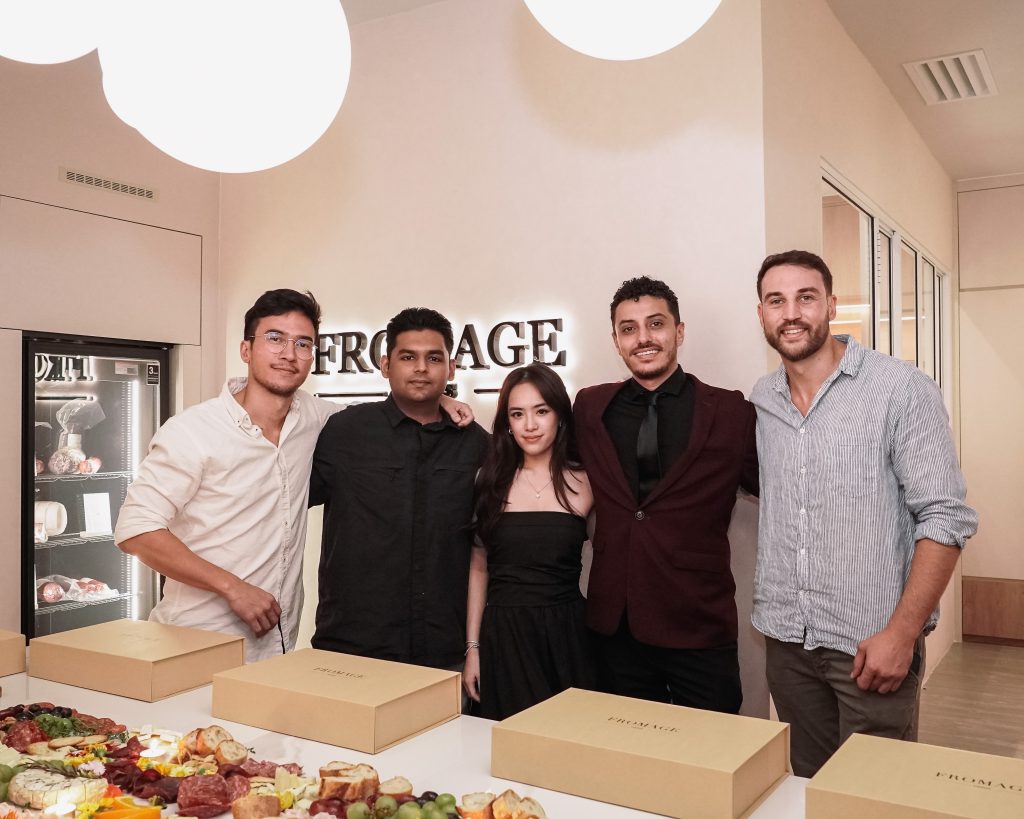
There’s a broader argument buried in that translation, too — one about pace. Kuala Lumpur, Delaune says, runs on velocity: metrics, speed, immediate turnaround, the same tech landscape his co-founder Amine Chekali spent two decades inside. Cheese refuses all of it. “You cannot accelerate a 36-month Comté,” he says. “It requires three years of a producer making minute weekly adjustments in a cave, and no amount of investment or technological optimisation can force that wheel to mature faster.” Offering a product that demands patience is, in his words, “a subtle disruption to the modern urban rhythm.”
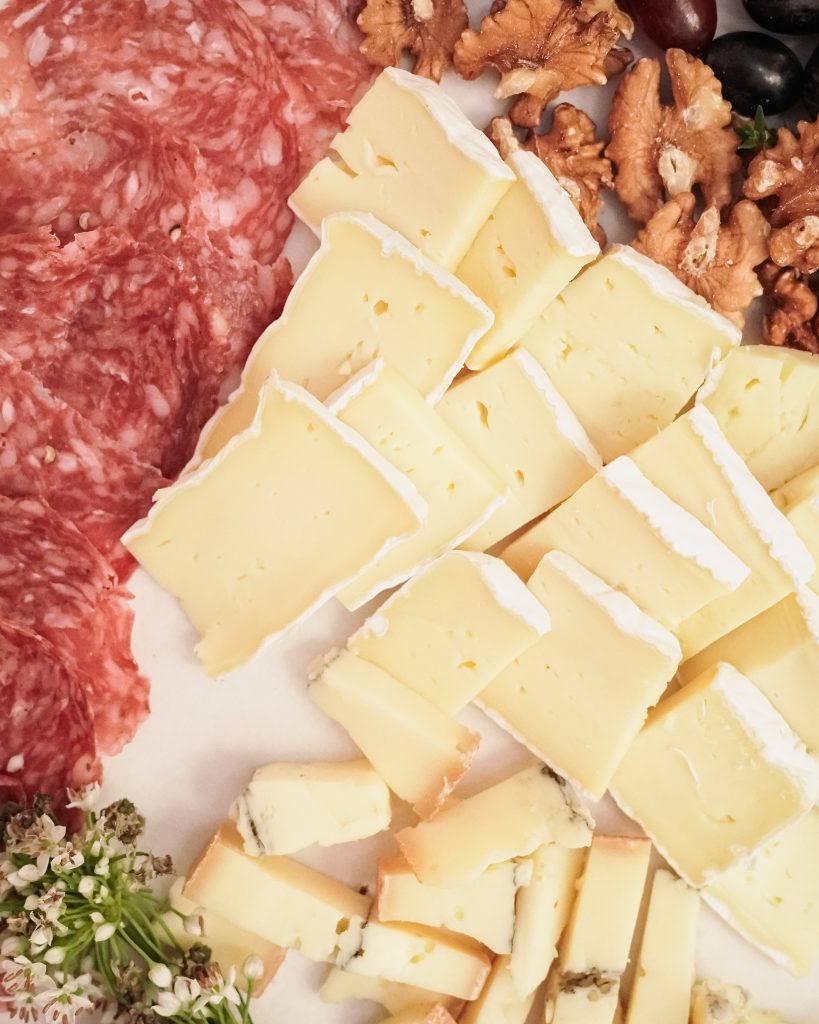
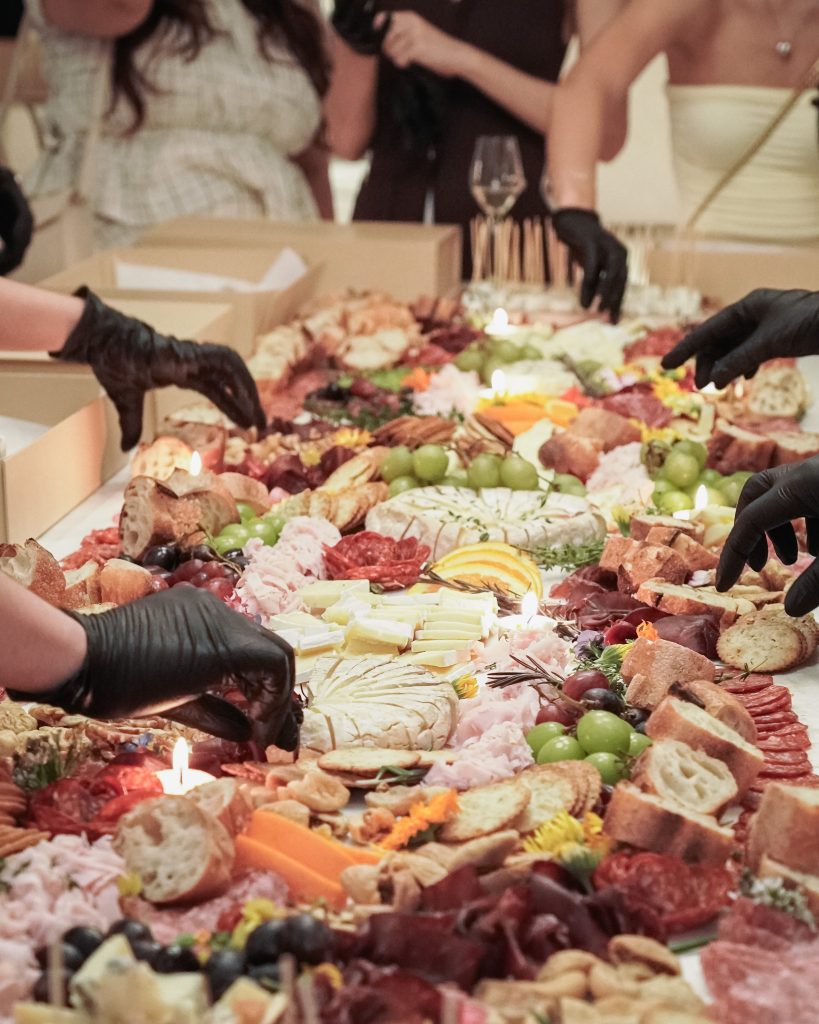
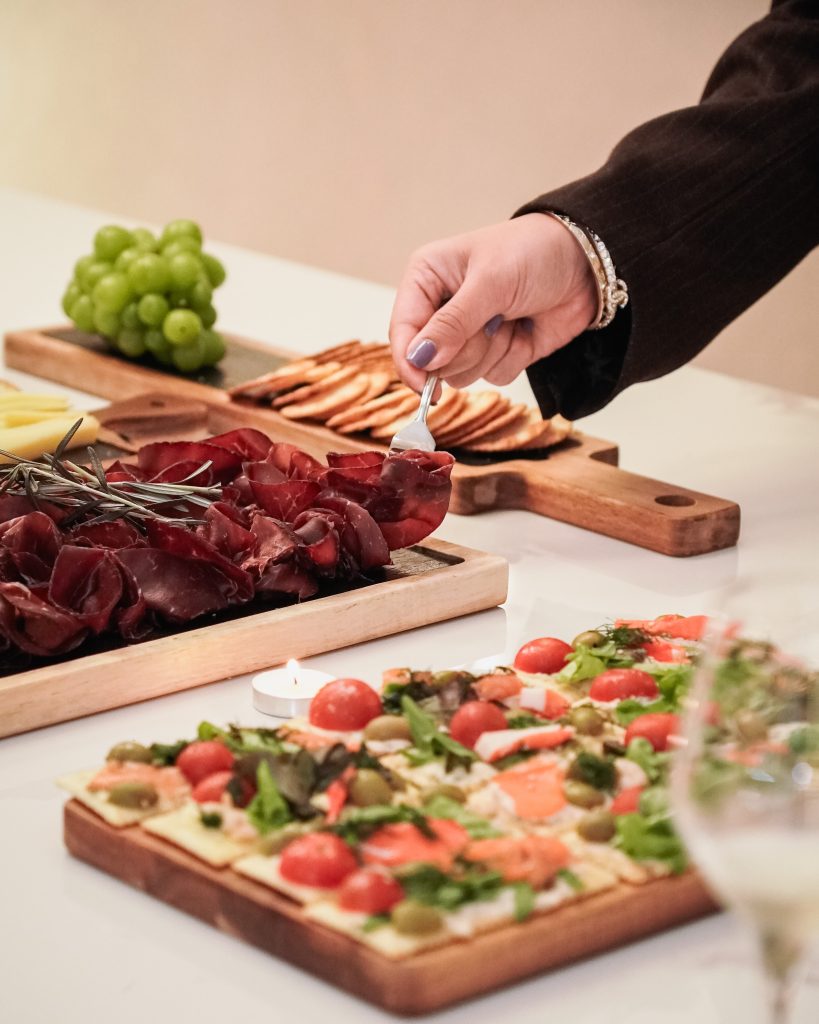
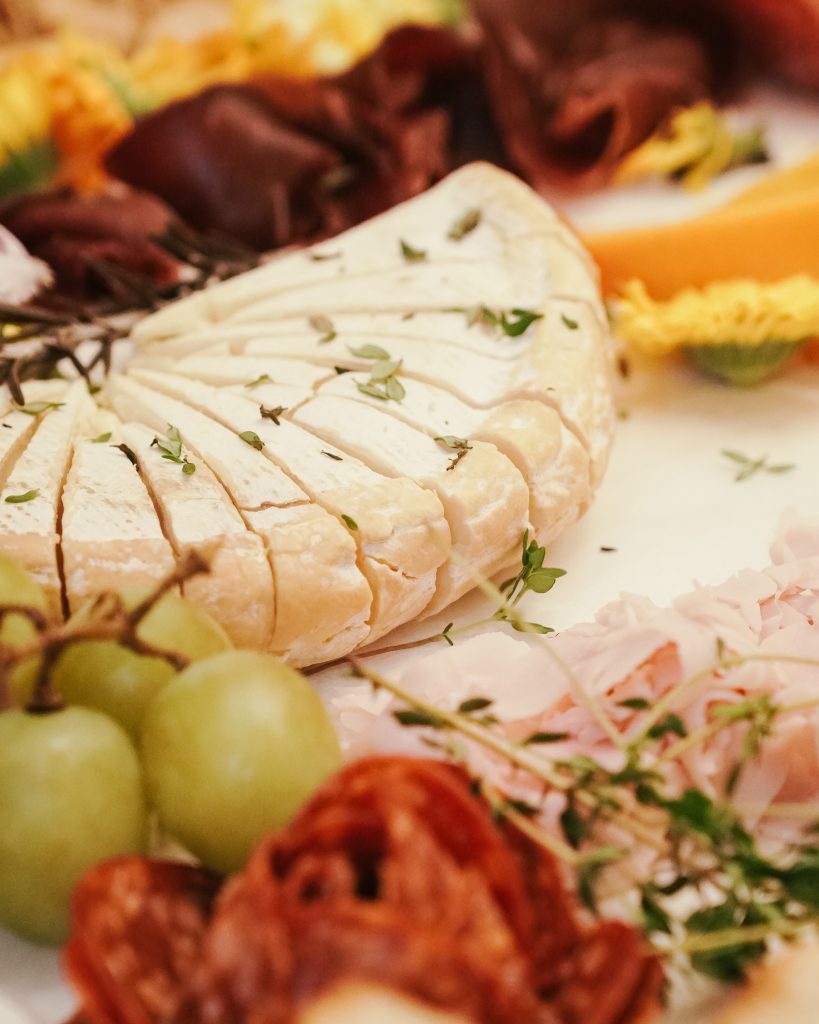
That same patience shapes how Fromage thinks about entertaining. Its cheese boards are designed in consultation with a Meilleur Apprenti de France, one of French cheesemaking’s most prestigious young-artisan honours — not, Delaune is careful to clarify, as a decorative credential. “It was for his technical precision,” he says. “He taught us how the geometry of a cut alters how a cheese tastes three days later, and how to structure a progression of flavours across a single board.” It’s a methodology he sees fitting neatly into how younger Malaysians host today — curated, but allergic to pretension. “An elevated, highly considered experience that remains casual, interactive, and designed for long evenings of shared moments.”
Education extends beyond the counter, into fromage.my and a companion app launching in May. But Delaune is emphatic about where he draws the line. “We will never allow a screen to get between a customer and the physical counter,” he says. “A conversation at the shop lasts five minutes, while the cheese sits in your fridge for two weeks.” The app, in his framing, compresses a learning curve that would otherwise take years of living in France — explaining, for instance, why a Morbier has a thin layer of vegetable ash running through its centre. “Literacy deepens the appreciation, which fundamentally protects the value of artisanal craft in a new market.”
Ask him what actually separates a memorable cheese from a merely expensive or fashionable one, and Delaune reaches past marketing entirely. “A fashionable cheese relies on marketing momentum, and an expensive cheese is often just the byproduct of inefficient shipping or middleman markups,” he says. “A truly memorable cheese is distinguished by its structural depth” — the variation in seasonal milk, the exact humidity of the cave, the restraint of the affineur. “Industrial production delivers flat reliability. An artisanal wheel offers complexity, slight unpredictability, and a finish that lingers on the palate long after you’ve finished eating. You cannot fake that depth.”
It’s a philosophy that dovetails, unsurprisingly, with a wider cultural drift toward slower living — in food, travel, design. Cheese, Delaune says, simply can’t be rushed into that conversation; it was already there. “Even at home, you cannot eat it straight from the refrigeration unit,” he notes. “You have to let it sit on the counter for up to an hour to breathe and reach room temperature, or the fat molecules remain locked and the flavour profile stays flat. It demands that you slow down simply to consume it correctly.”
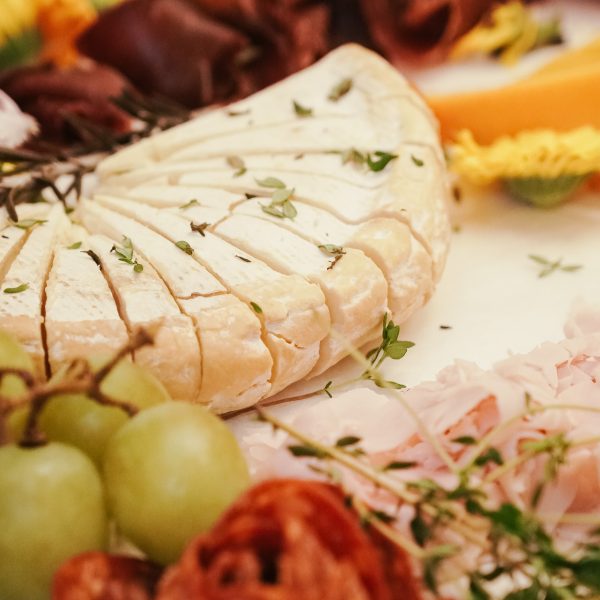
Pressed to build the ideal board for a long Kuala Lumpur evening — wine, conversation, no urgency to leave — Delaune constructs it like a piece of music, in movements. A clean, rustic Tomme de Brebis to open, gentle and buttery. A dense, savoury Swiss Gruyère next, its crystalline pinpricks nudging the conversation along. Then the anchor: a 24-month Comté AOP, Fromage’s bestseller, “the absolute sweet spot between vibrant, pliable fruitiness and rich, nutty depth.” A matured Pont-l’Évêque follows, washed-rind and supple, for when the night deepens. And to close, Sottocenere — an Italian truffle cheese, saved deliberately for last.
It is, in miniature, the whole pitch of Fromage: nothing rushed, nothing industrial, and every wheel expected to earn its place on the board.