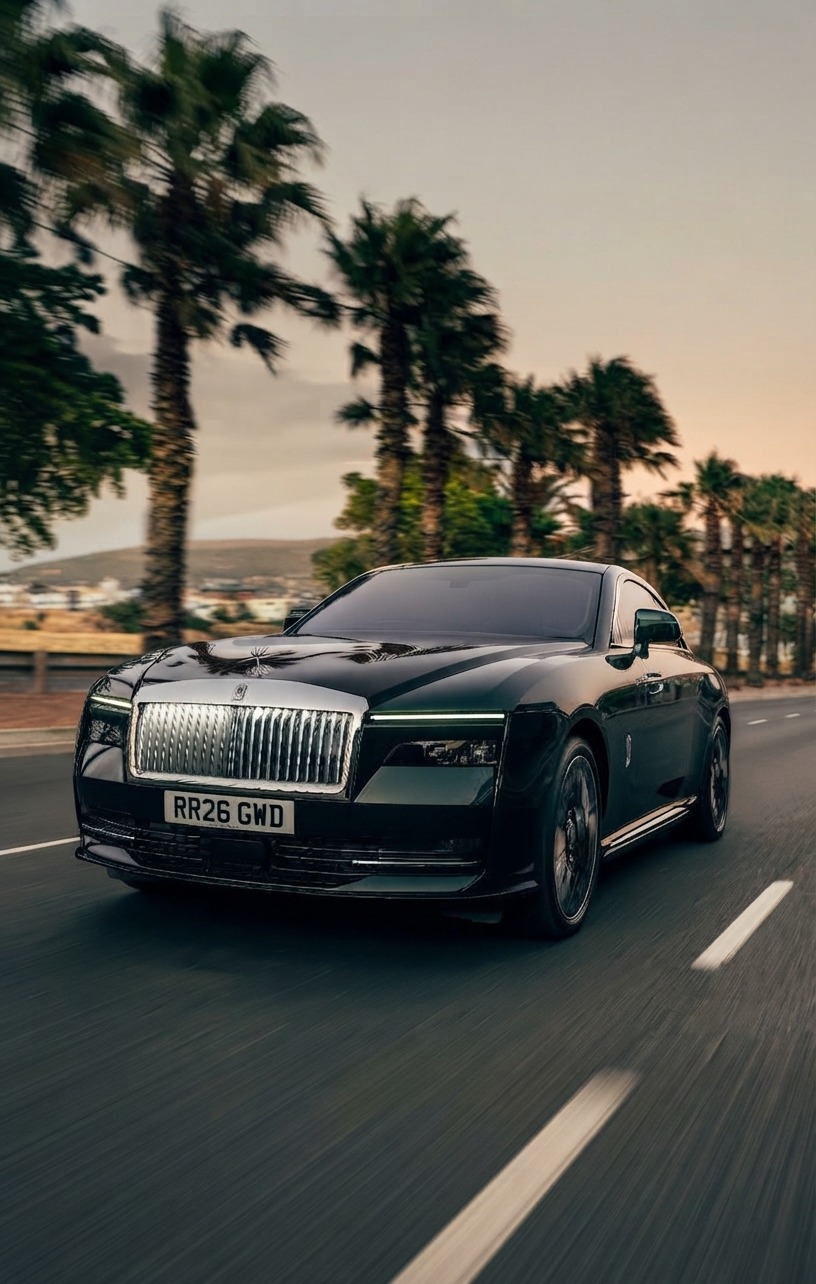
Rolls-Royce refines its landmark electric super-coupé for a new era of commissioning, sharpening its performance and expanding its possibilities as a canvas for Bespoke.
There’s a particular kind of confidence that comes from not needing to change very much. Four years after Spectre first arrived as Rolls-Royce’s boldest statement yet — the marque’s first purpose-built electric car, and proof that silence and power were never mutually exclusive — the Goodwood carmaker has resisted the urge to reinvent it. Instead, Spectre Series II does something more difficult: it refines.
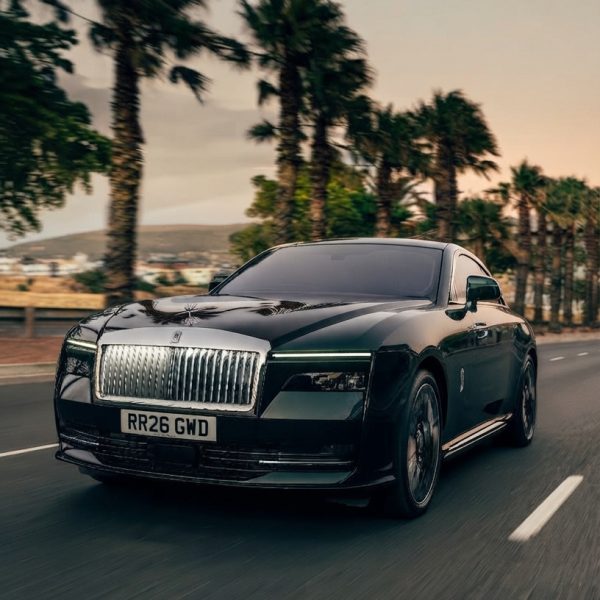
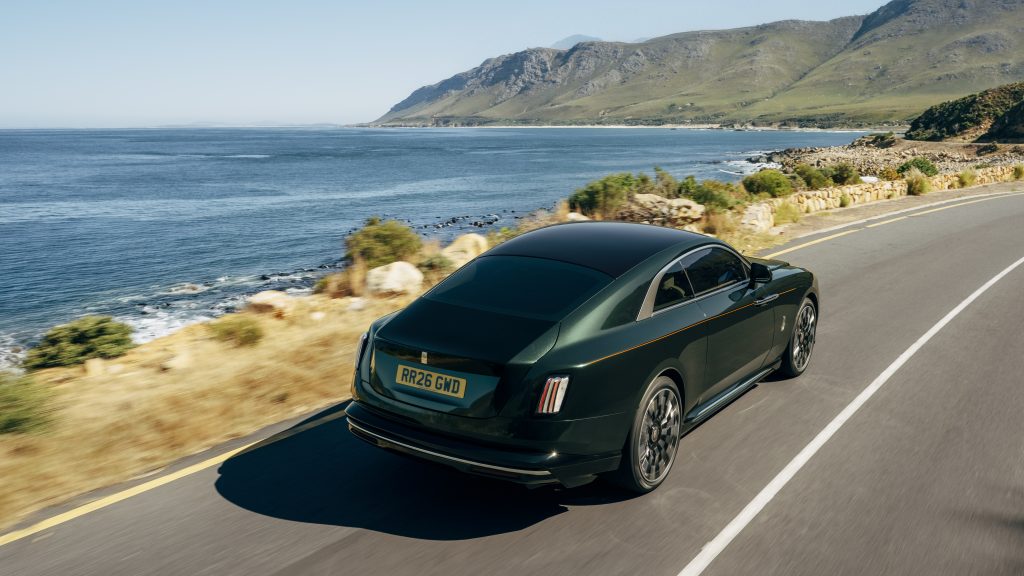
The fastback silhouette remains untouched, as does the split headlamp signature that made Spectre instantly recognisable from its debut. Rolls-Royce clearly understood it had already arrived at something close to timeless — Spectre now sits alongside Phantom Coupé in the marque’s collector canon, and design panels the world over have continued to single it out. What’s changed lives beneath the surface, in the details, and in exactly how far a client can now push the car as a canvas for self-expression.
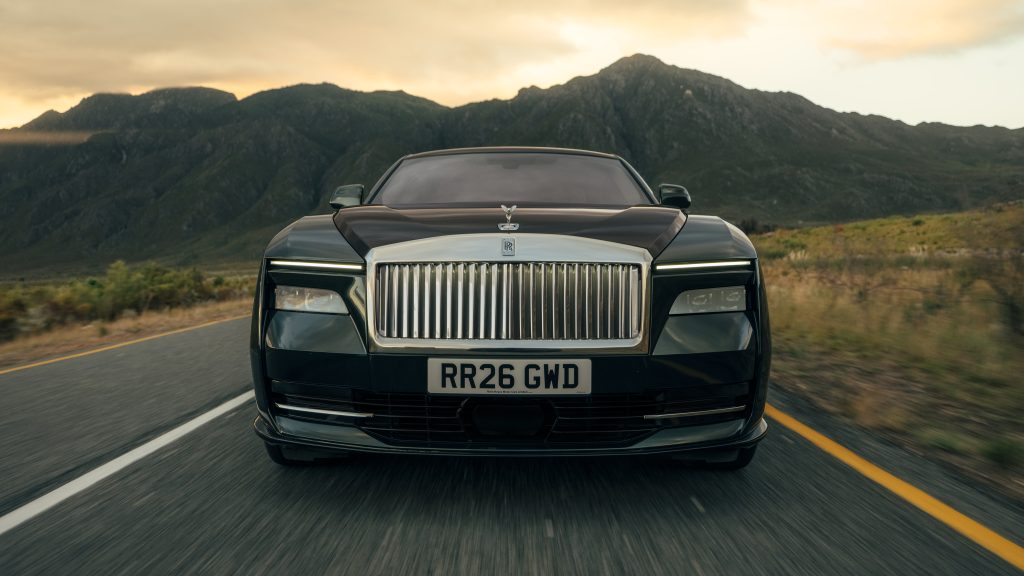
Start with what the engineers at Goodwood have done to the drivetrain. Range climbs by up to 18 percent, bringing total distance to 390 miles on the WLTP cycle, while charging times drop by as much as 14 percent. Torque has been recalibrated too — standard Spectre now delivers 1,015 Nm, while Black Badge Spectre Series II, summoned into Spirited Mode, unleashes 1,100 Nm and, in Infinity Mode, 500 kW of power, cementing its position as the most powerful Rolls-Royce ever built. None of this is chased for its own sake. It exists to sharpen what Spectre was always meant to deliver: immediacy without drama, power without noise.
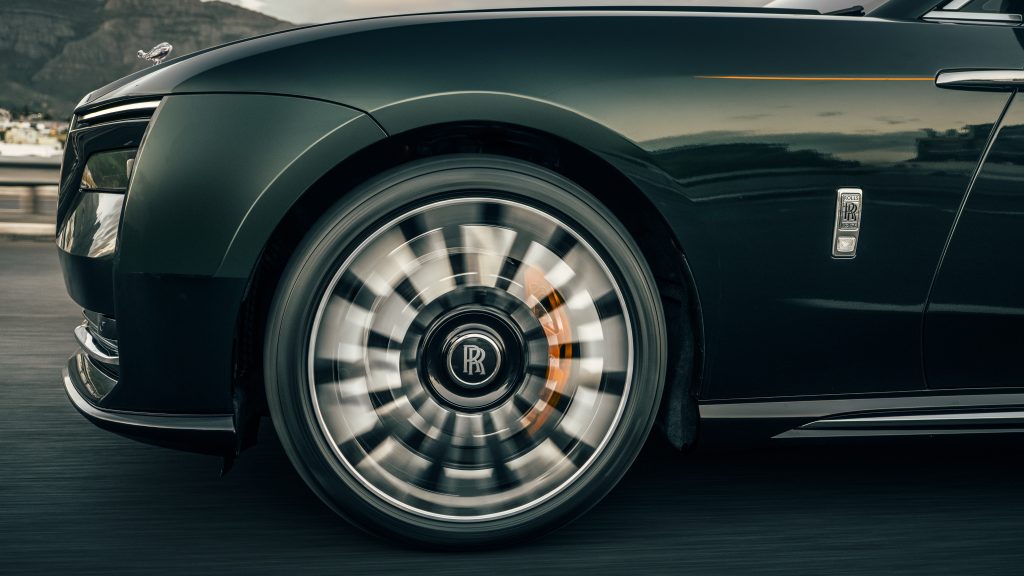
That restraint extends to the exterior, where a single new solid finish, Ethereal Blue, joins the palette, and a newly sculpted 23-inch forged wheel makes its case through precision rather than spectacle. Its facets are cut with 2.5mm radii sharp enough to hold a diamond-like crispness even after polishing, and each wheel demands up to six hours of hand-finishing to get there. It’s a very Rolls-Royce kind of extravagance — the sort that most people will never notice, and that the client will never stop noticing.
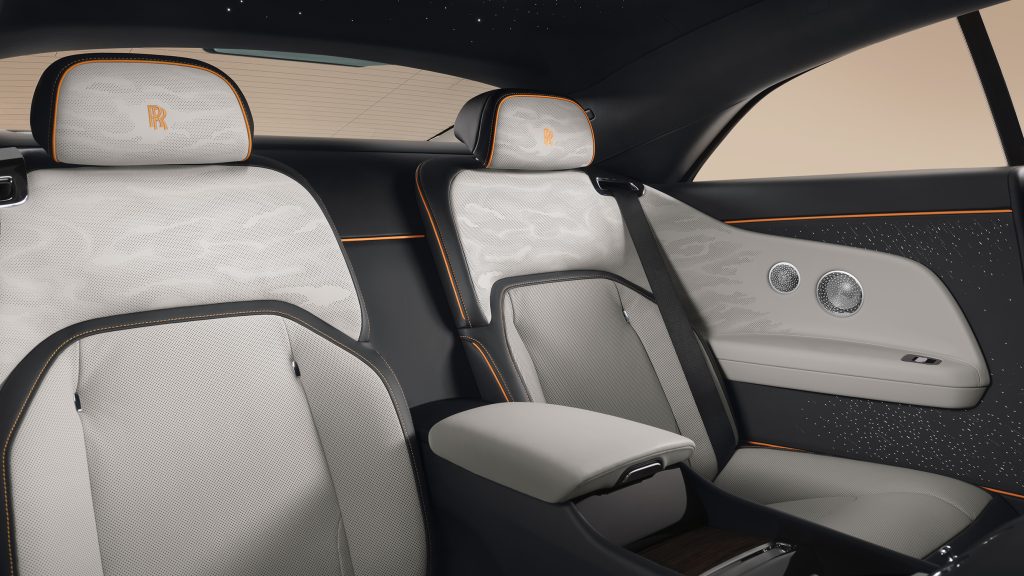
Inside is where Series II makes its real argument. Rolls-Royce has always treated Spectre as an increasingly serious canvas for Bespoke work — surpassed in personalisation demand only by Phantom — and the new materials on offer reflect that appetite. Duality Twill, a rayon fabric spun from bamboo, appears in Spectre for the first time, its design a nod to the bamboo grove that once bordered Sir Henry Royce’s winter home on the Côte d’Azur. The embroidered motif reads as an abstract interlocking of the marque’s founders’ initials, styled with a nautical rhythm borrowed from the rope lines of sailing yachts. A single Duality Twill interior can call for 2.6 million stitches and ten miles of thread — a quiet reminder that in this world, luxury is still measured in hours of human hands, not marketing copy.
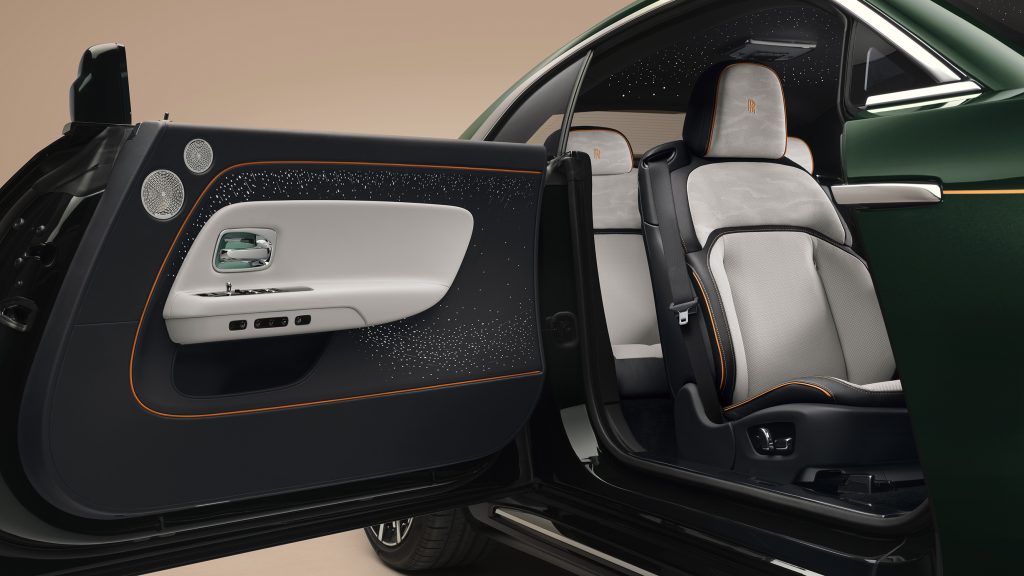
Placed Perforation leather, meanwhile, turns the seats themselves into artwork. The launch pattern — inspired by the shifting shapes clouds cast in moonlight — comprises 78,138 individual perforations across three sizes, arranged so that, paired with the illuminated door option, light seems to diffuse outward like starlight breaking through cloud cover. It’s the kind of detail a client commissions knowing that perhaps only they will ever fully appreciate it, which is rather the point.
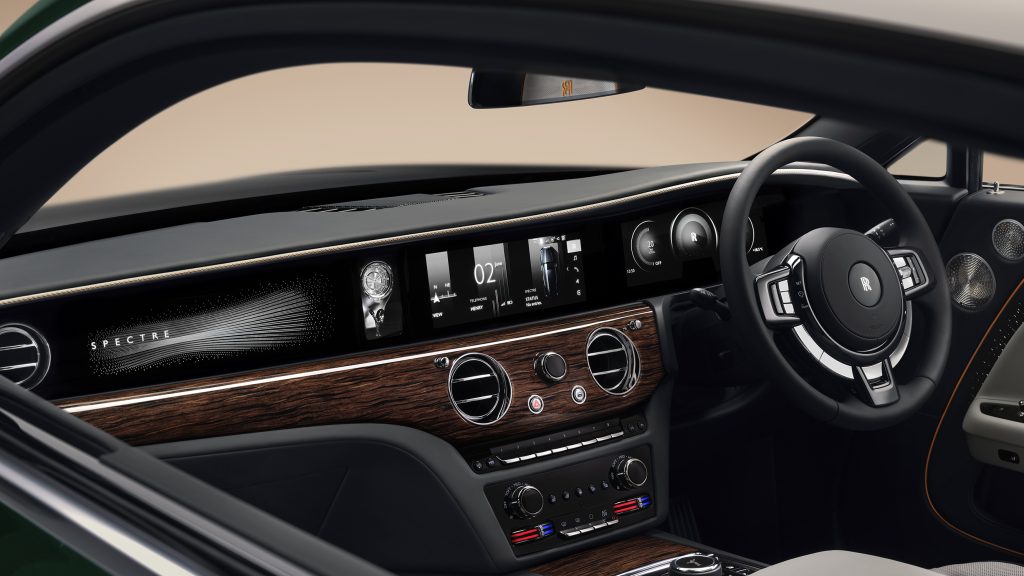
There’s a new veneer, too — Brindled Walnut, made by combining wood from non-fruiting walnut trees that would otherwise be discarded with eucalyptus fibres left over from paper production, sealed beneath a lacquer infused with glass flake powder that gives the surface a sense of depth, as if something were glimmering just beneath it. And a redesigned dashboard clock, inspired by aviation instruments and their obsession with legibility, now shares its cabinet with an illuminated Spirit of Ecstasy carved from solid stainless steel.
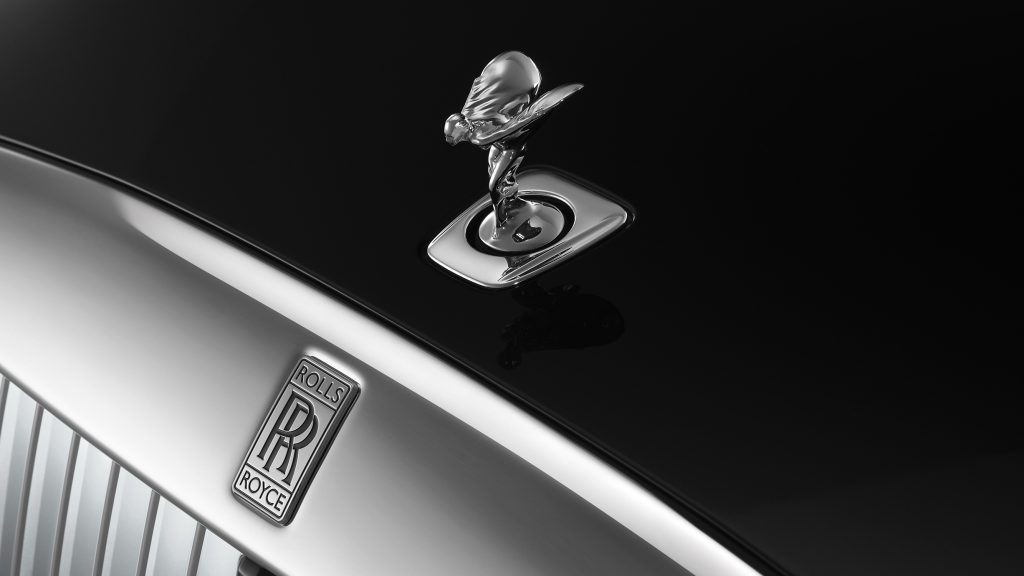
For Black Badge devotees, Series II leans further into drama: an Iced Black exterior treatment mutes nearly every piece of brightwork into a satin matte finish, while carefully leaving the Pantheon Grille’s vanes polished — designers were adamant that Spectre shouldn’t lose its face entirely to the dark. A new open-spoke wheel, available for the first time in an iced matte black, completes the look.
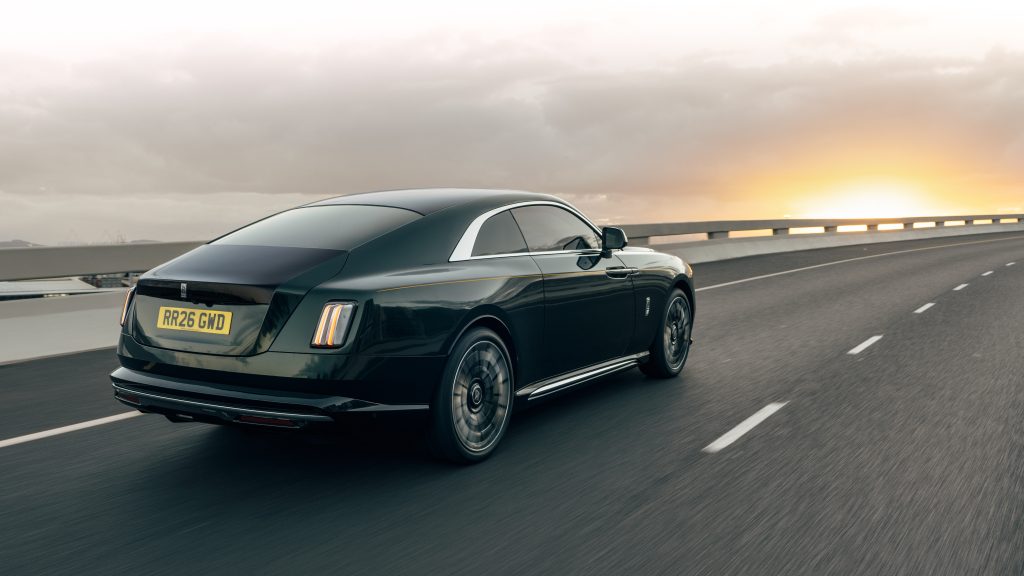
What emerges from all this isn’t a louder Spectre, but a more articulate one. Rolls-Royce’s own research into how clients actually live with the car reveals something telling: despite being, on average, the second car in a seven-car garage, Spectre gets driven — a European client has already covered more than 30,000 miles in two years, more than triple the marque’s typical annual mileage for a two-door model. People aren’t just commissioning Spectre. They’re living inside it, using its Bespoke possibilities to tell their own stories — a starlight headliner mapped to the exact night sky under which a couple first met, a marquetry tribute to a beloved family dog, an interior that mirrors the palette of someone’s own home.
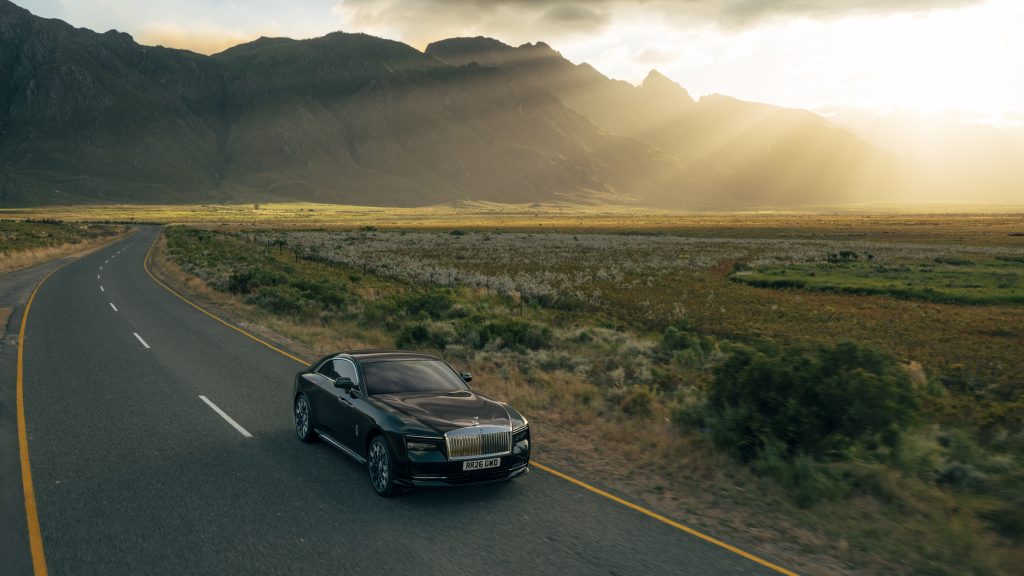
Series II doesn’t ask to be understood at a glance. It asks to be discovered slowly, the way any object built with this much intention deserves to be — one stitch, one facet, one perfectly calibrated silence at a time.