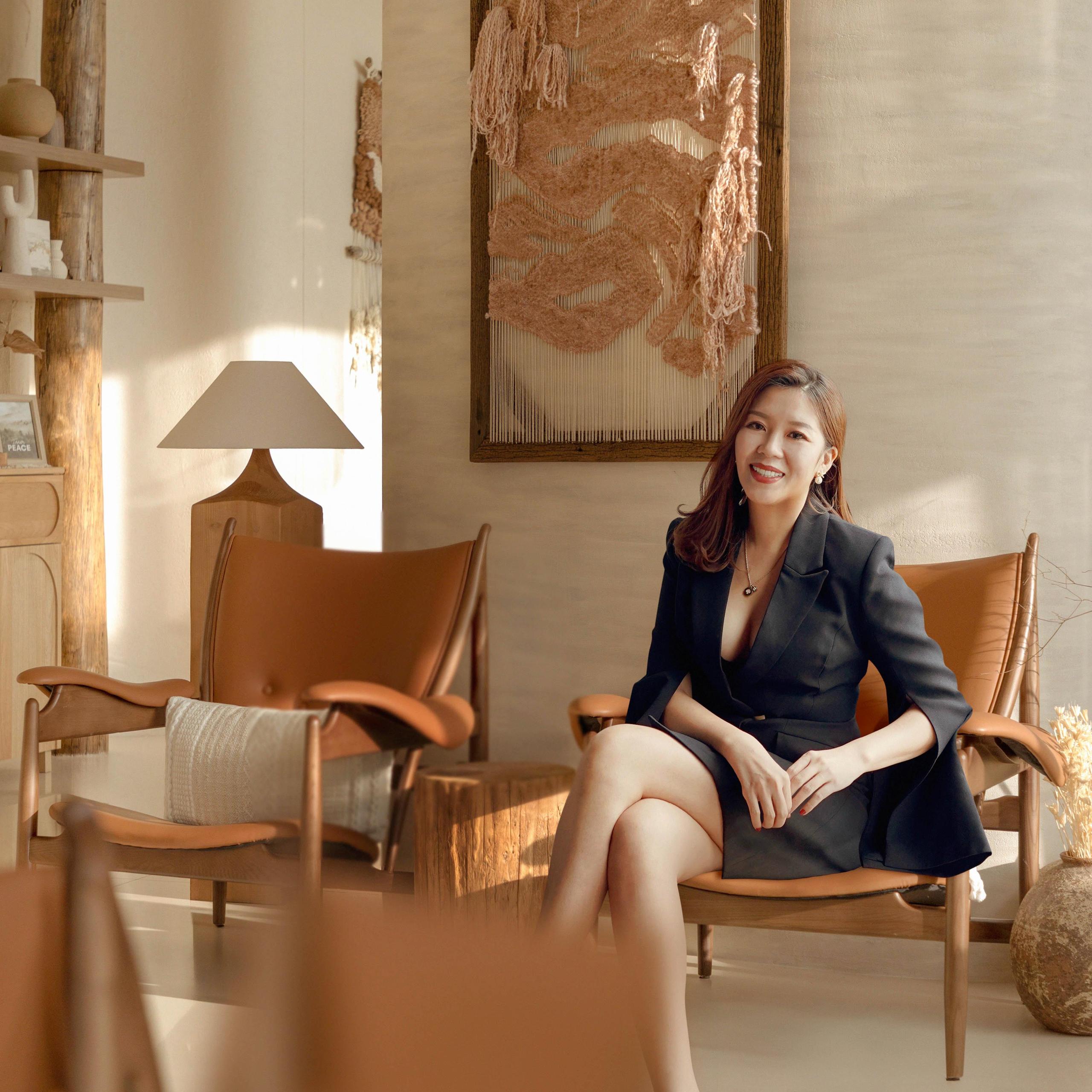
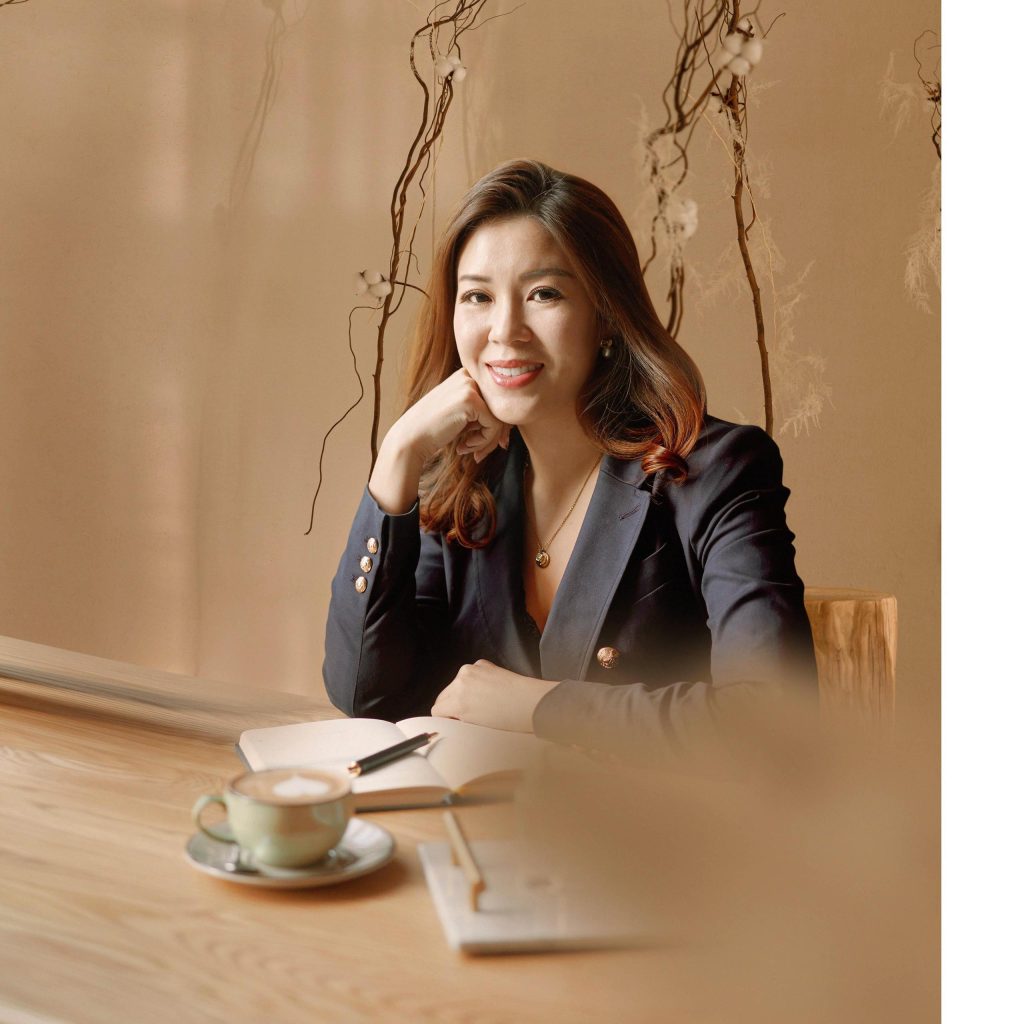
In a 30,000-square-foot penthouse above Bangsar, ĀMANÏ Biohacking Club founder and CEO Yap Yann Fang is betting that Asia’s most driven leaders don’t need another lecture on sleep and self-care — they need someone to rebuild the biology that ambition has been quietly spending down for years.

There is a particular kind of exhaustion that never announces itself. It doesn’t show up on a company balance sheet or in a boardroom vote of confidence. It hides behind a fourth cup of coffee, a shorter fuse, a mind that won’t switch off at 11pm even though the body is desperate for it to. Yap Yann Fang, founder and CEO of ĀMANÏ Biohacking Club, has a name for this: biological debt. And she has built an entire club around the radical idea that no leader — however capable, however successful — is exempt from paying it back.
ĀMANÏ Biohacking Club, tucked into the heart of Bangsar, doesn’t look like anywhere else in Asia claiming to serve this space, largely because there isn’t anywhere else in Asia quite like it. Billed as the region’s first and largest biohacking club, it occupies 30,000 square feet of Kuala Lumpur real estate with the quiet confidence of a place that knows exactly what it is: not a clinic, not a spa, not a gym, but — in Yann’s words — “an operating system” for the people whose decisions ripple furthest.
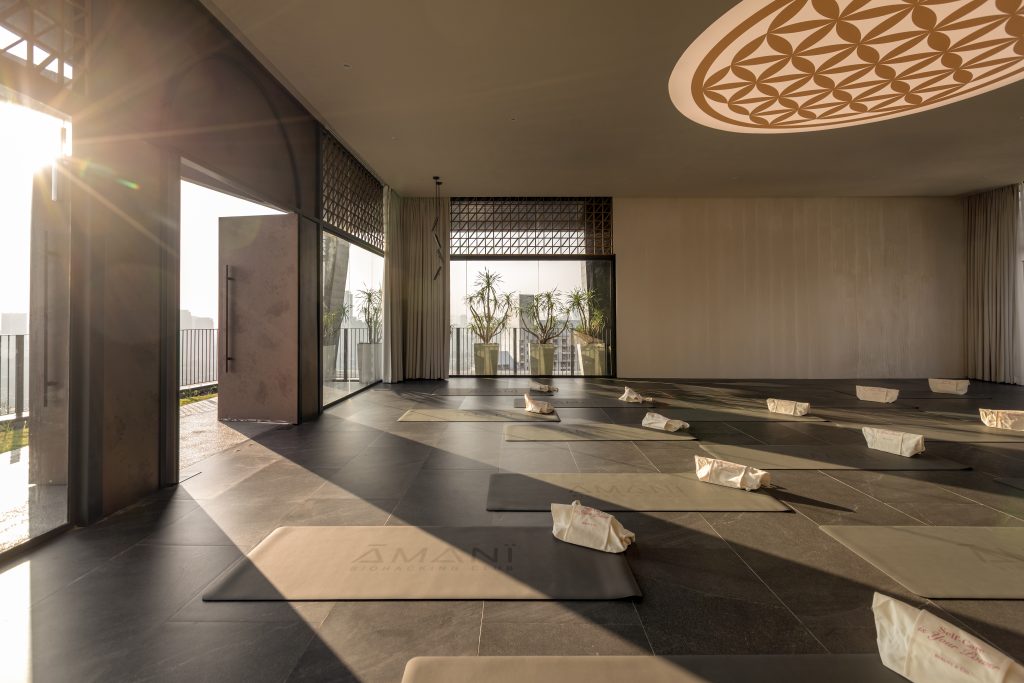
The idea was born, fittingly, somewhere else entirely. In 2022, Yann attended a biohacking summit in Finland that reordered how she thought about health altogether. “What changed me in Finland wasn’t one machine or one treatment,” she recalls. “It was seeing health being approached as a system.” Sleep, nervous-system regulation, recovery, nutrition, even consciousness — all of it treated not as separate errands to run when time allowed, but as interlocking parts of one machine. Back home, she saw the opposite: a hospital when you’re sick, a gym when you want to look better, a spa when you’re burnt out, and nobody connecting any of it for the person trying to lead at full capacity for another twenty or thirty years. “Leaders don’t need another treatment,” she remembers thinking. “They need an operating system for their health.” ĀMANÏ is the answer she built.
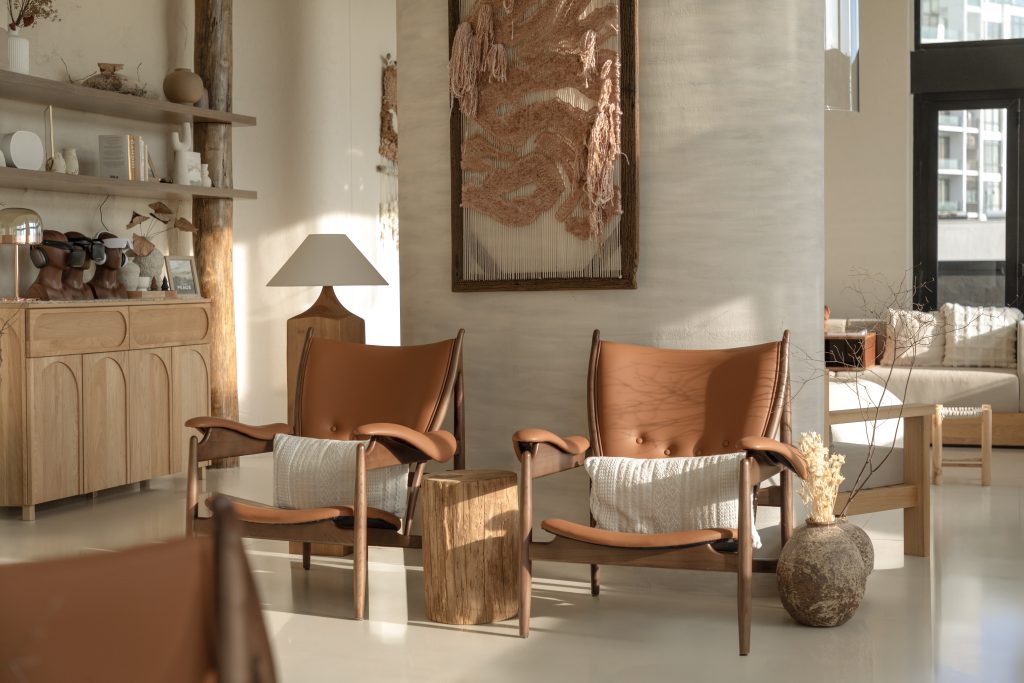
Walk through the Club and the wabi-sabi philosophy declares itself immediately — not as a design mood board cliché, but as something load-bearing. Sixty-year-old reclaimed wood lends the interiors a sense of accumulated wisdom rather than showroom polish. Lighting systems are engineered to mimic sunrise and sunset, nudging circadian rhythms back into alignment without a member ever noticing the intervention. There’s an Alfresco Olive Tree Terrace, chosen deliberately as a symbol of longevity, and a Meditation Cave built from natural minerals — the kind of space that asks for stillness simply by existing. Nothing here reads as accidental, which tracks with Yann’s own description of the philosophy behind it: “Every detail within the Club reflects our commitment to elevating wellness while embracing the imperfect beauty of the human experience. None of it was left to chance.”

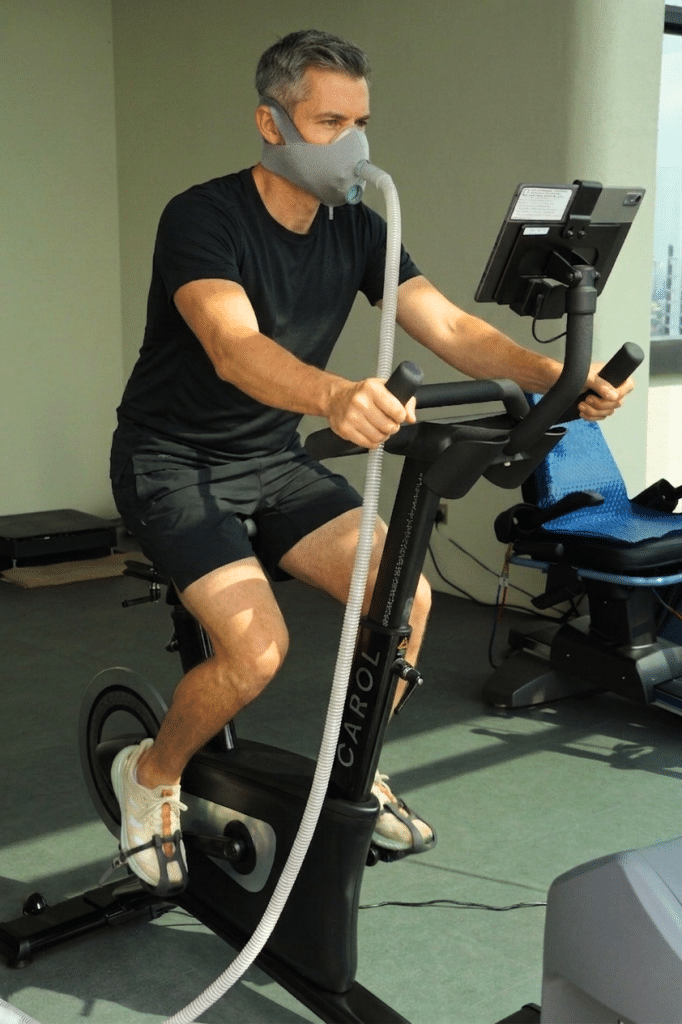
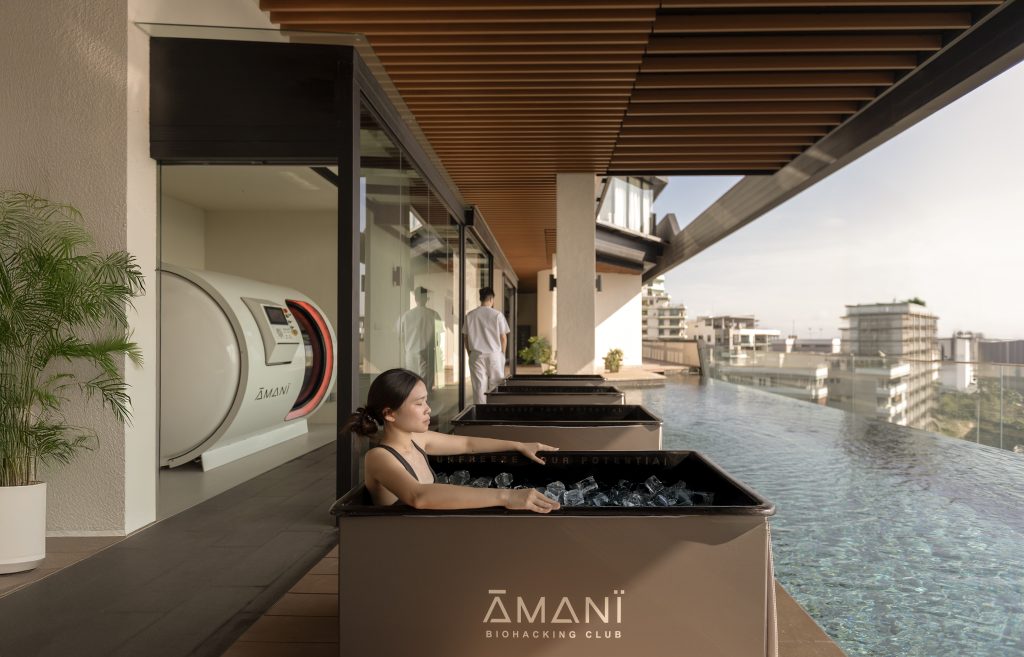
The technology stacked into the Club’s five zones — the Biohacking Lounge, the Recovery Zone, the AI Fitness Gym, the Biohacking Kitchen — reads, admittedly, like a fever dream of acronyms: BioCharger, ReOxy, Emsella, EECP, PEMF, the Vasper System, a CAROL Bike paired with EWOT. It would be easy to dismiss this as biohacking’s usual gadget worship, technology deployed for its own sake. But spend time with Yann’s answers and a more disciplined philosophy emerges underneath the hardware. “Most CEOs already know they should sleep more, exercise and eat better,” she says. “Knowledge isn’t usually the problem. The problem is that we keep asking people to use discipline and willpower to fight against an environment and a biology that are working against them.” Her point lands with the force of the obvious once she’s made it: telling an exhausted nervous system to simply try harder was never a strategy. It was a delay tactic.

That reframing extends into how ĀMANÏ handles its most sensitive territory — the clinical end of its offering, which includes interventions like intrathecal stem cell therapy that sit unmistakably within medical governance rather than wellness marketing. Yann is unambiguous about where the line falls. “Where a medical assessment, diagnosis or medical intervention is required, that sits with appropriately qualified medical professionals and under the appropriate medical governance,” she says. “The decision on whether an advanced medical intervention is suitable belongs to the medical team — not to the club, not to a salesperson and not to me as the founder.” What ĀMANÏ adds, she argues, isn’t a replacement for medicine but the connective tissue around it — the hundreds of hours a month that happen between doctor’s visits, where sleep, stress and recovery quietly decide how well a person actually functions.
It is in the four-stage member journey — Decode, Blueprint, Integration, Continuity — that the philosophy meets its hardest test: real life. Yann doesn’t pretend the friction isn’t there. “You can design the most scientifically perfect protocol in the world, but if a CEO has to travel three weeks every month, entertain clients, run a company and still be present for their family, a ‘perfect’ health routine may be completely unrealistic,” she admits. “Sometimes 80% adherence to something realistic is far more valuable than a perfect protocol followed for ten days.” It’s a refreshingly unglamorous admission from a founder selling a premium proposition — proof that the science, however sophisticated, is ultimately in service of the human being trying to live inside it.

There’s also something quietly pointed in ĀMANÏ choosing Kuala Lumpur, and Asia, as its starting point rather than Silicon Valley or Zurich. Yann is candid about the cultural weight leaders here carry — responsibility that extends beyond a business to parents, children, sometimes several generations, wrapped in a culture where admitting exhaustion can feel indistinguishable from admitting weakness. “A leader may never use the word burnout,” she says. “They may simply say they aren’t sleeping, they’re exhausted, their patience is shorter or they can’t switch their brain off anymore — and then they continue working.” Framing health as “performance infrastructure, business continuity and biological capital,” rather than self-indulgence, gives leaders permission to address what they might never otherwise name.
It would be easy to file ĀMANÏ under luxury wellness for people who already have everything, and Yann doesn’t pretend the price tag isn’t real. But her closing argument reaches past the biomarkers entirely, toward something closer to inheritance. “The more meaningful question is: if I have another 20 healthy years, what am I going to do with them?” she says. A calmer founder. A more patient parent. A CEO who stops treating burnout as a badge of honour and starts reshaping the culture beneath them. That, to Yann, is the real return on health — not simply more years, but more life inside the years already given. Longevity, in other words, only becomes legacy once someone decides what it’s for.