By Ong Chin Huat
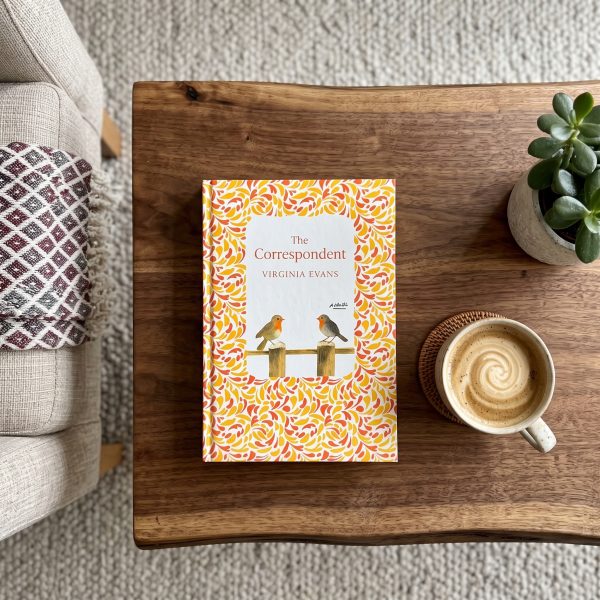
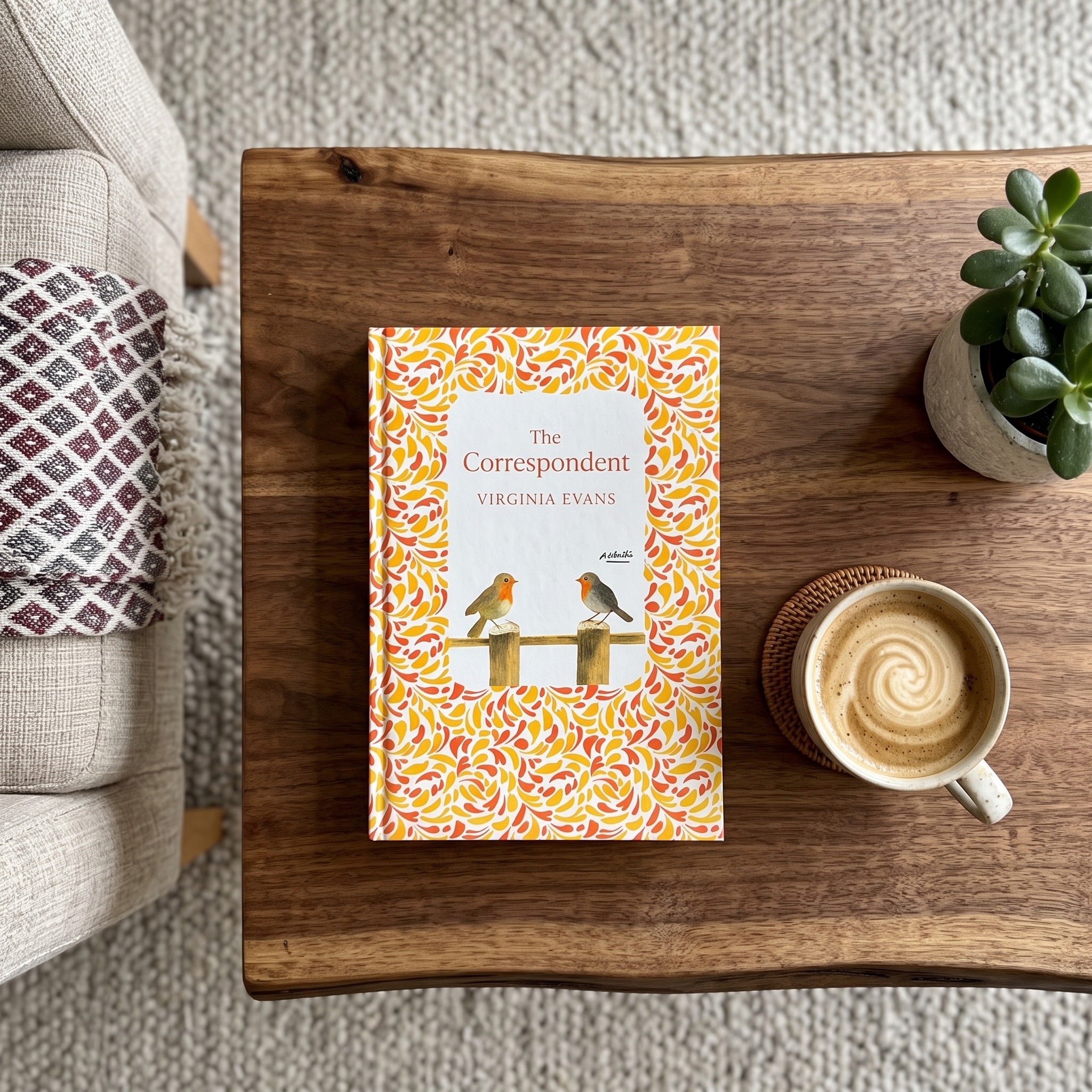
Virginia Evans’s debut novel opens with a letter, dated June 2012, from Sybil Van Antwerp to her brother in France. “Thank you for the birthday card, the fountain pen, and the book, which I started the day it arrived and finished today,” it begins. Nothing happens in it. That, it turns out, is the point. The Correspondent is built entirely from what Sybil puts down on paper across a decade: to family scattered over two continents, to a Mr. Lubeck who leaves white roses on her porch, to Ann Patchett and Joan Didion, whom she writes to like a lawyer rather than a fan. There is no conventional dialogue and no narrator standing outside her to explain what she’s really thinking. What you get is her handwriting, her postscripts, what she bothers to justify and what she clearly doesn’t.
It’s a hard trick to sustain for three hundred pages, and in the opening chapters Evans doesn’t quite land it. Correspondents pile up before there’s reason to care which is which, the timeline doubles back on itself, and Sybil, a retired lawyer in her seventies in Annapolis, reads at first like a formal conceit standing in for a person.
Stick with it.
The novel is doing something patient, and a little stubborn, much like its narrator. Small disclosures accumulate: an aside about a daughter she can’t quite forgive, a line dropped almost carelessly about the vision she’s losing, a letter referred to but never sent. What emerges by the middle third is a genuinely unusual portrait, a woman who is exacting, often withholding, occasionally cruel in small, clever ways, and never softened for the reader’s comfort. Evans has said the character grew out of her mother-in-law, and that specificity shows. Sybil isn’t a type. Her adoption, which she has spent decades refusing to discuss, and a grief she never names directly, run underneath nearly every letter without ever announcing themselves as the subject. When either surfaces, usually in the correspondence she can’t bring herself to send, Evans earns the weight instead of reaching for it.
The book’s ten-year span, 2012 to 2022, straddles the last years when a certain kind of person still wrote actual letters and the point where even they gave in to email. Sybil resists the shift for as long as she can, and Evans is good on the small snobberies involved: good stationery, a proper salutation, the faint suspicion that anything typed is less honest than anything handwritten. Annapolis itself barely registers as a place, no harbour views lingered over, no scene-setting for its own sake, and that restraint feels deliberate. The novel isn’t interested in where Sybil is. It’s interested in the room she’s alone in when she picks up a pen.
Writing real authors into the correspondence could easily have tipped into cute self-regard, a writer flattering her own bookshelf. It mostly doesn’t. Sybil’s letters to Didion and Patchett are sharp and a little presumptuous rather than starstruck, and Evans uses them less as literary name-dropping than as another register for a woman who has decided books are safer company than people. It’s one of the few places the novel lets itself be openly funny, and the humour is dry enough that it earns the grief around it rather than undercutting it.
Evans has named Stoner and 84 Charing Cross Road as touchstones, and the second is the more honest comparison. The Correspondent has little of Stoner‘s bleak, unhurried weight. What it shares with Helene Hanff’s book is an interest in what people admit on paper that they’d never say to a face, and in how a whole life can exist largely in the white space between what’s written and what’s meant. Evans is after accumulation rather than any single dramatic reveal, and the story moves at the pace of someone slowly deciding whether to trust you with the truth.
That’s also what separates it from the multi-voice family novels it will get shelved beside. Most of those use fragmentation as a puzzle, doling out perspectives until the reader can assemble the “real” story. Evans never breaks from Sybil’s single point of view; everyone else exists only as she chooses to represent them, so the book isn’t withholding a plot twist so much as withholding a person. It’s a harder, less commercial choice than it looks, and it’s why the novel earns comparison to older, quieter books rather than whatever else is trending that month.
Not everyone will have the patience for that, and I’m not convinced the book is as airtight as its most enthusiastic readers claim. The final stretch resolves more neatly than the disorder of the first two-thirds has earned, and a couple of the minor correspondents feel included to fill out the chorus of voices rather than because Sybil’s story needed them. But as an exercise in formal control, an entire interior life built from nothing but what a guarded woman puts in writing, it’s a real achievement, and it’s not hard to see why it topped the bestseller lists or why Lionsgate optioned it fast, with Jane Fonda attached. Fonda has exactly the instrument for Sybil: present and closed off in the same breath. Whether film can do in pictures what Evans does between the lines of a letter is a different question, one this particular novel would probably find quietly funny.